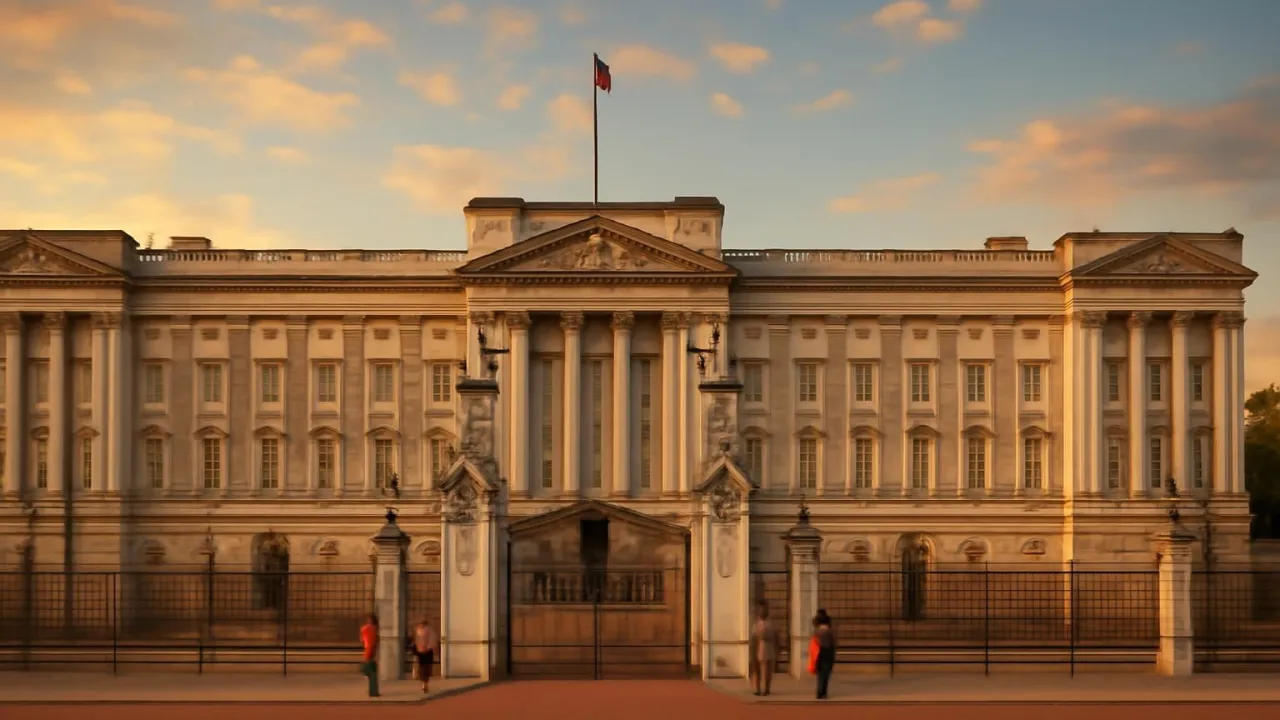
The palace has its own post office and movie theater!
✨ Word Sparks (Grade 2 Glossary)
Tap 🔊 to hear
ceremony
A special event or tradition
treasure
Something valuable or special
royal
Belonging to a king or queen
🪝
Have you ever heard the clack of royal boots on stone?
1
A Royal Home
Buckingham Palace is the home of the British king or queen. It sits in the middle of busy London, where many people visit every year. The palace is huge and shines with gold gates and bright windows.
2
Guards on Duty
The palace guards wear red coats and tall black hats called bearskins. They march in front of the palace and stand very still, even when people watch them. Every day, the guards change places in a special .
3
Rooms and Treasures
Inside, there are 775 rooms, including bedrooms, offices, and ballrooms. Some rooms are used for parties and meetings, while others hold beautiful art and shiny . Visitors can tour some rooms in the summer.
Can you imagine hearing trumpets echo through grand palace halls?
1
A Palace Full of History
Buckingham Palace has stood in London for over 300 years, growing from a townhouse to a grand royal residence. The British uses it for important events, ceremonies, and celebrations. Its famous balcony is where the royal family waves to crowds. Each year, thousands gather outside its gates to watch the Changing of the Guard.
2
Guards and Ceremonies
The palace’s guards are known for their bright red uniforms and tall bearskin hats. Their Changing of the Guard ceremony is a tradition with precise marching and music. The guards’ movements create a rhythmic on the stone ground. Visitors love watching this unique display of discipline and pageantry.
3
Inside the Palace
Buckingham Palace contains 775 rooms, including 19 state rooms and 78 bathrooms. Some rooms are decorated with gold, sparkling , and famous paintings. The palace even has its own post office and swimming pool. During summer, people can tour the state rooms and see royal treasures up close.
4
A Living Landmark
The palace is not just a monument—it is a working building where important decisions are made. Its architecture blends Georgian and Victorian styles, with strong stone walls and decorative gates. Buckingham Palace is a symbol of the United Kingdom and attracts millions of visitors every year.
During World War II, the palace was bombed nine times but remained standing.
✨ Word Sparks (Grade 4 Glossary)
Tap 🔊 to hear
acoustic
Related to sound or hearing
tradition
A custom passed down over time
monument
An important building or statue
🪝
What secrets might the palace walls hold after centuries of royal history?
1
A Royal Symbol Through Time
Buckingham Palace has evolved from a private townhouse built in 1703 to the official London residence of the British monarch since 1837. Over the centuries, architects like John Nash expanded it into a massive palace with a grand central balcony. The palace is the backdrop for state events, royal weddings, and historic celebrations, making it a symbol of British and unity.
2
Guards, Ceremonies, and Pageantry
The Changing of the Guard is a famous ceremony featuring disciplined soldiers in red coats and bearskin hats. Their synchronized marching produces a rhythmic vibration that echoes across the palace forecourt. Trumpets, drums, and precise steps create an spectacle for visitors. This demonstrates the importance of ceremony and respect in royal life.
3
Inside the Palace Walls
Buckingham Palace contains 775 rooms, including 52 royal bedrooms, 19 state rooms, and 92 offices. The magnificent state rooms are decorated with gold leaf, crystal chandeliers, and priceless artwork. The palace even houses its own post office, cinema, and medical center, showing how it functions as both a home and a workplace for the royal family.
4
Architecture and Global Impact
The palace’s architecture blends strong Georgian lines with ornate Victorian details, using Portland stone and iron gates for security and beauty. Buckingham Palace is recognized worldwide as a symbol of the United Kingdom and British monarchy. Millions of people visit or watch ceremonies each year, making it a global landmark of history, culture, and royal .
2. What materials are used in the palace’s architecture?
🤯 Mind-Blowing Fact • Grade 5
The palace’s flag, the Royal Standard, only flies when the monarch is present inside.
✨ Word Sparks (Grade 5 Glossary)
Tap 🔊 to hear
resonance
A deep, echoing sound or vibration
conservationist
A person who protects old buildings or nature
embellishment
A fancy decoration or detail
🪝
If these palace walls could talk, what royal stories would they tell about Britain’s past?
1
From Townhouse to Royal Residence
Buckingham Palace began as Buckingham House, a private townhouse built for the Duke of Buckingham in 1703. Over time, it was acquired by King George III and expanded significantly by architects like John Nash and Edward Blore. In 1837, it officially became the London residence of Queen Victoria, marking the start of its enduring role as the administrative and ceremonial heart of the British monarchy. Today, the palace is both a working office and a home for the reigning monarch.
2
Architectural Grandeur and Engineering
The palace’s architecture features a blend of Georgian symmetry and Victorian , constructed primarily from Portland stone and Bath stone. Its façade stretches 354 feet (108 meters) across, and the building encloses an area of approximately 830,000 square feet (77,000 square meters). The famous balcony, added in 1913, is supported by robust stone columns and overlooks the vast forecourt. Advanced engineering solutions, like reinforced floors and intricate ironwork gates, ensure both the security and elegance of the structure.
3
Ceremonies, Acoustics, and Pageantry
Buckingham Palace is renowned for its ceremonial traditions, especially the Changing of the Guard, which involves precise choreography and vibrant music. The rhythmic vibration of marching boots, combined with the acoustic of brass instruments, creates a memorable sensory experience for visitors. These ceremonies are not only displays of discipline and pageantry but also serve to reinforce the continuity and dignity of the monarchy. The palace’s grand halls are designed to amplify sound, allowing music and speeches to echo throughout the state rooms.
4
Interior Marvels and Modern Functions
Inside, the palace contains 775 rooms, including 19 state rooms, 52 royal and guest bedrooms, 92 offices, and 78 bathrooms. The state rooms are adorned with gilded moldings, crystal chandeliers, and masterpieces by artists such as Rembrandt and Vermeer. Beyond its opulent décor, the palace houses a post office, a cinema, a swimming pool, and even its own police station. It operates as a fully functioning administrative center, hosting over 50,000 guests annually for state banquets, investitures, and garden parties.
5
Global Significance and Resilience
Buckingham Palace stands as a global symbol of the British monarchy, attracting millions of visitors and viewers from around the world each year. During World War II, the palace endured nine direct bombings, yet its resilient structure protected the royal family and preserved its historic legacy. The palace’s ongoing maintenance involves expert who repair stonework, restore artwork, and modernize systems for energy efficiency. As both a living landmark and a piece of living history, Buckingham Palace continues to shape Britain’s identity and cultural heritage.