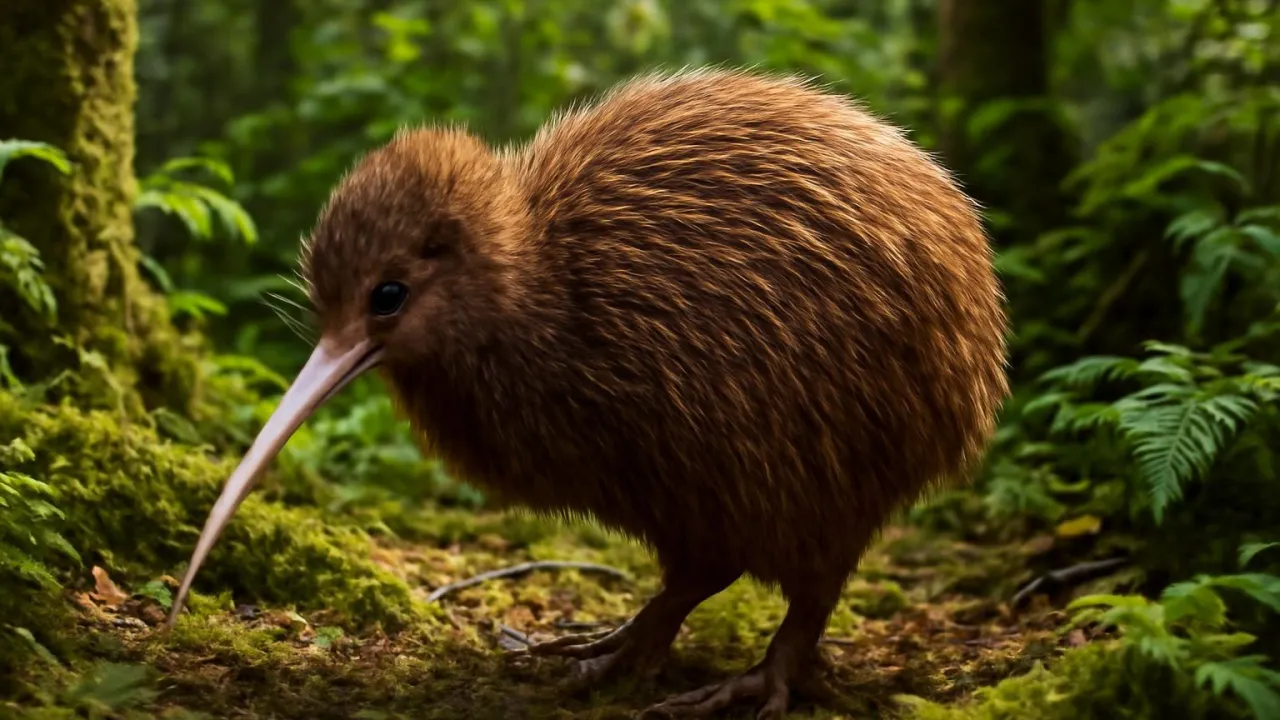
Brown kiwis have nostrils at the tip of their beak, unlike most birds that have nostrils near their face!
✨ Word Sparks (Grade 2 Glossary)
Tap 🔊 to hear
burrow
A hole dug in the ground for shelter
predator
An animal that hunts other animals
nostrils
The holes in the nose used for smelling
🪝
Can you imagine a bird that uses its nose to find food underground?
1
Brown Kiwi’s Look and Movement
The brown kiwi has brown feathers that look like fur and cannot fly. It walks on strong legs and uses its long beak to find food underground. Its feathers help it blend into the forest floor to hide from . It runs quickly to escape danger.
2
Where the Brown Kiwi Lives
Brown kiwis live in New Zealand forests where it is dark and quiet. They hide under leaves and sleep in or holes in the ground. The forest floor gives them food and shelter from animals that might eat them. They prefer places with many trees and soft soil.
3
How Brown Kiwis Find Food
This bird uses its long beak with at the tip to smell worms and insects underground. It taps the ground to find moving bugs and digs with its beak. The kiwi eats worms, insects, and berries it finds in the soil. Its super sense of smell helps it survive in the forest.
Unlike most birds, the brown kiwi’s nostrils are at the tip of its beak to smell underground prey!
✨ Word Sparks (Grade 3 Glossary)
Tap 🔊 to hear
camouflage
Colors or shapes that help hide animals
foraging
Searching for food in nature
ecosystem
All living things in one place
🪝
How does a brown kiwi use its unique beak to survive in the forest?
1
Brown Kiwi’s Special Body
The brown kiwi has feathers that look like fur to help with in the forest. Its small wings are too tiny for flying but help balance while running. The long beak has nostrils at the tip, a rare adaptation among birds. This beak helps it find food hidden underground.
2
Living in New Zealand Forests
Brown kiwis live in dense forests where they hide from predators using their . They sleep in burrows or hollow logs to stay safe at night. This forest habitat provides plenty of insects and worms for food. Their adaptation helps them thrive in this environment.
3
Finding Food Underground
The kiwi’s nostrils at the beak tip allow it to smell worms and insects deep underground. It taps the soil to detect movement and digs with its beak to catch prey. This method of finding food is called . Their strong legs help them dig and run quickly when needed.
4
How Kiwis Help the Forest
Brown kiwis help the forest by eating insects that could harm plants. They also spread seeds from the berries they eat, aiding new plant growth. As part of the food web, they balance insect populations and provide food for predators. Their survival is important for health.
1. Why do brown kiwis have feathers that look like fur?
2. What is foraging?
🤯 Mind-Blowing Fact • Grade 4
The brown kiwi’s nostrils at the beak tip are a unique adaptation that lets it smell prey hidden deep underground.
✨ Word Sparks (Grade 4 Glossary)
Tap 🔊 to hear
vestigial
A body part that no longer works like before
disperse
To spread seeds or animals far and wide
nocturnal
Active during the night instead of the day
🪝
What unique traits help the brown kiwi survive and shape its ecosystem?
1
Adaptations for Survival
The brown kiwi’s feathers resemble fur, providing excellent camouflage that helps it avoid predators in dense New Zealand forests. Its tiny wings are , meaning they no longer aid in flight but assist in balance while running swiftly. The nostrils located at the tip of its long beak allow the kiwi to detect prey underground, a rare adaptation among birds that improves its foraging success.
2
Role in the Forest Ecosystem
Brown kiwis play a vital role in controlling insect populations by feeding on worms and insects, which helps maintain forest health. They also seeds from the berries they consume, aiding plant reproduction and forest regeneration. As prey for introduced predators, kiwis are part of a complex food web that influences ecosystem balance and biodiversity.
3
Geographic Distribution and Habitat
This species is native to New Zealand’s North Island, where it inhabits temperate forests with dense undergrowth and soft soil ideal for digging. The kiwi’s preference for moist, shaded environments supports its lifestyle and provides abundant food sources. Habitat loss and introduced predators have reduced their range, making conservation efforts critical.
4
Human Impact and Conservation
Humans have impacted brown kiwi populations through habitat destruction and introducing predators like stoats and dogs. Conservation programs include predator control, habitat restoration, and breeding efforts to increase numbers. Educating people about the kiwi’s ecological importance helps protect this iconic bird and ensures its survival for future generations.
1. Why are the kiwi’s feathers important for survival?
2. How do brown kiwis help plants grow?
🤯 Mind-Blowing Fact • Grade 5
Brown kiwis are the only birds with nostrils at the tip of their beak, giving them a super sense of smell underground.
✨ Word Sparks (Grade 5 Glossary)
Tap 🔊 to hear
endemic
Only found in one special place
olfactory
Related to the sense of smell
fragmentation
Breaking habitats into smaller pieces
🪝
How does the brown kiwi’s unique biology and behavior reflect its evolutionary history and conservation needs?
1
Taxonomy and Scientific Classification
The brown kiwi, scientifically named Apteryx mantelli, belongs to the family Apterygidae and is to New Zealand’s North Island. It is one of five kiwi species, all flightless birds with vestigial wings and unique sensory adaptations. This species is notable for its evolutionary divergence from other birds, adapting to a nocturnal, ground-dwelling lifestyle in dense forest ecosystems.
2
Physiological Adaptations and Mechanics
Brown kiwis have highly specialized nostrils at the tip of their long beaks, allowing them to detect prey underground through cues, an uncommon trait among birds. Their dense, hair-like feathers provide excellent camouflage and insulation, while their strong legs enable effective digging and rapid terrestrial movement. These adaptations collectively support their nocturnal foraging and predator avoidance strategies.
3
Ecological Role and Conservation Status
As insectivores and seed dispersers, brown kiwis contribute significantly to forest ecosystem dynamics by controlling invertebrate populations and facilitating plant regeneration. However, introduced mammalian predators and habitat have severely threatened their populations. Conservation efforts focus on predator control, habitat protection, and captive breeding programs to stabilize and increase kiwi numbers.
4
Botanical and Behavioral Interactions
Brown kiwis consume a diet primarily composed of invertebrates like worms and beetles, along with native berries, which aids in seed dispersal for various forest plants. Their nocturnal behavior reduces competition and predation risk, while their keen sense of smell compensates for limited vision in low-light conditions. These behavioral traits are critical for survival in their specific ecological niche.
5
Quantitative Comparisons and Conservation Challenges
Adult brown kiwis typically weigh between 4.4 and 9 pounds (2 to 4 kilograms) and measure about 20 inches (50 centimeters) tall. They can run at speeds up to 6 miles per hour (10 kilometers per hour) when threatened. Conservation programs have increased population numbers by over 30% in some protected areas, yet ongoing habitat loss and predation remain significant challenges for their long-term survival.