Brooklyn Bridge
A Giant Web of Steel and Stone
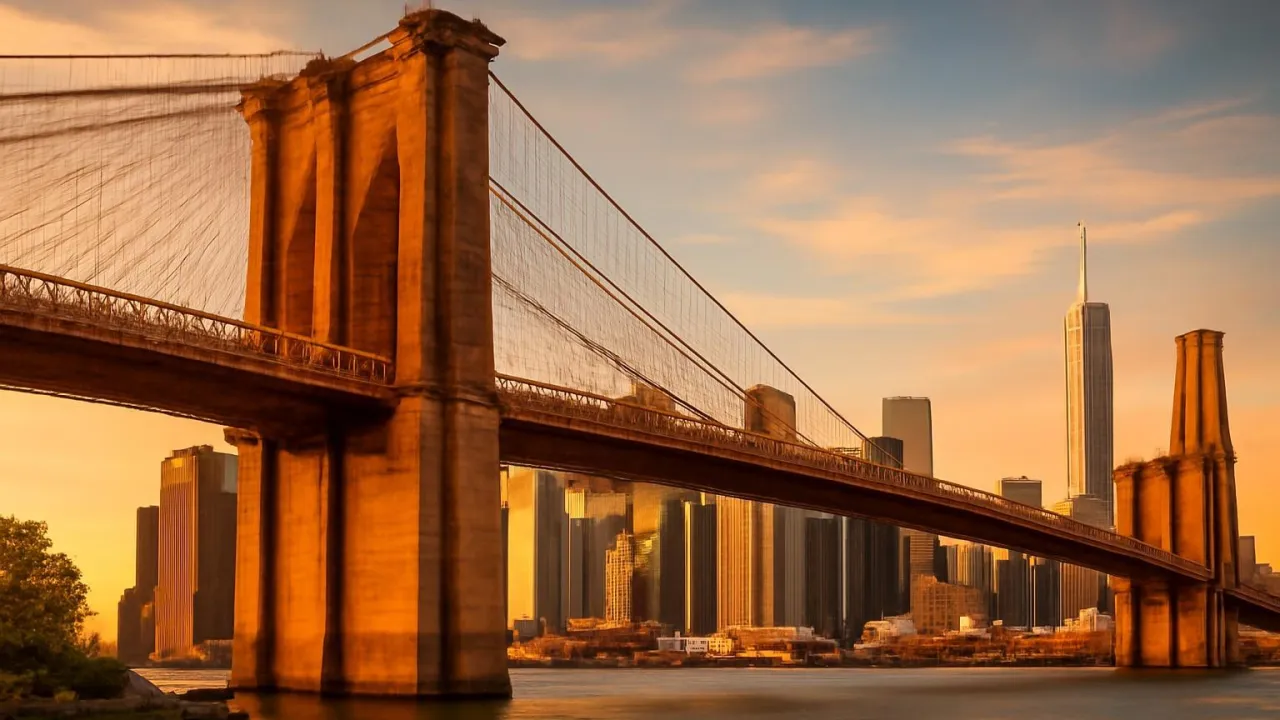
The Brooklyn Bridge was the first major bridge in the world to use steel for its cables.
1 A Bridge Born from Innovation
The Brooklyn Bridge was designed during the Gilded Age, a time of rapid change in America. Its construction began in 1869, led by engineer John A. Roebling and later his son, Washington Roebling. The bridge’s two neo-Gothic towers were built using massive granite blocks and stand 276 feet tall above the river. The project required new engineering solutions to span the wide East River safely.
2 The Science of Suspension
The Brooklyn Bridge is a suspension bridge, meaning its roadway hangs from cables draped over tall towers. Each cable is made from over 5,000 steel wires twisted together, creating strength through and flexibility. The towers transfer the enormous weight of the bridge down into deep stone foundations called , which were built underwater using compressed air to keep out the river. This design allowed the bridge to stretch nearly 1,600 feet across open water.
3 Challenges and Triumphs
Building the bridge was dangerous and difficult, with workers facing risks from underwater construction and new materials. The bridge’s steel-wire cables were a groundbreaking invention, giving it greater strength and than earlier bridges. When it opened in 1883, the Brooklyn Bridge became the world’s longest suspension bridge and a symbol of New York’s ambition. It quickly became a vital link for people, goods, and ideas between Manhattan and Brooklyn.
4 A Lasting Impact
The Brooklyn Bridge has survived over 140 years of storms, traffic, and city growth, remaining a beloved landmark. Its design inspired countless other bridges around the world, showing how science and creativity can solve big problems. Today, millions of people walk, bike, and drive across its span, enjoying views of the city skyline. The bridge stands as a monument to engineering, innovation, and the dreams of those who built it.
1. What made the Brooklyn Bridge’s cables different from earlier bridges?
2. What did builders use to create the deep foundations?