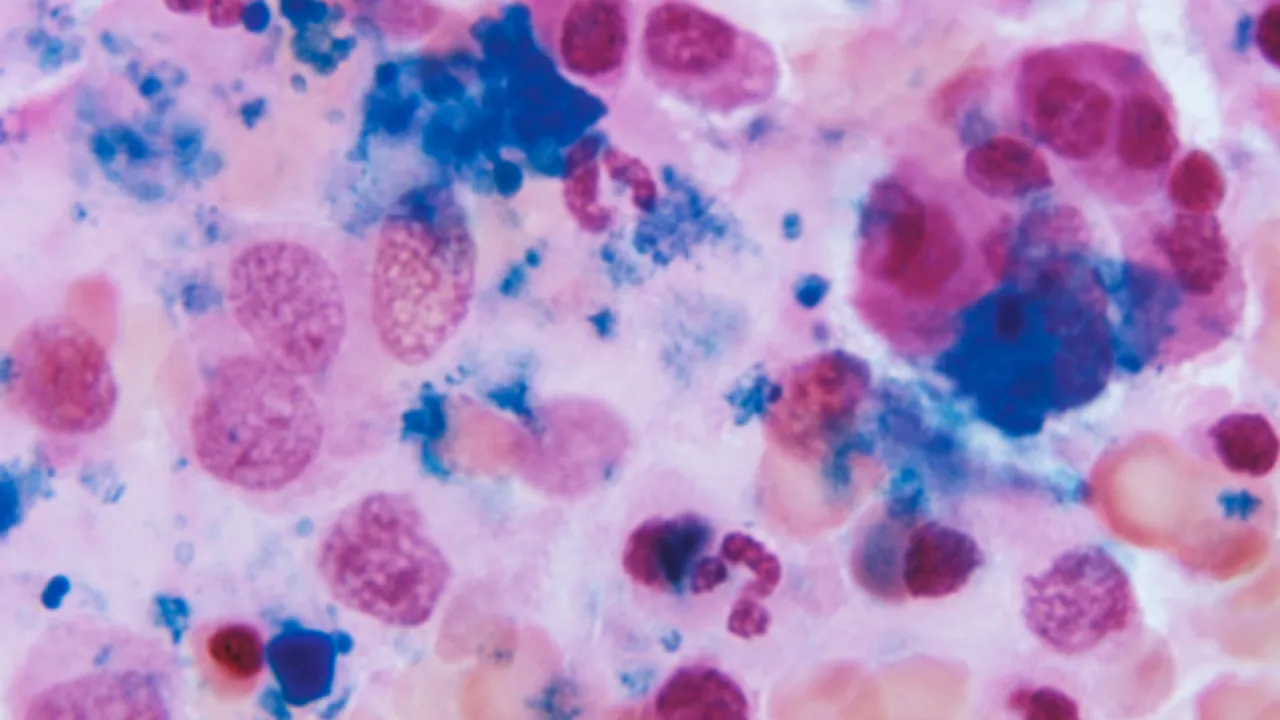
1. Where does soft bone marrow live inside your body?
2. What important job does red bone marrow do all day and night?
🤯 Mind-Blowing Fact • Grade 2
When you are born, almost all of your bone marrow is bright red to help your fast-growing baby body build blood!
✨ Word Sparks (Grade 2 Glossary)
Tap 🔊 to hear
Platelets
Tiny blood helpers that plug up small scrapes
Oxygen
Fresh gas from air that cells need
Yellow Marrow
Bone center tissue that stores backup energy
🪝
Where do all the trillions of blood cells zooming through your body come from?
1
Hard Shell, Soft Center
Imagine a crunchy pretzel filled with soft jelly in the middle. Your big bones are built in a similar way! Beneath a tough outer shell sits a honeycomb of spongy bone packed with soft tissue called bone marrow.
2
Red and Yellow Marrow
Humans actually have two colors of bone marrow. Red marrow builds three kinds of blood helpers: red cells for , white cells to stop germs, and tiny to seal scrapes. stores healthy fats for backup energy.
3
Never Takes a Vacation
Old blood cells wear out after a few months. Thankfully, your bone marrow works while you sleep, study, and play so your blood stays fresh!
2. Which tiny marrow-made helpers rush in to seal a small skin scrape?
🤯 Mind-Blowing Fact • Grade 3
Every single day, your bone marrow produces more than two hundred billion brand-new blood cells to replace worn-out ones!
✨ Word Sparks (Grade 3 Glossary)
Tap 🔊 to hear
Stem Cells
Starter cells that grow into different blood cells
Spongy Bone
Honeycomb bone layer holding soft red marrow
Bloodstream
Flowing river of blood traveling through vessels
🪝
How can hollow-looking bones weigh less than solid stone while churning out billions of living cells?
1
Inside the Spongy Vault
Pick up a hollow metal bike frame and notice how light yet sturdy it feels. Your skeleton uses that same smart design, except the spaces inside your bones are far from empty! Tucked inside honeycomb-like pockets of sits bone marrow, a jelly-soft tissue bursting with life.
2
Master Stem Cells at Work
Red marrow houses remarkable starter cells called . Like shape-shifting builders, one type of stem cell can divide and mature into oxygen-carrying red blood cells, germ-chasing white blood cells, or clot-forming platelets.
3
Changing Colors as You Grow
In young kids, nearly every bone brims with active red marrow. As you grow toward adulthood, about half of that red marrow inside long arm and leg bones turns into fat-rich yellow marrow. Adult red marrow stays busiest inside flat bones like the hips, ribs, breastbone, and spine.
4
Quality Control Gates
Tiny blood vessels inside marrow have microscopic doorways that hold young cells back until they are completely finished growing, releasing only ready-to-work cells into your .
1. Which special starter cells inside red marrow can grow into red cells, white cells, or platelets?
2. Where is most active red marrow found once a person reaches adulthood?
🤯 Mind-Blowing Fact • Grade 4
If your body urgently needs extra blood supply, energy-storing yellow marrow can actually transform back into blood-making red marrow!
✨ Word Sparks (Grade 4 Glossary)
Tap 🔊 to hear
Hematopoiesis
Scientific term for building fresh blood cells
Trabecular Bone
Lattice-shaped inner bone housing red marrow pockets
Erythrocyte
Disk-shaped red blood cell carrying vital oxygen
🪝
What secret microscopic factory keeps your bloodstream stocked with 200 billion fresh cells every single day?
1
A Living Cradle Shielded by Bone
Press your hands against your hips and imagine a bustling biological city humming just beneath that hard mineral armor. Weighing roughly five to six pounds in an adult, bone marrow accounts for nearly five percent of total body mass. Shielded inside trabecular (spongy) bone lattices and central medullary cavities, this richly vascular tissue serves as the command center for both oxygen transport and immune defense.
2
Hematopoiesis: One Ancestor, Many Jobs
Scientists call blood cell production . Inside red marrow, multipotent hematopoietic stem cells respond to chemical messenger hormones from your kidneys and immune system. When you hike up a high mountain with thinner air, your kidneys signal red marrow to ramp up (red cell) output; if a virus invades, marrow rapidly multiplies leukocytes (white cells) instead.
3
Red Versus Yellow Marrow Balance
Children require enormous blood production to match rapid growth, filling almost every bone cavity with crimson marrow. Gradually, adipocytes (fat cells) replace red marrow inside the hollow shafts of long limb bones, creating yellow marrow. Amazingly, if the body ever faces a major blood shortage, yellow marrow can convert back into active red marrow to boost supply!
4
Lifesaving Medical Transplants
Because bone marrow stem cells build an entire immune and blood system, doctors can transplant healthy donor stem cells to help patients whose own marrow stops working properly.
1. How does your bone marrow respond when you spend weeks high in the mountains where air is thinner?
2. What amazing backup trick can yellow bone marrow perform during an emergency blood shortage?
🤯 Mind-Blowing Fact • Grade 5
The immune defenders called B-cells get their famous 'B' name from bone marrow (and a bird organ called the bursa), where they grow up and learn to recognize germs!
How does five pounds of gelatinous tissue hidden inside mineral bone sustain human life second by second?
1
Architecture of the Medulla Ossium
Far from inert structural scaffolding, living human bones enclose a dynamic hematopoietic organ known anatomically as the medulla ossium. Constituting approximately four to five percent of adult body weight—roughly 2.6 kilograms—bone marrow occupies the central medullary canals of long bones and the porous honeycomb interstices of cancellous bone across the pelvis, sternum, cranium, ribs, and vertebrae.
2
Two Specialized Stem Cell Lineages
Bone marrow hosts two distinct stem cell populations working side by side. Hematopoietic stem cells generate every cellular element of circulating blood: biconcave erythrocytes that survive roughly 120 days, diverse immune leukocytes including B-lymphocytes that mature right inside the marrow, and giant whose cytoplasmic fragments bud off as clotting platelets. Meanwhile, mesenchymal stem cells found in yellow marrow differentiate into bone-building osteoblasts, cartilage chondrocytes, and energy-storing adipocytes.
3
Sinusoidal Gatekeepers and Hormone Signals
Developing blood cells mature within nurturing stromal niches crisscrossed by specialized wide capillaries called . Endothelial walls of these sinusoids act as selective biological airlocks, permitting only mature, flexible erythrocytes and responsive leukocytes to squeeze into general circulation. Production rates are precisely calibrated by cytokines and hormones such as from the kidneys and thrombopoietin from the liver.
4
Lifelong Shifts in Marrow Distribution
At birth, virtually 100 percent of human marrow is hematopoietically active red marrow. By early adulthood, roughly half undergoes physiological conversion into lipid-rich yellow marrow within appendicular diaphyses, though it retains latent plasticity to reconvert under severe hypoxic stress.
5
Pioneering Transplant Medicine
Following foundational 19th-century discoveries by Ernst Neumann and Giulio Bizzozero linking marrow to blood formation, physician E. Donnall Thomas pioneered successful human bone marrow transplantation in the late 1950s and 1960s, earning the 1990 Nobel Prize in Physiology or Medicine.