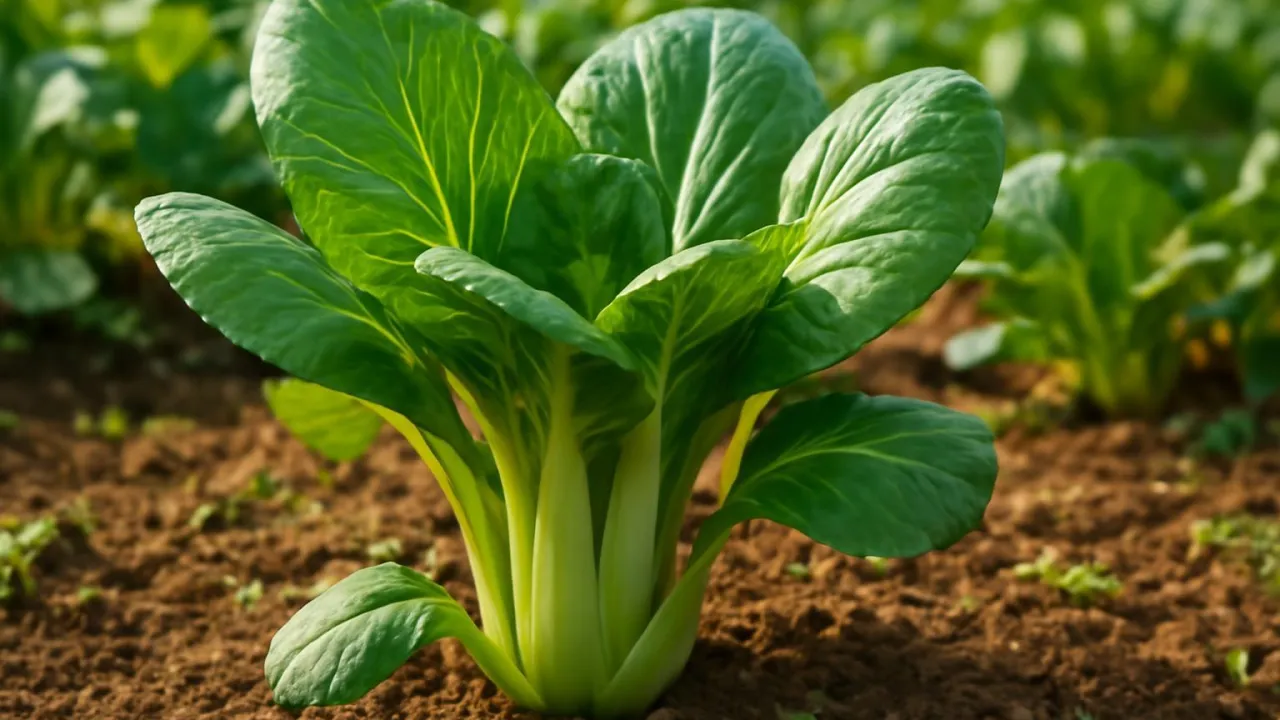
Bok choy is a vegetable that belongs to the same family as broccoli and cabbage.
✨ Word Sparks (Grade 3 Glossary)
Tap 🔊 to hear
pollination
When bees help plants make seeds
nutrients
Food parts plants need to grow
immune system
Body’s way to fight sickness
🪝
Did you know bok choy is a leafy vegetable that helps keep you healthy and strong?
1
Bok Choy’s Appearance
Bok choy has thick white stems and dark green leaves that grow in a cluster. The leaves are smooth and shiny, helping the plant absorb sunlight. Its shape helps it stand upright in the garden. This structure protects the plant from wind and rain.
2
How Bok Choy Grows
Bok choy grows best in cool weather with moist soil and plenty of sunlight. It is a fast-growing plant that can be harvested in about six weeks. The plant needs from the soil to grow strong stems and leaves. Farmers often rotate crops to keep the soil healthy.
3
Bok Choy’s Role in Nature
Bok choy is part of the cabbage family and provides food for insects like bees that help with . Pollination helps plants make seeds for new plants to grow. It also serves as food for some small animals and insects in the garden. This shows how bok choy fits into the garden’s food web.
4
Why People Eat Bok Choy
People enjoy bok choy because it is crunchy and full of vitamins like vitamin C and calcium. These help keep bones strong and the healthy. Bok choy can be eaten raw in salads or cooked in soups and stir-fries. Its mild flavor makes it easy to add to many dishes.
Bok choy’s thick stems help it store water, allowing it to survive short dry periods.
✨ Word Sparks (Grade 4 Glossary)
Tap 🔊 to hear
photosynthesis
How plants use sunlight to make food
ecosystem
All living things in one place
sustainable
Using resources without harming nature
🪝
How does bok choy grow so quickly and help gardens stay healthy?
1
Bok Choy’s Growth and Structure
Bok choy grows rapidly in cool, moist climates because its thick stems store water efficiently, helping it survive dry spells. The broad green leaves capture sunlight for , which produces energy for growth. Its upright form reduces leaf damage from wind, allowing the plant to thrive in open fields. This adaptation helps bok choy grow strong and healthy in many environments.
2
Bok Choy’s Role in Ecosystems
As a member of the Brassica family, bok choy provides food for many insects, including pollinators like bees and butterflies, which support plant reproduction. It also serves as a food source for small herbivores, contributing to local food webs. Growing bok choy in gardens can improve soil health by adding organic matter when leaves decompose. This symbiotic relationship benefits both plants and animals in the .
3
Human Uses and Agricultural Impact
Farmers cultivate bok choy worldwide because it grows quickly and yields nutritious crops that support healthy diets. It is often grown in rotation with other vegetables to prevent soil nutrient depletion and reduce pests. Bok choy’s vitamins and minerals make it a popular choice in many cuisines, especially in East Asia. However, overuse of fertilizers can harm soil and water quality, so farming practices are important.
4
Where Bok Choy Grows Naturally
Originally from China, bok choy thrives in temperate climates with cool growing seasons, such as parts of Asia, North America, and Europe. It prefers well-drained, fertile soils rich in organic matter. Gardeners worldwide grow bok choy during spring and fall when temperatures are mild. Its adaptability allows it to be cultivated in many regions, making it a globally important vegetable.
Bok choy can be harvested in as little as 45 days, making it one of the fastest-growing leafy vegetables.
✨ Word Sparks (Grade 5 Glossary)
Tap 🔊 to hear
petiole
The stalk that connects leaf to stem
inflammation
Body’s reaction to injury or sickness
crop rotation
Growing different plants to keep soil healthy
🪝
What makes bok choy an important vegetable scientifically and nutritionally worldwide?
1
Scientific Classification and Origins
Bok choy, scientifically known as Brassica rapa subsp. chinensis, belongs to the Brassicaceae family, which includes cabbage and mustard. It originated in China thousands of years ago and has since spread globally due to its nutritional benefits and fast growth. This subspecies is distinguished by its smooth, dark green leaves and thick white . Its classification helps scientists understand its relationship to other important crops.
2
Physiological Adaptations and Growth
Bok choy’s thick store water, enabling the plant to withstand short drought periods common in temperate climates. Its broad leaves maximize photosynthesis efficiency by capturing sunlight and converting it into energy. The plant’s rapid growth cycle, typically 45 to 60 days, allows multiple harvests annually under optimal conditions. These physiological traits make bok choy an efficient and resilient crop for farmers worldwide.
3
Nutritional Value and Human Health
Bok choy is rich in vitamins A, C, and K, as well as minerals like calcium and potassium, which support bone health and immune function. Its low calorie and high fiber content make it an excellent choice for balanced diets. Studies show that consuming bok choy regularly can reduce and improve cardiovascular health. These nutritional properties contribute to its popularity in health-conscious cuisines globally.
4
Agricultural Practices and Environmental Impact
Farmers often use and organic fertilizers to maintain soil fertility when growing bok choy, minimizing environmental damage. Sustainable farming practices help prevent nutrient runoff that could pollute waterways. Bok choy’s relatively short growing season reduces resource use compared to longer-season crops. However, large-scale production requires careful management to balance yield with ecological health.
5
Global Cultivation and Quantitative Comparisons
Bok choy is cultivated worldwide, especially in East Asia, North America, and Europe, with annual production exceeding millions of tons. It typically grows between 12 and 20 inches tall and can weigh up to 1.5 pounds per plant. Optimal growth temperatures range from 55 to 75 degrees Fahrenheit, making it suited for temperate climates. Compared to other leafy greens, bok choy offers a unique combination of rapid growth and high nutrient density.