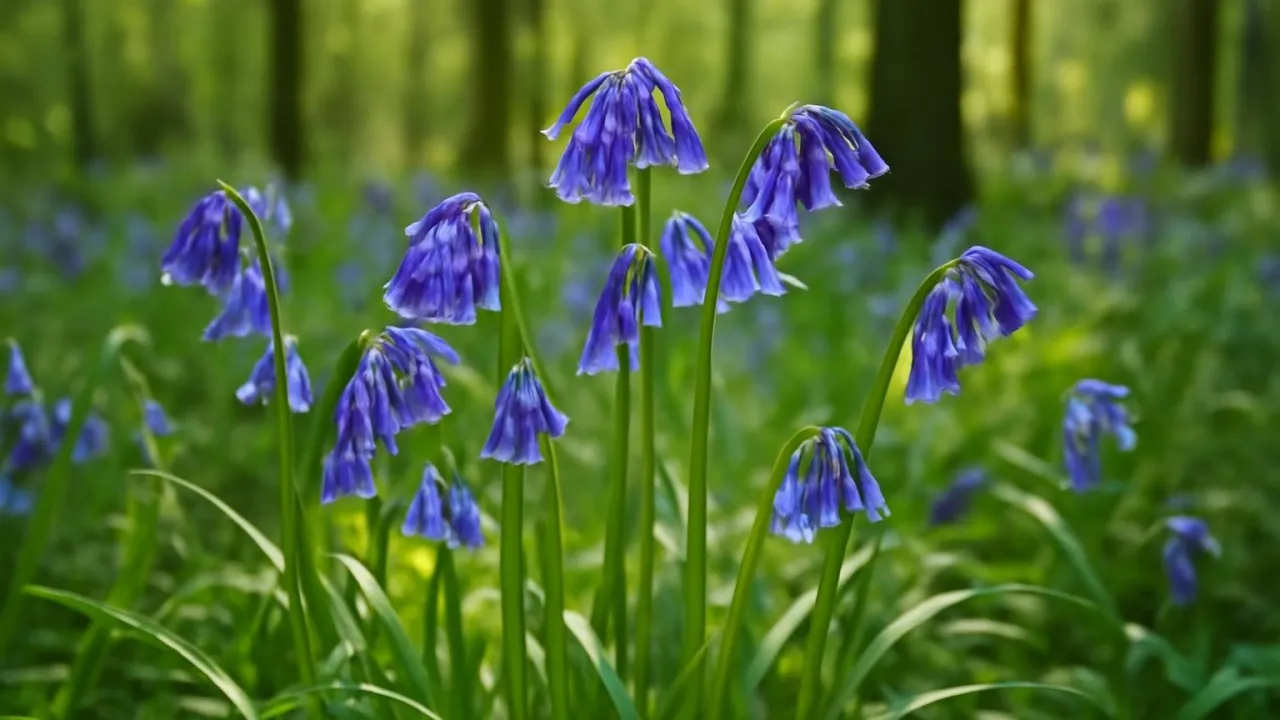
Bluebells can cover large forest floors, creating stunning blue carpets each spring!
✨ Word Sparks (Grade 2 Glossary)
Tap 🔊 to hear
cluster
A group of things close together
moist
A little wet or damp
pollinate
Help flowers make seeds by moving pollen
🪝
Have you ever seen a flower that looks like a tiny blue bell?
1
What Bluebells Look Like
Bluebells have bell-shaped flowers that hang down in . Their color is a soft blue. They bloom in springtime when the weather warms. The flowers are delicate and smell sweet.
2
Where Bluebells Grow
Bluebells grow mostly in shady woodlands and gardens. They like soil and partial sunlight. These places help them grow strong and healthy. They often carpet forest floors in spring.
3
Why Bluebells Are Special
Bluebells smell sweet and attract bees and butterflies. These insects help the flowers make seeds. Bluebells also make the forest floor look magical. They are important for many woodland creatures.
Bluebells are so important that some forests are protected just to keep these flowers safe!
✨ Word Sparks (Grade 3 Glossary)
Tap 🔊 to hear
pollination
When insects help flowers make seeds
ecosystem
A place where plants and animals live together
adaptation
A special trait that helps plants survive
🪝
Did you know bluebells use their shape to protect themselves from rain?
1
Bluebell Shape and Color
Bluebells have bell-shaped flowers that hang downward to keep rain off. Their soft blue color helps them stand out in shady woods. This shape also protects pollen inside the flower.
2
Where Bluebells Live
These flowers grow in woodlands across Europe where the soil is moist and rich. They prefer shady spots under trees to avoid too much sun. This helps them keep their delicate petals safe.
3
Bluebells and Pollination
Bees and butterflies visit bluebells to collect nectar and pollen. This helps bluebells produce seeds for new plants. The flower’s shape makes it easy for insects to land and gather food.
4
Bluebells’ Role in Nature
Bluebells create beautiful carpets that support many insects and animals in the . Their blooming signals spring and helps other plants grow. They are an important part of woodland food webs.
Bluebells are so beloved that in some places, picking them is illegal to protect wild populations!
✨ Word Sparks (Grade 4 Glossary)
Tap 🔊 to hear
symbiosis
When two living things help each other
invasive
A plant or animal that harms new places
biodiversity
Many different living things in one place
🪝
How do bluebells shape the forests where they grow every spring?
1
Bluebell Adaptations and Growth
Bluebells have bell-shaped flowers that hang downward, which protects their pollen from rain and helps insects pollinate effectively. They grow in moist, shady woodlands across Europe, thriving in nutrient-rich soils. This adaptation allows them to bloom early in spring before tree leaves fully develop and block sunlight. Their early blooming helps them gather sunlight and reproduce before other plants shade them.
2
Bluebells in the Ecosystem
Bluebells provide nectar and pollen to many insects such as bees and butterflies, playing a key role in pollination. Their dense carpets support woodland ecosystems by offering food and shelter for insects and small animals. This symbiotic relationship helps maintain in forest habitats. Bluebells also signal the changing seasons and support many other plants and animals.
3
Human Impact and Conservation
Bluebell habitats face threats from urban development and species, which can reduce their numbers and harm ecosystems. Conservation efforts protect ancient woodlands where bluebells thrive, preserving these iconic spring flowers. Gardeners also cultivate bluebells, helping to maintain their presence outside wild forests. Protecting these habitats ensures bluebells continue to bloom for future generations.
4
Geographic Distribution
Native primarily to western Europe, bluebells flourish in the British Isles and parts of Spain and France. They prefer temperate climates with mild, wet winters and cool summers. Their presence signals healthy woodland environments and seasonal changes in these regions. Bluebells have become symbols of spring in many cultures across Europe.
1. Why do bluebells bloom before tree leaves grow fully?
2. What is one way humans help protect bluebells?
🤯 Mind-Blowing Fact • Grade 5
Bluebells can carpet entire forests with millions of flowers, creating one of nature’s most stunning spring displays!
✨ Word Sparks (Grade 5 Glossary)
Tap 🔊 to hear
perennial
A plant that lives many years and blooms each spring
pollination
The process of moving pollen to make seeds
invasive species
Plants or animals that harm native habitats
🪝
Did you know the bluebell’s bell shape is a clever evolutionary design for survival?
1
Scientific Classification and Description
Bluebells belong to the family Asparagaceae and the genus Hyacinthoides, with the species name non-scripta. They are herbaceous plants that grow from bulbs, typically reaching heights between 15 and 30 centimeters. Their bell-shaped, pendulous flowers are usually deep blue, although variations can occur. This species is native primarily to western Europe, especially the British Isles.
2
Physiological Mechanics and Adaptations
The downward-facing bell shape of bluebell flowers protects reproductive parts from rain, reducing pollen washout and increasing efficiency. Their tubular flowers guide pollinators such as bees and butterflies to nectar while ensuring pollen transfer. Bluebells bloom early in spring, exploiting higher light availability before tree canopies fully develop, which is a vital adaptation to shaded woodland environments.
3
Ecological Role and Conservation
Bluebells form dense carpets that support complex woodland ecosystems by providing nectar for pollinators and shelter for small invertebrates. They play an essential role in food webs and contribute to biodiversity. Threats from habitat loss, like Spanish bluebells (Hyacinthoides hispanica), and human disturbance have led to conservation efforts focused on protecting native populations and ancient woodlands.
4
Botanical History and Cultural Significance
Historically, bluebells have been celebrated in folklore and literature as symbols of humility and gratitude. Their presence in ancient woodlands indicates long-established habitats. Garden cultivation of bluebells dates back to the 18th century, and their popularity continues in horticulture. Bluebells also serve as indicators of healthy woodland ecosystems, valued by ecologists and conservationists.
5
Quantitative Comparisons and Interesting Facts
Bluebell carpets can cover several acres, with millions of flowers blooming simultaneously in spring. Each flower measures about 1 to 2 centimeters in length. Bluebells typically grow in temperate climates with average spring temperatures between 50 and 60 degrees Fahrenheit (10 to 15 degrees Celsius). Their bulbs store energy underground to survive cold winters and regrow annually.