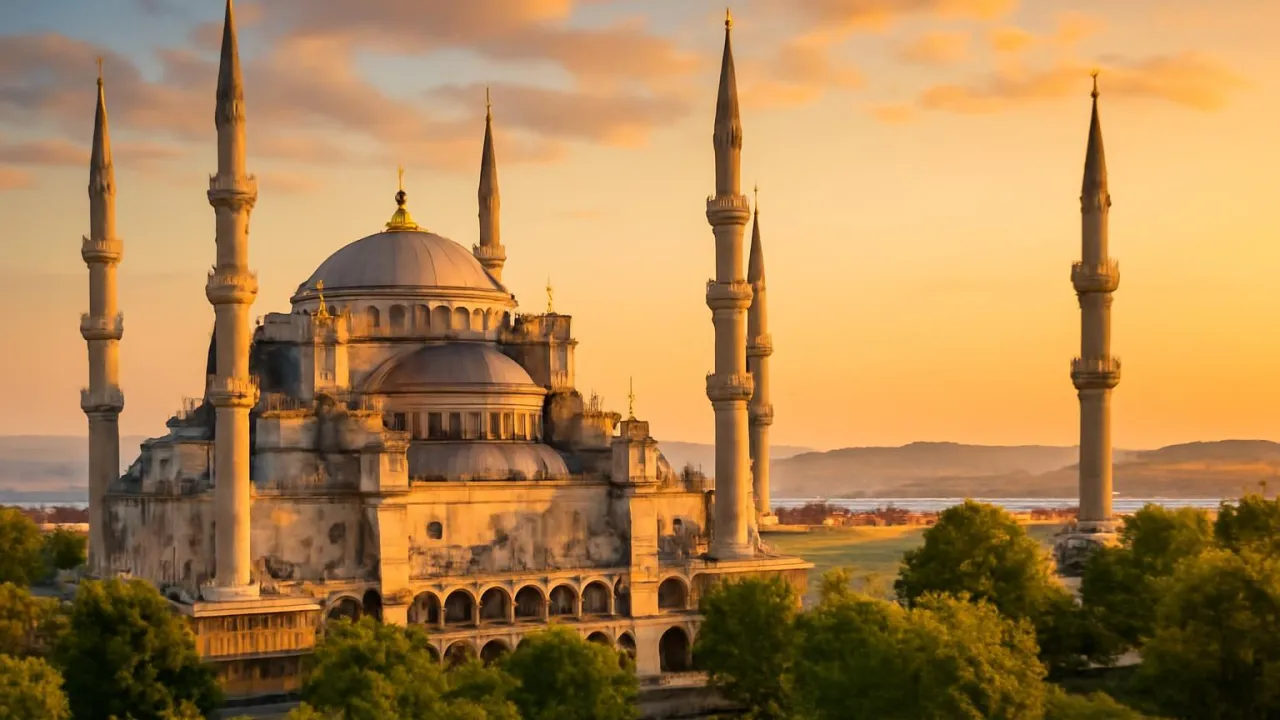
The Blue Mosque has 260 stained glass windows that let in colorful light!
✨ Word Sparks (Grade 2 Glossary)
Tap 🔊 to hear
pattern
A design that repeats again and again
mosque
A special place where Muslims pray
window
A glass opening that lets in light
🪝
Can you imagine walking under a giant blue dome?
1
A Palace of Blue
The Blue shines with blue and white tiles. Its six tall minarets reach into the sky, and the domes look like bubbles stacked high. People from around the world come to see its beauty and take photos. The mosque's outside walls and courtyards are always full of life and color.
2
Inside the Mosque
Inside, the walls are covered with flower and shapes. Sunlight glows through hundreds of , making the blue tiles sparkle. Visitors must take off their shoes and stay quiet while walking on the soft carpets. The air smells fresh, and you can hear gentle echoes under the dome.
3
A Place for All
Some people come to pray every day, while others visit to see the beautiful art and shapes. The is open to everyone who is respectful and follows the rules. Many families, students, and travelers enjoy learning about its history. The Blue Mosque is a special place for both worship and wonder.
The Blue Mosque was built by more than 10,000 workers in just 7 years!
✨ Word Sparks (Grade 3 Glossary)
Tap 🔊 to hear
arch
A curved shape that holds up weight
vibration
A quick movement that makes sound
monument
A building made to remember something important
🪝
What would it feel like to hear your voice echo under a giant blue dome?
1
A Wonder in Istanbul
The Blue Mosque stands in the heart of Istanbul, Turkey. Its six slender minarets and huge domes are famous worldwide. People visit to see the blue İznik tiles that cover the inside. The mosque glows with color when sunlight streams through its many windows.
2
Building with Domes and Arches
The mosque was built using strong and one main dome. Smaller domes support the big dome, spreading the weight safely. This design lets the main hall feel open and bright. The builders used clever engineering to make the dome stand tall for centuries.
3
A Place of Sound and Silence
Inside, sound vibrates and echoes under the dome. The walls and carpets help soften footsteps and voices. People pray quietly, and visitors listen to the peaceful sounds. The mosque is both a and a working place of worship.
4
Art in Every Detail
Over 20,000 hand-painted tiles create patterns of flowers and vines. The windows fill the space with shifting light and color. Calligraphy covers the walls with verses from the Quran. Every detail shows the skill of Ottoman artists and builders.
The Blue Mosque’s six minarets once caused a stir, because only Mecca’s mosque had that many!
✨ Word Sparks (Grade 4 Glossary)
Tap 🔊 to hear
acoustics
How sound moves and echoes in a space
calligraphy
Beautiful writing used as decoration
minaret
A tall tower for calling people to pray
🪝
Imagine hearing the call to prayer echoing from six towers above a sea of blue domes—how did people build such a wonder?
1
A Jewel of Ottoman Architecture
The Blue Mosque, completed in 1616, is a masterpiece of Ottoman design and religious art. It was commissioned by Sultan Ahmed I to show the empire’s strength and devotion. Its six were unusual, making the mosque stand out among others in the world. Today, it remains an important symbol for both Istanbul and the Islamic world.
2
Engineering Marvel: Domes and Arches
The mosque’s main dome rises 141 feet high and is supported by four massive pillars. A series of semi-domes and arches distribute the dome’s weight, preventing collapse. This system allows the central prayer hall to be wide and open, filled with natural light from 260 windows. Ottoman engineers used stone, brick, and special mortar to ensure the mosque’s strength.
3
A Symphony of Art and Sound
Inside, over 20,000 İznik tiles create swirling patterns of blue, white, and green. The of the dome make prayers and calls to worship resonate beautifully throughout the hall. Soft carpets and thick walls absorb extra sound, creating a peaceful atmosphere. and stained glass windows add to the mosque’s breathtaking beauty.
4
A Living Monument for All
The Blue Mosque is both a monument and an active place of worship. Visitors from all over the world come to admire its art and architecture. During prayer times, only worshippers are allowed inside, respecting its sacred role. The mosque’s design has inspired buildings in many countries, showing its lasting impact on world architecture.
1. Why did the mosque’s six minarets surprise people?
2. How do the mosque’s tiles and windows affect the inside?
🤯 Mind-Blowing Fact • Grade 5
The Blue Mosque’s main dome weighs over 500 tons but appears to float effortlessly above the hall.
✨ Word Sparks (Grade 5 Glossary)
Tap 🔊 to hear
seismic resilience
How buildings stay strong during earthquakes
motif
A repeated design or pattern in art
resonance
When sound vibrates and fills a space
🪝
If you stepped beneath the Blue Mosque’s soaring domes, could you solve the secret of its shimmering light and perfect echoes?
1
A Symbol of Empire and Faith
Commissioned by Sultan Ahmed I between 1609 and 1616, the Blue Mosque was intended to rival the grandeur of Hagia Sophia and demonstrate the Ottoman Empire’s devotion and power. Its construction marked a turning point in imperial mosque design, blending Byzantine Christian and traditional Islamic architectural elements. The mosque’s location, facing the ancient Hippodrome and Hagia Sophia, was chosen to highlight its importance in Istanbul’s historic heart. Today, it stands as a UNESCO World Heritage Site, drawing millions of visitors and worshippers each year.
2
Structural Genius: Domes, Arches, and Minarets
The mosque’s central dome spans 75 feet (23 meters) in diameter and rises 141 feet (43 meters) above the prayer hall, supported by four colossal 'elephant foot' pillars. A cascade of smaller domes and semi-domes, linked by carefully engineered arches, distributes the immense weight and creates an open, airy interior. The six minarets, each over 210 feet (64 meters) tall, were a bold innovation, matching the sacred mosque in Mecca and sparking controversy at the time. Ottoman engineers used a mix of stone, brick, and specially formulated lime mortar to ensure the structure’s longevity and .
3
A Masterpiece of Light and Color
Over 20,000 hand-painted İznik tiles, featuring intricate geometric and floral , cover the mosque’s interior walls. These tiles reflect and scatter sunlight streaming through 260 stained glass windows, creating a constantly shifting tapestry of blue, turquoise, and gold. The windows’ colored glass was crafted by master artisans to maximize the interplay of natural light and decorative art. This dazzling effect gives the mosque its famous blue glow, especially at sunrise and sunset.
4
Acoustics and Spiritual Resonance
The Blue Mosque’s vast domed ceiling produces remarkable acoustic , allowing a single voice to be heard clearly throughout the main hall. Ottoman architects designed the dome’s curvature and surface to enhance sound waves while thick carpets and tiled walls absorb excess echoes. During prayer, the call to worship (adhan) reverberates from each minaret, amplified by the open courtyards and marble floors. This careful balance of sound and silence creates a deeply spiritual atmosphere for worshippers and visitors alike.
5
Global Legacy and Cultural Impact
The Blue Mosque remains an active place of worship and a symbol of Istanbul’s rich cultural heritage. Its architectural innovations influenced mosque design across the Muslim world, inspiring buildings from Cairo to Kuala Lumpur. The mosque’s blend of engineering, art, and faith continues to attract scholars, architects, and tourists, who study its structural solutions and artistic achievements. As a living monument, it bridges centuries of history, inviting new generations to appreciate the wonders of science, culture, and belief.