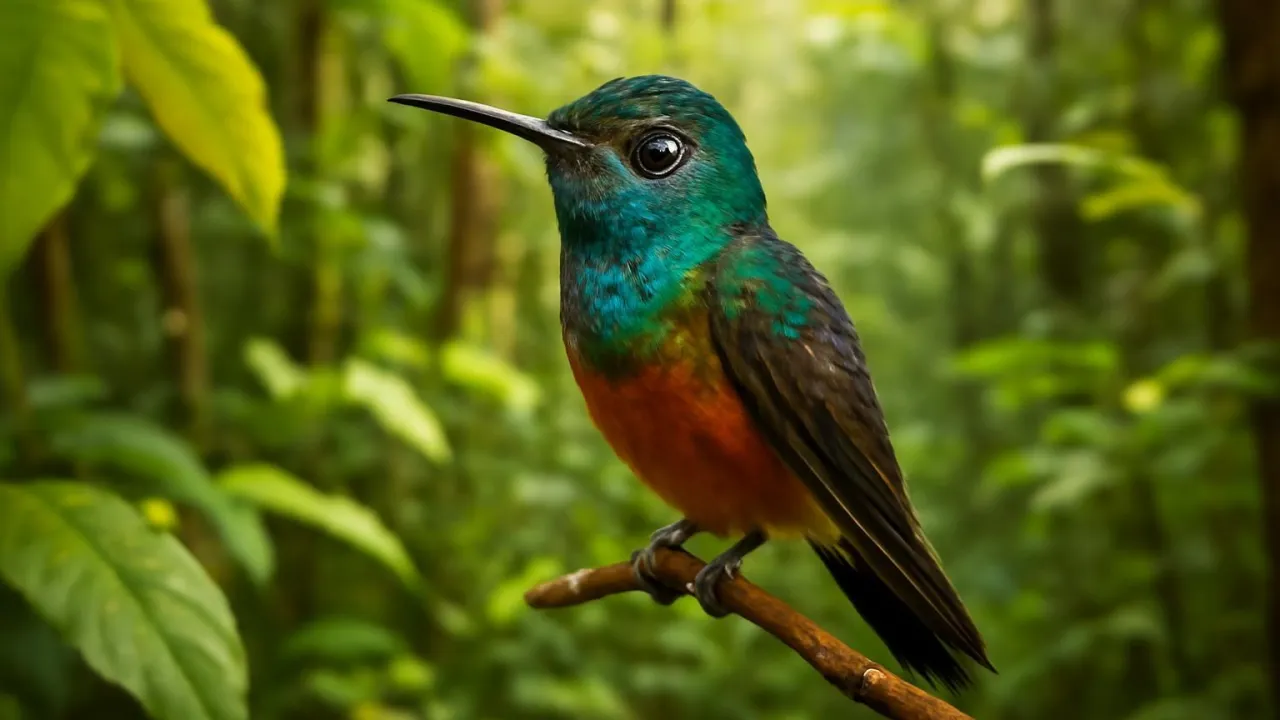
The bee hummingbird beats its wings up to 80 times every second!
✨ Word Sparks (Grade 2 Glossary)
Tap 🔊 to hear
nectar
Sweet juice inside flowers
hover
To stay still while flying
predator
An animal that hunts others
🪝
Can you imagine a bird as tiny as a bee flying fast?
1
Smallest Bird in the World
The bee hummingbird is the smallest bird in the world and it lives in Cuba. It measures about 2.2 inches long and weighs less than a penny. Its feathers shine bright red and green in the sunlight.
2
Where It Lives and Grows
This tiny bird lives in warm forests and gardens where flowers grow. It drinks from flowers to get energy and also eats tiny insects for protein. Baby hummingbirds hatch from eggs and grow feathers to fly.
3
Amazing Flying Skills
The bee hummingbird flaps its wings very fast to in one place. It can fly forwards, backwards, and even upside down. This helps it reach deep inside flowers and avoid .
The bee hummingbird’s wings beat so fast they make a humming sound you can hear!
✨ Word Sparks (Grade 3 Glossary)
Tap 🔊 to hear
camouflage
Colors that help hide animals
nectar
Sweet juice from flowers
adaptation
A trait that helps survival
🪝
How does the tiniest bird survive in a big world?
1
Small Size and Bright Colors
The bee hummingbird is the smallest bird, measuring only about 2.2 inches long. Its bright red and green feathers help it blend into colorful flowers, a type of . This camouflage protects it from predators while it feeds. Its tiny size also helps it move quickly and easily.
2
Habitat and Diet
This bird lives in the tropical forests of Cuba, where many flowers bloom. It feeds mostly on , which provides sugar and energy. It also eats tiny insects to get important nutrients like protein. This diet helps the bird stay strong and healthy.
3
Flying and Hovering
The bee hummingbird can hover by beating its wings about 80 times per second. This fast wing movement allows it to stay still in the air while feeding. Hovering helps the bird reach deep inside flowers without landing. This flying skill is an important for survival.
4
Life Cycle and Protection
The bee hummingbird lays tiny eggs in small nests built on branches. The mother bird feeds the chicks with regurgitated and insects. Its small size and help protect it from predators. These increase its chances of survival in the wild.
The bee hummingbird’s wing beats create a humming sound that can reach up to 80 beats each second!
✨ Word Sparks (Grade 4 Glossary)
Tap 🔊 to hear
pollination
Moving pollen to help flowers grow fruit
metabolism
How the body uses energy
deforestation
Cutting down many trees
🪝
What makes the bee hummingbird a master of flight and survival?
1
Tiny Size and Color Adaptations
The bee hummingbird, measuring just over two inches, is the smallest bird on Earth, and its bright iridescent feathers serve as camouflage among tropical flowers. This coloration helps it avoid predators by blending into its vibrant environment, which is crucial for survival in Cuba’s forests. Its small size allows it to access nectar from flowers that larger birds cannot reach, giving it a unique feeding advantage.
2
Habitat, Diet, and Ecosystem Role
Living exclusively in Cuba’s tropical forests and gardens, the bee hummingbird plays a critical role in by transferring pollen while feeding on nectar. It primarily consumes nectar for energy but supplements its diet with tiny insects to obtain protein and other nutrients. This diet supports its high and helps maintain the balance of insect populations in its ecosystem.
3
Flight Mechanics and Survival Strategies
The bee hummingbird’s wings beat approximately eighty times per second, enabling it to hover precisely and fly in all directions, including backwards and upside down. This remarkable flight ability allows it to extract nectar from deep within flowers while evading predators efficiently. Its rapid wing movement also produces the distinctive humming sound that gives hummingbirds their name.
4
Reproduction and Conservation
Females build tiny cup-shaped nests on tree branches where they lay one or two eggs, which hatch after about two weeks. The mother feeds her chicks a mixture of nectar and insects until they can fly independently. Although the bee hummingbird is not currently endangered, habitat loss from poses a threat, so conservation efforts in Cuba focus on protecting its natural environment.
2. Why is the bee hummingbird’s wing speed important?
🤯 Mind-Blowing Fact • Grade 5
The bee hummingbird’s wings can beat 80 times per second, faster than any other bird species in the world!
✨ Word Sparks (Grade 5 Glossary)
Tap 🔊 to hear
endemic
Only found in one special place
metabolism
How animals use energy
pollinator
An animal that helps plants grow fruit
🪝
How does the bee hummingbird’s tiny body perform such incredible flight feats?
1
Scientific Classification and Size
The bee hummingbird, scientifically named Mellisuga helenae, belongs to the family Trochilidae and is the smallest bird species known, measuring approximately 2.2 inches (5.5 centimeters) in length. Its diminutive size makes it smaller than many insects, including some bees, which is why it earned its common name. This tiny bird is to Cuba and the nearby Isla de la Juventud, where it occupies tropical forest habitats.
2
Physiological Adaptations for Flight
To sustain its rapid wing beats, which can reach up to 80 beats per second, the bee hummingbird has an exceptionally high requiring frequent feeding on nectar rich in sugars. Its wing muscles are highly specialized, allowing precise control for hovering, backward flight, and rapid maneuvers. The bird’s lightweight skeleton and aerodynamic feathers reduce drag and energy expenditure during flight.
3
Ecological Role and Conservation Status
As a critical in Cuban ecosystems, the bee hummingbird facilitates the reproduction of many flowering plants by transferring pollen while feeding. Although currently classified as Least Concern by conservation organizations, ongoing threats from habitat destruction and deforestation could impact its populations. Conservation programs emphasize preserving native forests to maintain this species’ ecological niche.
4
Botanical and Behavioral Insights
Unlike many birds, the bee hummingbird’s diet includes both nectar and small arthropods, providing carbohydrates and proteins essential for its energy-intensive lifestyle. It exhibits territorial behavior, aggressively defending feeding areas from other hummingbirds. Its role in pollination also supports agricultural crops and wild plants, highlighting its importance beyond natural habitats.
5
Quantitative Comparisons and Flight Mechanics
The bee hummingbird’s wingspan measures about 2.5 inches (6.4 centimeters), and it weighs roughly 1.6 grams, lighter than a U.S. penny. Its wing beat frequency of up to 80 beats per second generates the characteristic humming sound. In comparison, larger hummingbird species flap their wings around 50 beats per second. This rapid wing movement allows the bee hummingbird to hover with remarkable stability and agility in warm tropical climates.