Angkor Wat
Temple of Stone, Sunrise, and Secrets
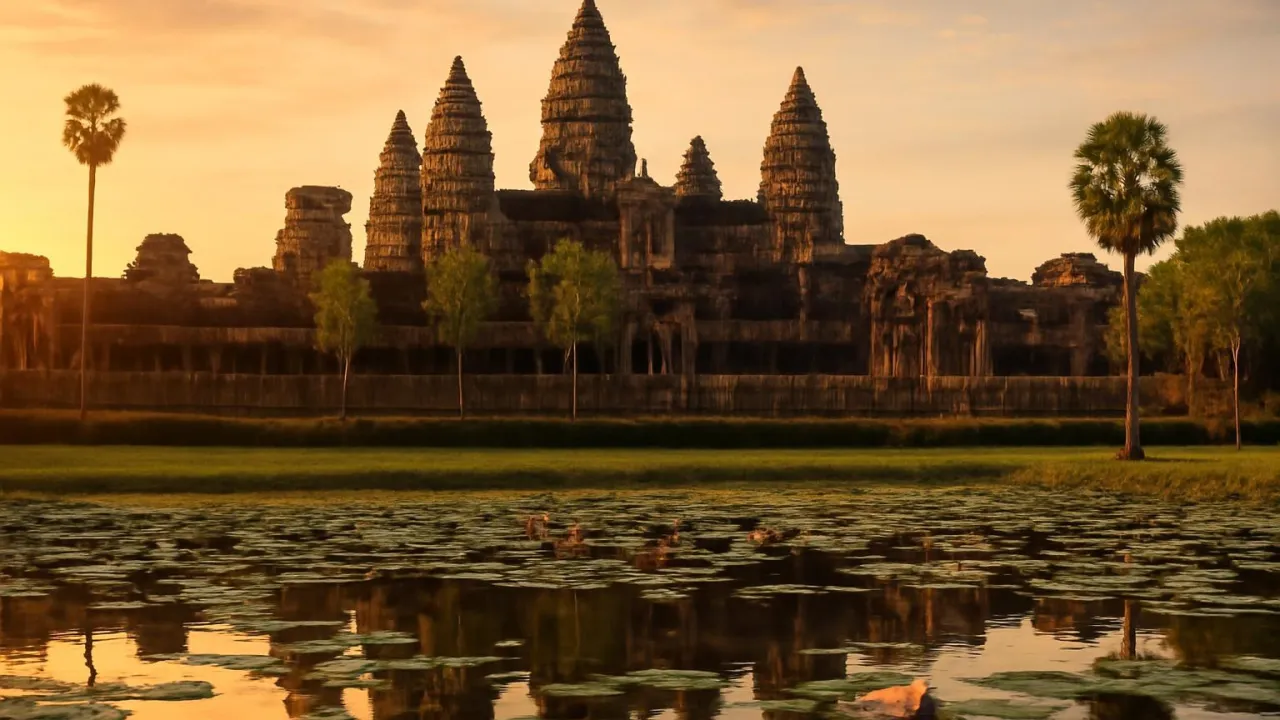
Angkor Wat’s main tower stands 213 feet tall—taller than a 20-story building!
1 The Temple That Touches the Sky
As dawn breaks, Angkor Wat’s central towers glow gold above the Cambodian jungle, reflecting in the moat’s still water. Built in the early 1100s by King Suryavarman II, it was originally a Hindu temple dedicated to Vishnu. The temple complex covers over 400 acres, making it the largest religious monument ever constructed. Its five towers are designed to look like lotus buds, a symbol of purity and creation.
2 Engineering Marvels of the Khmer Empire
Angkor Wat’s builders used sandstone blocks weighing up to 3,300 pounds each, transported from quarries over 25 miles away. The temple’s walls are covered with intricate , some stretching for hundreds of feet, depicting Hindu myths and Khmer history. Ingenious engineering, such as the wide moat and elevated walkways, protects the temple from erosion and flooding during Cambodia’s rainy season. The entire structure is perfectly symmetrical, with each side mirroring the other along a central axis.
3 A Living Monument
Over the centuries, Angkor Wat transformed from a Hindu sanctuary to a Buddhist temple, and monks still worship there today. The site is alive with wildlife: monkeys, birds, butterflies, and even lizards thrive among the ancient stones. Tourists from every continent visit to marvel at its size, beauty, and mysterious carvings. Angkor Wat is a source of pride for Cambodia and appears on the country’s national flag.
4 Global Importance and Preservation
Recognized as a UNESCO World Heritage site, Angkor Wat is protected for future generations to study and enjoy. Archaeologists and engineers work together to repair damage from weather and plant roots. The temple inspires artists, writers, and architects around the world with its harmony and grandeur. Its stories and secrets continue to spark curiosity and wonder in everyone who visits.
1. Why did builders make Angkor Wat so symmetrical?
2. How do people help protect Angkor Wat today?