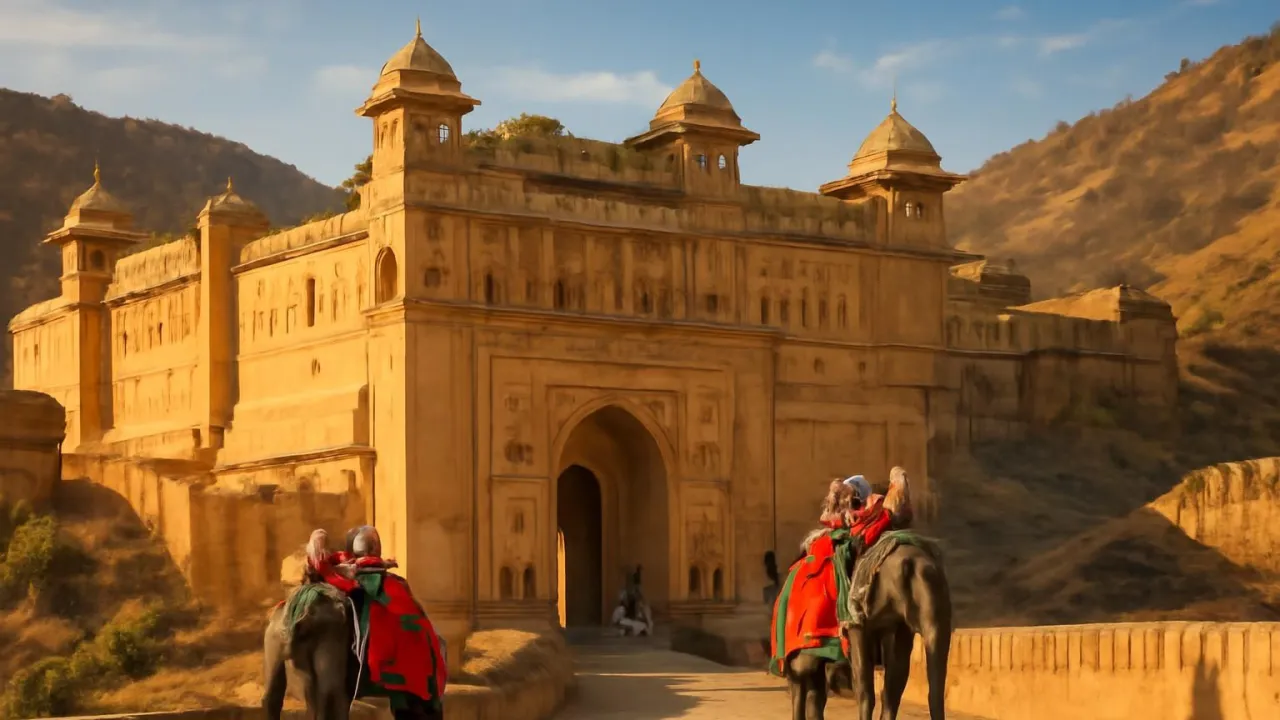
1. What animal do some visitors ride to Amber Fort?
2. What shines inside the secret room?
🤯 Mind-Blowing Fact • Grade 2
The Mirror Palace inside Amber Fort can glow with just one candle’s light.
✨ Word Sparks (Grade 2 Glossary)
Tap 🔊 to hear
sandstone
A soft yellow rock
palace
A fancy home for royals
tourist
A person who visits new places
🪝
Can you imagine hearing your own echo in a royal palace?
1
Golden Walls and High Hills
Amber Fort sits high on a rocky hill, shining in the sun. Its walls are made of yellow and white marble. People can see it from far away, and it looks like a castle from a storybook.
2
Mirrors and Magic Rooms
Inside the fort, there are rooms with tiny mirrors set in the walls. When sunlight comes in, the mirrors sparkle and shine everywhere. People love to clap and hear their echoes bounce around the halls.
3
A Place for Visitors
Families and visit Amber Fort every day to explore its big gates and gardens. Some visitors ride elephants up the steep path, which feels like an adventure. Everyone enjoys seeing the fort’s beautiful arches and secret rooms.
Amber Fort’s Mirror Palace has over one million tiny mirror pieces set by hand.
✨ Word Sparks (Grade 3 Glossary)
Tap 🔊 to hear
acoustic
About how sound moves and echoes
arch
A curved shape that holds weight
monument
A special building from history
🪝
What secrets might you discover if you explored a palace built for echoes and light?
1
A Fortress Above the City
Amber Fort rises above Jaipur, its sandstone walls glowing in the desert sun. The fort was built by Rajput kings to protect their people and show their power. Visitors today climb winding paths or ride elephants to reach its giant gates. From the top, you can see hills, lakes, and the pink city below.
2
Mirrored Marvels and Echoes
Inside, the Sheesh Mahal, or Mirror Palace, dazzles with thousands of small mirrors set in patterns. When a candle is lit, vibrations of light bounce off every surface, making the whole room sparkle. If you clap or sing, the design lets your voice echo around the halls. The mirrors and domes make every sound feel magical.
3
How Was It Built?
Amber Fort was built in 1592 using sandstone, marble, and strong wooden beams. and thick walls helped it survive attacks and hot weather. The engineers made secret tunnels and water channels to protect the royal family. Each gate and courtyard was carefully planned to impress and defend.
4
A Place for Stories and Festivals
Today, Amber Fort is a and a UNESCO World Heritage site. People visit for music shows, light festivals, and to learn about its history. The fort’s art, carvings, and water gardens show the creativity of the Rajput people. It stands as a symbol of Jaipur’s royal past and bright future.
2. What happens when you clap in the Mirror Palace?
🤯 Mind-Blowing Fact • Grade 4
Amber Fort’s stepwells could store enough water to last an entire year of siege.
✨ Word Sparks (Grade 4 Glossary)
Tap 🔊 to hear
rampart
A tall wall for defense
mosaic
A picture made of tiny pieces
insulation
Something that keeps heat or cold out
🪝
If you walked through Amber Fort at sunrise, what shimmering surprises and ancient secrets might you find?
1
A Royal Fortress Overlooking Jaipur
Amber Fort stands high above the city of Jaipur, its sandstone and marble walls blending with the rocky Aravalli hills. Built in 1592 by Raja Man Singh, it served as a stronghold and royal residence for the Rajput rulers. The fort’s strategic hilltop location made it nearly impossible for enemies to attack directly. Today, visitors arrive by winding roads or ride elephants, just as royal guests did centuries ago.
2
Engineering Marvels and Artistic Wonders
The fort’s architecture combines Rajput and Mughal styles, using massive arches, thick , and intricate carvings. The Sheesh Mahal, or Mirror Palace, is famous for its of over a million tiny mirrors. Even a single candle’s vibration can make the entire hall shimmer with reflected light. The fort’s courtyards, gardens, and water channels were designed not only for beauty but also for cooling and defense.
3
Secrets of Defense and Survival
Amber Fort’s engineers created clever defenses, including hidden tunnels and strong wooden gates reinforced with iron spikes. Rainwater was collected and stored in deep stepwells, ensuring the fort had water during long sieges. The thick stone walls provided from Rajasthan’s scorching heat, while the acoustic domes amplified music and voices during royal ceremonies.
4
A Living Monument of Culture
Now a UNESCO World Heritage site, Amber Fort attracts people from around the world to experience its history and artistry. Festivals, music shows, and guided tours bring the stories of Rajput bravery and creativity to life. The fort’s blend of engineering, art, and tradition continues to inspire architects and visitors alike. It remains a symbol of Jaipur’s royal heritage and India’s cultural richness.
1. How did Amber Fort’s engineers keep the fort cool and safe?
2. What makes the Sheesh Mahal so magical?
🤯 Mind-Blowing Fact • Grade 5
Amber Fort’s rainwater harvesting system could store over 6 million gallons (23 million liters) of water.
✨ Word Sparks (Grade 5 Glossary)
Tap 🔊 to hear
bastion
A strong part of a wall for defense
resonance
When sound vibrates and fills a space
heritage
Important traditions and history from the past
🪝
Could you design a fortress that dazzles with light, defends against invaders, and survives centuries of storms?
1
Amber Fort: A Masterpiece of Rajput Engineering
Perched atop the rugged Aravalli hills, Amber Fort dominates the landscape with its formidable ramparts and ornate gateways. Constructed in 1592 by Raja Man Singh I, the fortress was strategically positioned to oversee the surrounding valleys and protect Jaipur from invasions. Its design incorporates both defensive and aesthetic elements, blending Rajput military ingenuity with Mughal artistic influence. The fort’s sprawling 94-acre layout includes four main courtyards, each serving unique ceremonial or practical purposes.
2
Architectural Brilliance and Defensive Innovations
Amber Fort’s architecture features massive walls up to 70 feet high, robust , and imposing gates reinforced with iron spikes to deter war elephants. The fort’s labyrinth of corridors, hidden tunnels, and zigzag paths complicated enemy advances and protected royal occupants during sieges. Thick sandstone and marble walls provided insulation against Rajasthan’s extreme heat, while the use of arches and domes distributed weight and enhanced structural stability. Rainwater harvesting systems, including deep stepwells and underground channels, ensured a reliable water supply even during prolonged blockades.
3
The Sheesh Mahal: Science of Light and Sound
The Sheesh Mahal, or Mirror Palace, exemplifies the fort’s fusion of art and physics. Over one million hand-cut mirror pieces are set into intricate floral mosaics, creating astonishing optical effects. When a single candle is lit, the palace’s mirrored surfaces reflect and multiply the light, illuminating the entire hall with a star-like glow. The domed ceilings and curved walls were engineered to enhance acoustic , allowing even soft music or speech to fill the space. This combination of visual and aural design made the palace ideal for royal gatherings and celebrations.
4
Cultural Legacy and Global Recognition
Amber Fort is recognized as a UNESCO World site, celebrated for its architectural innovation and cultural significance. The fort’s blend of Rajput and Mughal styles influenced countless palaces and forts across northern India. Today, Amber Fort hosts vibrant festivals, sound-and-light shows, and educational tours that share its history with visitors from around the world. Its preservation demonstrates the importance of heritage conservation and the enduring impact of ancient engineering.
5
Enduring Symbolism and Modern Inspiration
Amber Fort remains a living symbol of Jaipur’s royal , resilience, and artistic achievement. Its engineering solutions, such as stepwells and insulated walls, inspire modern architects facing similar environmental challenges. The fort’s intricate craftsmanship and scientific design continue to captivate historians, engineers, and artists alike. As visitors explore its echoing halls and sunlit courtyards, they experience firsthand the ingenuity and imagination that shaped one of India’s greatest landmarks.