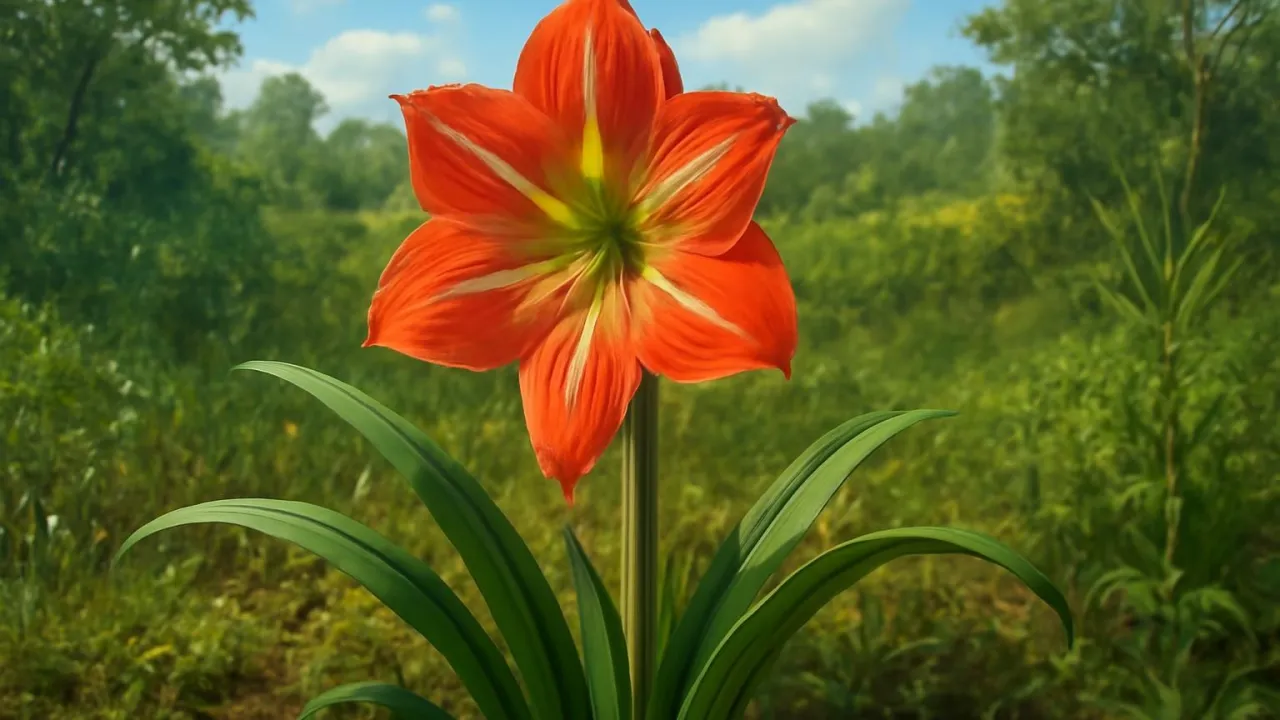
Amaryllis flowers can grow up to 24 inches tall, making them one of the tallest indoor blooms!
✨ Word Sparks (Grade 2 Glossary)
Tap 🔊 to hear
pollen
Tiny dust that helps flowers make seeds
stalk
The tall stem that holds the flower up
scent
A smell that flowers use to attract bees
🪝
Have you ever seen a flower as big as your hand bloom indoors?
1
Bright and Big Flowers
Amaryllis plants produce large, trumpet-shaped flowers that come in red, pink, or white colors. They bloom mostly in winter when many other flowers sleep. The flowers attract bees that help spread to make seeds.
2
Where They Grow
Amaryllis originally come from tropical and subtropical areas in the Americas, but people grow them inside homes worldwide. They need bright sunlight and moderate watering to grow tall and strong.
3
Special Features
The thick green leaves help the plant make food using sunlight. Amaryllis flowers have a sweet that many people enjoy. Their tall flower can reach up to two feet high.
Amaryllis bulbs can store enough nutrients to bloom even after months without water!
✨ Word Sparks (Grade 3 Glossary)
Tap 🔊 to hear
pollination
When pollen moves to help make seeds
photosynthesis
How plants make food from sunlight
bulb
A round plant part that stores food underground
🪝
Did you know amaryllis flowers use bright colors to hide from predators?
1
Amazing Flower Colors
Amaryllis flowers have bright red, pink, or white petals that attract pollinators like bees and butterflies. Their trumpet shapes help guide these insects to the pollen inside. This process helps the plant reproduce and survive.
2
Plant Structure Helps Survival
The thick green leaves perform , making nutrients for the plant to grow. The tall flower stalk lifts blooms high above leaves, helping them stand out to pollinators and avoid being eaten by small predators.
3
Life Cycle and Growth
Amaryllis grow from planted in soil, which store food during winter dormancy. When conditions are right, the bulb sends up leaves and flower stalks. This adaptation helps the plant survive dry or cold seasons.
4
Where Amaryllis Live
Native to tropical and subtropical regions of the Americas, amaryllis thrive in warm climates. They are often grown indoors in cooler places. Their bright flowers add color to homes during winter months.
Amaryllis flowers can bloom indoors during winter, brightening cold, dark months for many people!
✨ Word Sparks (Grade 4 Glossary)
Tap 🔊 to hear
ecosystem
A community of living things and their environment
pollinator
An animal that helps flowers make seeds
adaptation
A trait that helps a plant survive better
🪝
How do amaryllis flowers play a role in their ecosystem’s food web?
1
Bright Flowers and Pollinators
Amaryllis flowers use their bright colors and sweet scents to attract such as bees and butterflies, which help transfer pollen and enable reproduction. This cause-and-effect relationship ensures that new plants can grow and support other animals in the . Without pollinators, the amaryllis would struggle to produce seeds and continue its life cycle.
2
Adaptations for Survival
The plant’s thick leaves perform photosynthesis efficiently, providing nutrients needed for growth, while the tall stalks keep flowers visible to and reduce damage from ground predators. These increase the amaryllis’s chances of thriving in both wild and indoor environments, helping it survive changing conditions.
3
Ecosystem and Human Impact
Amaryllis plants contribute to food webs by supporting , which in turn feed birds and other animals. Humans cultivate amaryllis widely for decoration, but overharvesting wild bulbs could threaten natural populations if not managed sustainably. Responsible gardening and habitat preservation are important to protect these plants.
4
Geographic Distribution
Native to tropical and subtropical Americas, amaryllis plants are now grown worldwide, especially indoors in cooler climates. Their ability to bloom during winter months adds color to homes and gardens far from their original habitats, bringing joy and brightness when outdoor plants are dormant.
1. What role do pollinators play for amaryllis plants?
2. Why is overharvesting wild amaryllis bulbs a problem?
🤯 Mind-Blowing Fact • Grade 5
Amaryllis bulbs can remain dormant for months yet still produce large flowers quickly when conditions improve.
✨ Word Sparks (Grade 5 Glossary)
Tap 🔊 to hear
genus
A group of related plants or animals
carbohydrates
Plant sugars that give energy
dormancy
A resting state when plants grow slowly
🪝
What scientific secrets help amaryllis flowers bloom so brightly indoors?
1
Taxonomy and Botanical History
The amaryllis belongs to the Hippeastrum, within the Amaryllidaceae family, native to tropical and subtropical regions of the Americas. Historically, these plants were first cultivated by indigenous peoples and later introduced worldwide as popular ornamental flowers. Their classification has changed over centuries as botanists learned more about their relationships.
2
Physiological Mechanics of Growth
Amaryllis grow from large bulbs that store and nutrients, enabling rapid growth and flowering even during periods. Photosynthesis in their broad leaves produces energy, while the tall, sturdy flower stalks support large, trumpet-shaped blooms that attract pollinators. These mechanisms allow the plant to bloom indoors during winter months.
3
Conservation and Cultivation
Although widely cultivated indoors, wild amaryllis populations face threats from habitat loss and overharvesting of bulbs. Conservation efforts focus on sustainable harvesting and habitat protection to preserve genetic diversity and natural ecosystems. Gardeners are encouraged to buy bulbs from responsible sources to help protect wild plants.
4
Quantitative Comparisons
Amaryllis flower stalks can reach heights of 12 to 24 inches (30 to 60 cm), with individual blooms measuring 6 to 10 inches (15 to 25 cm) across. They typically bloom indoors during winter months when outdoor temperatures range from 30 to 60 degrees Fahrenheit (−1 to 15 degrees Celsius). These measurements show how adaptable the plant is to different environments.
5
Ecological and Human Importance
Amaryllis flowers play a vital role in supporting pollinators within their ecosystems, contributing to biodiversity. Additionally, their striking blooms have cultural significance and economic value in horticulture, especially as popular holiday gifts and indoor decorations. Their bright colors bring joy and symbolize beauty during cold seasons.