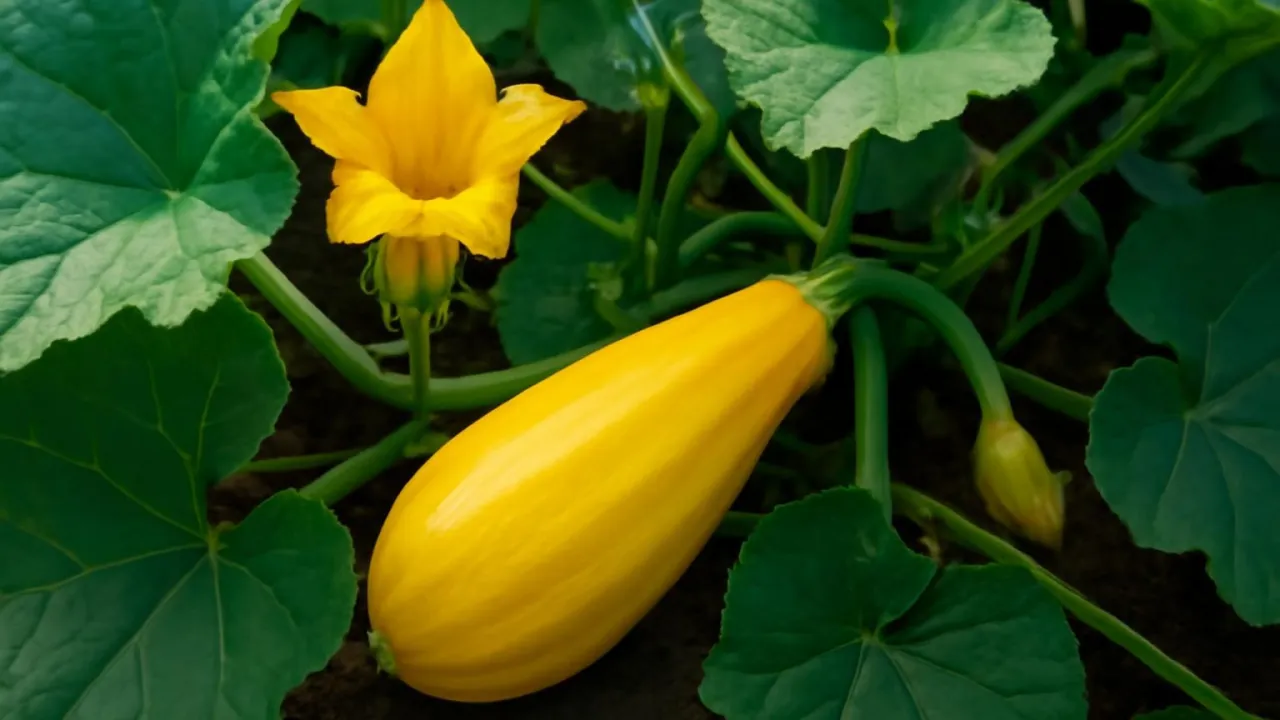
Yellow summer squash flowers open in the morning and close by afternoon each day!
✨ Word Sparks (Grade 2 Glossary)
Tap 🔊 to hear
pollinator
An insect that helps plants make seeds
vine
A plant stem that grows along the ground
harvest
To pick fruits or vegetables from plants
🪝
Have you ever seen a squash that shines bright yellow in the garden?
1
Bright and Shiny Squash
Yellow summer squash has a bright yellow skin that shines in sunlight. It grows on long green . The squash is smooth and looks fresh when picked.
2
Where It Grows
This squash grows best in warm gardens with plenty of sunlight. It needs regular watering to stay healthy. Farmers plant it in summer when the weather is hot.
3
A Special Feature
Yellow summer squash has soft flesh inside that cooks quickly. Its bright color helps attract bees and other to the flowers.
2. What helps yellow squash flowers attract pollinators?
🤯 Mind-Blowing Fact • Grade 3
Yellow summer squash is a type of botanical fruit even though many call it a vegetable!
✨ Word Sparks (Grade 3 Glossary)
Tap 🔊 to hear
pollination
When pollen moves to help plants make seeds
camouflage
Colors that help plants hide from animals
nutrients
Food in soil that helps plants grow
🪝
Did you know yellow summer squash uses bright colors to help pollination?
1
Bright Color and Camouflage
Yellow summer squash has a bright yellow skin that stands out in gardens. This color helps attract pollinators like bees and butterflies. The plant’s green leaves help it blend into the garden soil. This protects it from some predators.
2
Growing on Vines
The squash grows on long vines that spread across the ground. These vines help the plant absorb and water from the soil. The broad leaves collect sunlight for photosynthesis, which helps the plant grow strong.
3
Pollination and Seed Growth
Pollinators visit the bright flowers to collect nectar and pollen. When pollinators move pollen between flowers, happens. This process allows the squash to produce seeds inside the fruit. Seeds help the plant reproduce and grow new squash plants.
4
Eating and Adaptation
People eat yellow summer squash because it is soft and tasty when cooked. Its thin skin and soft flesh make it easy to eat. The plant adapts to warm weather by growing quickly in summer months.
1. Why does yellow summer squash have bright yellow skin?
2. What helps the squash plant get nutrients?
🤯 Mind-Blowing Fact • Grade 4
Yellow summer squash flowers open early and close by afternoon, perfectly timing pollinator visits!
✨ Word Sparks (Grade 4 Glossary)
Tap 🔊 to hear
symbiosis
When two living things help each other
pollinator
An animal that helps plants make seeds
food web
How plants and animals eat each other
🪝
How does yellow summer squash fit into garden food webs and help pollinators?
1
Bright Color and Pollinators
Yellow summer squash’s bright yellow skin and flowers attract many such as bees and butterflies, which are essential for pollination. This cause-and-effect relationship helps the plant produce fruit and seeds, ensuring its survival and reproduction. Pollinators rely on the flowers’ nectar for food, creating a mutual benefit.
2
Role in the Ecosystem
This squash provides food for humans and animals, making it a key part of many garden . Some insects eat the leaves, while birds and small mammals may eat the fruit. The plant also benefits from with that help it reproduce, supporting biodiversity in the garden.
3
Growing Conditions and Human Impact
Yellow summer squash grows best in warm temperate to subtropical regions with full sun and regular watering. Agricultural practices like crop rotation and pest management help maintain healthy squash crops. However, overuse of pesticides can harm populations and reduce fruit yields.
4
Geographic Distribution
Though native to North and Central America, yellow summer squash is now widely grown in gardens worldwide. Its ability to adapt to different climates allows it to thrive in many regions. Gardeners enjoy growing it because of its quick growth, tasty fruit, and important role in local ecosystems.
1. What role do pollinators play for yellow summer squash?
2. Why is overusing pesticides harmful?
🤯 Mind-Blowing Fact • Grade 5
Yellow summer squash’s bright carotenoid pigments not only attract pollinators but also protect it from strong sunlight.
✨ Word Sparks (Grade 5 Glossary)
Tap 🔊 to hear
carotenoids
Pigments that make plants yellow or orange
photosynthesis
How plants use sunlight to make food
fertilization
When pollen joins with a flower to make seeds
🪝
What scientific secrets help yellow summer squash thrive and support ecosystems worldwide?
1
Scientific Classification and Origins
Yellow summer squash belongs to the species Cucurbita pepo in the Cucurbitaceae family, native to North and Central America. This species includes many varieties of summer squash, all adapted to warm growing seasons. Its classification helps scientists understand its relationships with other gourds and pumpkins. This knowledge supports breeding of better squash varieties.
2
Physiological Mechanics and Growth
The plant uses in its broad leaves to convert sunlight into energy, supporting rapid fruit development. Its long vines spread horizontally, maximizing nutrient and water absorption from the soil. The bright yellow skin contains , pigments that protect the fruit from sun damage and attract pollinators. These pigments also provide nutritional benefits to humans.
3
Pollination and Reproduction
Yellow summer squash produces separate male and female flowers, relying on insect pollinators to transfer pollen for . This process enables seed formation inside the fruit, allowing the plant to reproduce effectively. The flowers open early in the morning and close by afternoon, optimizing pollinator activity. Pollinators such as bees are critical to high fruit yields.
4
Conservation and Agricultural History
Historically cultivated by indigenous peoples, yellow summer squash became a staple crop in many cultures due to its fast growth and high yield. Sustainable farming practices now focus on reducing pesticide use to protect pollinators essential for crop production. Conservation efforts support biodiversity in agricultural ecosystems and maintain healthy pollinator populations. These efforts help secure future food supplies.
5
Quantitative Comparisons and Adaptations
Yellow summer squash fruits typically measure 6 to 12 inches long and weigh between 0.5 to 1 pound. They grow best in temperatures ranging from 70 to 85 degrees Fahrenheit and require about one inch of water weekly. Compared to winter squash, summer squash has thinner skin and a shorter growing season, allowing quicker harvests. These adaptations help farmers produce fresh squash rapidly during warm months.