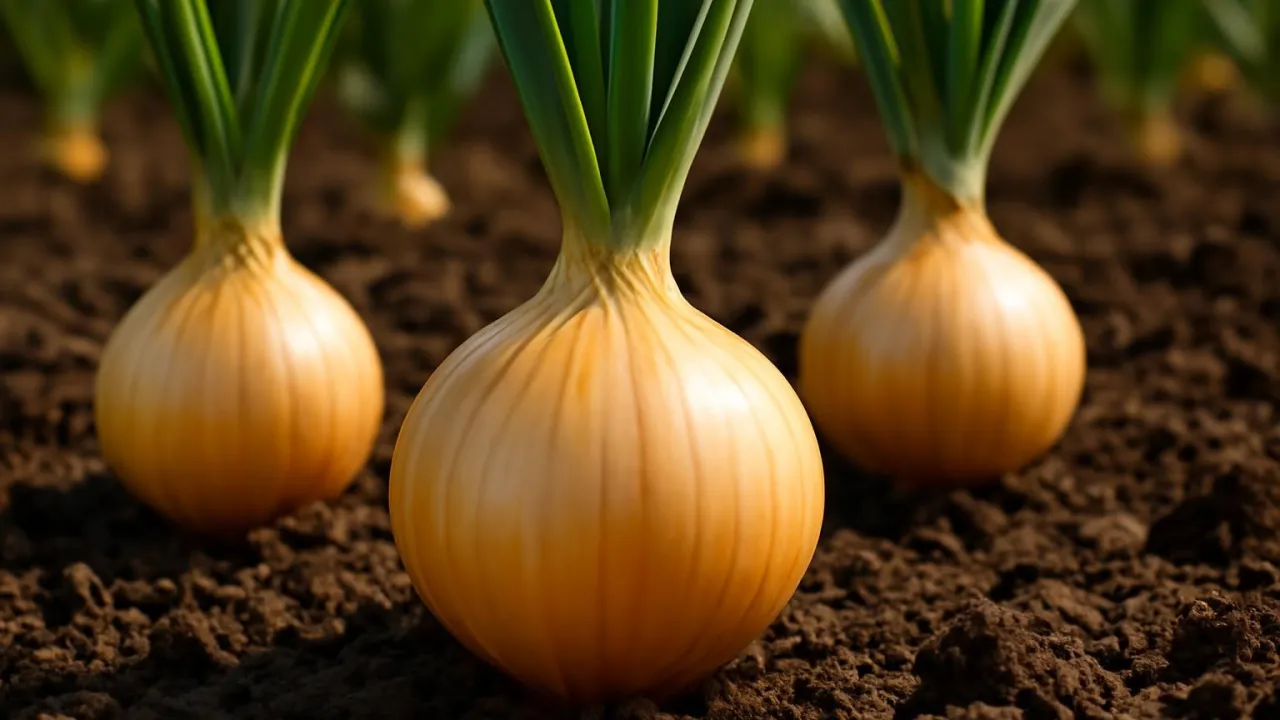
The gas from cutting onions is a natural defense to keep animals away!
✨ Word Sparks (Grade 2 Glossary)
Tap 🔊 to hear
bulb
The round part that grows underground
harvest
To pick plants when they are ready
gas
A kind of air that you cannot see
🪝
Have you ever cried when cutting a yellow onion in the kitchen?
1
How Yellow Onions Look and Grow
Yellow onions have brown skin and round that grow underground. They need full sunlight and regular water to grow well. Farmers plant onion seeds in spring and bulbs in late summer.
2
Where Do They Live?
Yellow onions grow best in temperate climates with loose soil. They are grown in many parts of the world, including North America and Europe. Gardens and farms provide the right place for onions to grow big.
3
A Special Onion Feature
When you cut a yellow onion, it releases a that makes your eyes tear up. This gas helps protect the onion from animals that might eat it. Cooking onions makes them taste sweeter and less spicy.
The sulfur gas from onions is a clever defense to keep animals from eating them!
✨ Word Sparks (Grade 3 Glossary)
Tap 🔊 to hear
bulb
A round underground part that stores food
predator
An animal that hunts other animals
nutrients
Food parts plants use to grow strong
🪝
Why do yellow onions make your eyes water when you slice them?
1
The Onion’s Shape and Growth
Yellow onions have a round covered with papery brown skin. This bulb grows underground, storing for the plant. The green leaves grow above ground and gather sunlight for food. This adaptation helps onions survive in many climates.
2
Onion’s Habitat and Life Cycle
Yellow onions thrive in temperate regions with loose, well-drained soil. They grow from seeds or small called sets planted in early spring. The onion’s life cycle includes sprouting leaves, growing the bulb, and finally harvesting in late summer. This cycle helps farmers plan their crops carefully.
3
The Tear-Making Defense
When you cut an onion, it releases a sulfur gas called syn-propanethial-S-oxide. This gas irritates your eyes and causes tears as a defense against . This natural chemical protects the onion from animals that might eat it before it fully grows.
4
Onions in Food and Culture
People use yellow onions worldwide to add flavor and nutrition to dishes. Cooking onions breaks down the harsh chemicals, making them taste sweet and mild. Onions are important in many recipes and even have a long history in human agriculture.
Yellow onions’ sulfur compounds both protect them and create their famous tear-inducing smell!
✨ Word Sparks (Grade 4 Glossary)
Tap 🔊 to hear
photosynthesis
How plants use sunlight to make food
ecosystem
All living and nonliving things in one place
herbivore
An animal that eats plants only
🪝
How does the yellow onion’s natural chemistry protect it in the garden?
1
Physical Traits and Adaptations
Yellow onions develop a thick, papery skin that protects the bulb from drying out and pests. Their underground bulbs store essential nutrients and water, allowing survival during dry periods. The green leaves above ground perform , capturing sunlight to fuel growth. These adaptations enable onions to thrive in temperate climates with variable weather.
2
Ecosystem Role and Human Impact
Yellow onions serve as food for many insects and animals, but their sulfur compounds deter most predators. Humans cultivate onions worldwide, impacting by replacing wild plants with farms. Onions contribute to food webs as both a crop and a source of nutrients for various organisms. Sustainable farming helps balance onion production with environmental health.
3
Geographic Distribution and Growth Cycle
Originally from Central Asia, yellow onions are now grown globally in temperate zones. They require loose, well-drained soil and full sunlight for optimal growth. The onion’s life cycle includes seed germination, leaf growth, bulb development, and harvest in late summer or fall. Proper timing ensures strong bulbs and high yields for farmers and gardeners.
4
Chemical Defense and Culinary Uses
When cut, yellow onions release sulfur-based compounds that irritate eyes and deter . Cooking transforms these harsh chemicals into sweet, flavorful sugars, making onions a kitchen staple. This chemical change explains why raw onions taste sharp but cooked onions taste mild and sweet. Onions have been used in cooking and medicine for thousands of years.
2. Why do cooked onions taste sweeter than raw onions?
🤯 Mind-Blowing Fact • Grade 5
Yellow onions produce a gas that protects them and makes cooks cry quickly!
✨ Word Sparks (Grade 5 Glossary)
Tap 🔊 to hear
enzyme
A protein that speeds up chemical reactions
volatile
A gas that easily evaporates into the air
photosynthesis
How plants use sunlight to make food
🪝
What makes the yellow onion’s chemistry both a defense and a culinary delight?
1
Scientific Classification and Origin
The yellow onion, scientifically named Allium cepa, belongs to the Amaryllidaceae family. It originated in Central Asia and has been cultivated globally for thousands of years. This species is a biennial plant grown as an annual for its edible bulb. Its classification helps scientists understand its relations to garlic and leeks.
2
Physiological Mechanics of Growth
Yellow onions grow from seeds or small bulbs called sets, developing a round bulb underground that stores carbohydrates. The green leaves perform , producing energy to expand the bulb. Onions require full sun and well-drained soils with moderate moisture for optimal growth. Their layered bulb structure protects inner tissues from damage and dehydration.
3
Chemical Defense and Tear Production
When cut, yellow onions release an called alliinase that converts sulfur-containing compounds into syn-propanethial-S-oxide gas. This gas irritates the eyes’ mucous membranes, triggering tear production as a defense mechanism. This biochemical process deters herbivores and protects the plant from predation before seed production.
4
Conservation, Agricultural History, and Human Use
Yellow onions have been cultivated since ancient times, with records from Mesopotamia and Egypt. They remain one of the most widely grown vegetables worldwide, with global production exceeding 90 million metric tons annually. Sustainable farming practices are increasingly important to reduce pesticide use and soil depletion. Onions contribute essential nutrients like vitamin C and antioxidants to human diets.
5
Quantitative Comparisons and Culinary Impact
A mature yellow onion bulb typically weighs between 150 and 300 grams and measures about 7.5 to 10 centimeters in diameter. The tear-inducing gas can cause eye irritation within seconds of cutting, sometimes lasting minutes. Cooked onions lose most sulfur compounds, becoming sweeter and milder in flavor. Their versatility makes them a staple ingredient in cuisines worldwide.