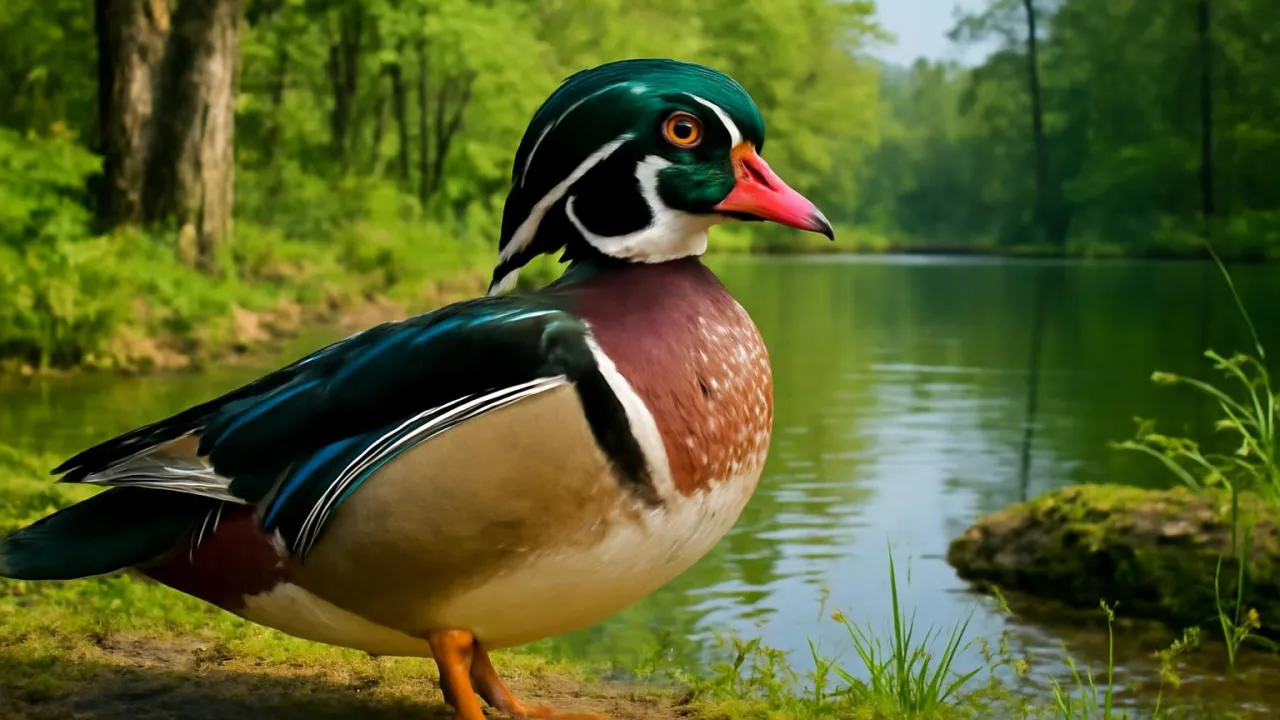
Wood ducks can fly up to 55 miles per hour to escape danger quickly!
✨ Word Sparks (Grade 2 Glossary)
Tap 🔊 to hear
iridescent
Shiny colors that change when you move
nest
A bird’s home made of sticks and leaves
insects
Small animals like bugs and ants
🪝
Have you ever seen a duck with shiny feathers that sparkle in the sun?
1
Colorful Feathers
Wood ducks have feathers that shine bright green and blue in sunlight. Their colors help them hide in trees and water. This makes it hard for predators to see them.
2
Home Near Water
These ducks live near lakes and streams surrounded by forests. They build in tree holes close to water. This safe place protects their eggs from danger.
3
Eating Habits
Wood ducks eat seeds, , and plants. They find food in water and on land during the day. Their diet changes with the seasons to stay healthy.
Wood ducks are one of the few duck species that nest in trees instead of on the ground!
✨ Word Sparks (Grade 3 Glossary)
Tap 🔊 to hear
camouflage
Colors that help animals hide
omnivore
An animal that eats plants and animals
predator
An animal that hunts other animals
🪝
Did you know the wood duck’s colorful feathers help it hide from predators in forests?
1
Amazing Feather Colors
Wood ducks have iridescent feathers that shine green, blue, and purple in sunlight. This helps them avoid while resting in trees. Their bright colors also play a role in attracting mates during breeding season.
2
Habitat and Nesting
These ducks live in wooded wetlands near lakes and streams across North America. Wood ducks nest in tree cavities, which protect their eggs from ground . The female lays about 10 eggs and stays close to the nest to keep them safe.
3
Diet and Feeding
Wood ducks are that eat seeds, aquatic plants, insects, and small crustaceans. Their diet changes with the seasons to get enough nutrients. They forage both in water and on land, using their sharp bills to catch food.
4
Adaptations for Survival
Wood ducks have strong wings that allow fast, agile flight to escape . Their sharp claws help them perch on tree branches. These adaptations increase their chances of survival in forest habitats.
Wood ducks can fly up to 55 miles per hour, making them one of the fastest ducks in North America!
✨ Word Sparks (Grade 4 Glossary)
Tap 🔊 to hear
plumage
A bird’s feathers, especially colorful ones
incubate
To keep eggs warm until they hatch
wetlands
Areas where land is wet like swamps
🪝
How do wood ducks use their bright feathers and forest homes to survive and thrive?
1
Feather Colors and Survival
Wood ducks have iridescent feathers that reflect green, blue, and purple light, which helps them camouflage in dappled forest light and avoid predators. Their colorful also plays a key role in mating displays to attract partners during breeding season. This combination of camouflage and display helps them survive and reproduce successfully.
2
Ecosystem Role and Habitat
These ducks live in wooded across North America, where they help control insect populations by eating many aquatic insects. Wood ducks also disperse seeds from the plants they eat, supporting forest growth and wetland health. Their presence benefits many other species in the ecosystem.
3
Nesting and Life Cycle
Wood ducks nest in tree cavities near water, which protects eggs from ground predators and flooding. Females lay about 10 eggs and them for 30 days. After hatching, ducklings quickly leave the nest and learn to swim and find food under their mother’s watchful eye.
4
Human Impact and Conservation
Habitat loss from logging and wetland drainage has reduced wood duck populations in the past. Conservation efforts, including installing nest boxes and protecting , have helped their numbers recover. Today, wood ducks are a common and beloved species in many areas, showing how humans can help wildlife.
1. What helps wood ducks avoid predators in forests?
2. How have humans helped wood duck populations recover?
🤯 Mind-Blowing Fact • Grade 5
Wood ducks are one of the fastest flying ducks, reaching speeds up to 55 miles per hour during escape flights!
✨ Word Sparks (Grade 5 Glossary)
Tap 🔊 to hear
iridescent
Shiny feathers that change color with light
incubate
To keep eggs warm until baby birds hatch
omnivore
An animal that eats both plants and animals
🪝
What fascinating adaptations make the wood duck a unique and colorful member of North American waterfowl?
1
Scientific Classification and Description
The wood duck, scientifically named Aix sponsa, belongs to the family Anatidae, which includes ducks, geese, and swans. It is medium-sized, measuring about 17 inches long with a wingspan of 26 to 29 inches. Males display green, blue, and purple plumage with distinctive white markings, while females have a more muted brown color with a white eye ring.
2
Physiological Adaptations and Flight
Wood ducks have strong, pointed wings that enable rapid, agile flight reaching speeds up to 55 miles per hour. Their feet are adapted for swimming and perching, with sharp claws allowing them to grip tree branches. Their feathers result from microscopic structures that refract light, creating shifting colors for camouflage and mating displays.
3
Nesting Behavior and Life Cycle
Unlike most ducks, wood ducks nest in tree cavities near water, which reduces predation risk. Females lay 7 to 15 eggs and them for about 30 days. After hatching, ducklings leap from the nest to the ground and quickly learn to swim and feed, relying on their mother’s protection.
4
Conservation History and Human Impact
Wood duck populations declined sharply in the early 1900s due to habitat loss and overhunting. Conservation measures, including wetland preservation and the installation of artificial nest boxes, have successfully increased their numbers. Today, wood ducks are considered a conservation success story in North America.
5
Quantitative Comparisons and Ecological Role
Wood ducks weigh between 1.1 and 2.1 pounds and live primarily in deciduous forests near freshwater wetlands. Their diet includes seeds, aquatic plants, insects, and small crustaceans, making them that help control insect populations. Their flight speed of up to 55 miles per hour is faster than many other duck species, aiding in predator evasion.