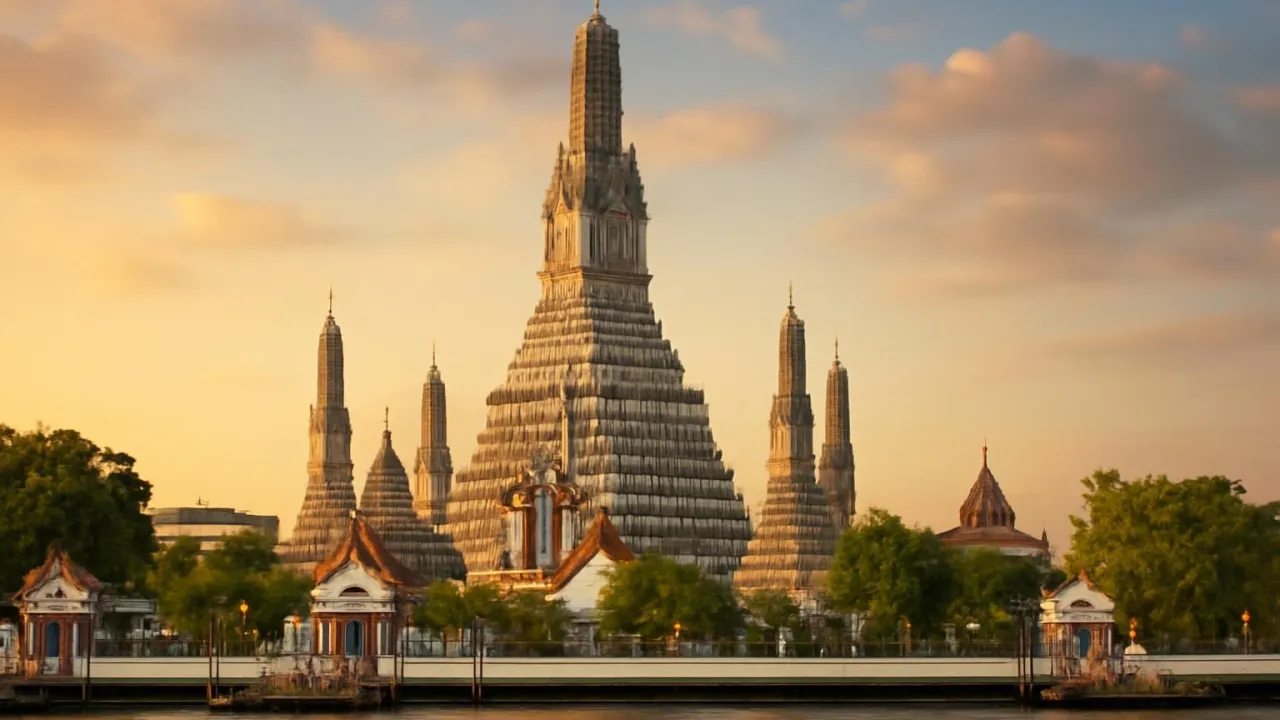
Wat Arun’s towers are decorated with old porcelain dishes and seashells!
✨ Word Sparks (Grade 2 Glossary)
Tap 🔊 to hear
tower
A tall, skinny building part
tile
A small, flat piece for covering
robe
A long, loose piece of clothing
🪝
Have you ever seen a tower shine like a sunrise rainbow?
1
Bright Colors in the Morning
Wat Arun stands beside a busy river, shining with tiny porcelain . When the sun rises, its glow with pink, blue, and green. People come early to see the sparkling colors.
2
Steep Steps and Tall Towers
The tallest has steep steps you can climb. From the top, you see boats moving on the river and the city all around. The steps are narrow, so people go up slowly and carefully.
3
A Peaceful Place for Prayers
Monks in orange walk quietly and ring bells. Visitors watch and listen to the gentle sounds in the air. The temple is a calm place to think and pray.
Wat Arun’s porcelain mosaics came from broken dishes on old trading ships!
✨ Word Sparks (Grade 3 Glossary)
Tap 🔊 to hear
prang
A tall temple tower
mosaic
A picture made from tiny pieces
guardian
A statue that protects a place
🪝
What if a temple could catch the morning sun and shine for miles?
1
A Temple That Glows at Dawn
Wat Arun rises beside the Chao Phraya River, sparkling with thousands of porcelain . At sunrise, its tall central glimmers with pink, blue, and gold reflections. The temple’s name means 'Temple of Dawn' because it shines brightest in the early morning. Many visitors come at sunrise to see the dazzling light.
2
Climbing the Steep Prang
The main , or tower, stands 259 feet tall and is built in the Khmer architectural style. Its steep steps challenge visitors, but the view from the top is worth the climb. From above, you can spot riverboats, city rooftops, and even other temples nearby. The prang’s shape helps it resist wind and rain, making it last for centuries.
3
Porcelain Mosaics and Mythical Creatures
Wat Arun’s towers are covered in colorful porcelain tiles and seashells arranged in beautiful patterns. Many tiles came from old Chinese trading ships that sailed to Thailand long ago. Statues of mythical creatures, like fierce yaksha , stand at the entrances to protect the temple. The sparkle in the sunlight, creating a magical effect.
4
A Place for Peace and Ceremony
Monks in bright orange robes chant, meditate, and ring bells during special ceremonies. The air fills with gentle sounds, creating a peaceful atmosphere for everyone. People light incense and offer flowers as they walk through the temple grounds. Wat Arun is not just a landmark—it is a living place for prayer and tradition.
Wat Arun’s main prang is as tall as a 25-story building!
✨ Word Sparks (Grade 4 Glossary)
Tap 🔊 to hear
stucco
A plaster used to cover walls
erosion
Wearing away by wind or water
mythical
From old stories or legends
🪝
Can you imagine a temple sparkling so brightly that it looks like a sunrise made of glass?
1
The Temple of Dawn’s Shimmering Towers
Wat Arun stands on the west bank of the Chao Phraya River, its towers glimmering with millions of porcelain fragments. The temple’s central prang rises 259 feet, built in the Khmer style with steep, narrow steps and ornate details. At sunrise, the mosaics reflect light in dazzling pinks, blues, and greens, making the entire temple appear to glow. The name 'Wat Arun' means 'Temple of Dawn,' and its beauty is most magical in the early morning.
2
Engineering Marvels of the Prang
The main prang’s shape is designed to withstand strong winds and heavy rain, using a wide base and tapering top for stability. Builders in the early 1800s used brick and as the core, then decorated the surface with colorful porcelain and seashells from Chinese trading ships. The steep steps are not just for looks—they help rainwater run off quickly, protecting the temple from . The four smaller corner prangs represent the wind gods, adding balance and symmetry to the structure.
3
Art, Myth, and Meaning
Wat Arun’s mosaics are arranged in floral patterns and shapes, telling stories from Buddhist and Thai legends. Statues of yaksha guardians and kinnari birds stand at the entrances, believed to protect the temple from harm. The temple is a place for Buddhist ceremonies, where monks chant, meditate, and ring bells that echo across the river. Visitors light incense and offer lotus flowers, joining in traditions that have lasted for centuries.
4
A Living Landmark in Bangkok
Wat Arun is both a historic monument and a living center of Thai culture, drawing visitors from around the world. Its riverside location once marked the gateway to Thailand’s old capital, making it a symbol of new beginnings. Today, the temple’s unique architecture and sparkling mosaics inspire artists, engineers, and travelers alike. Wat Arun remains a powerful reminder of how art, engineering, and faith can shine together.
1. How do the prang’s steep steps help the temple?
2. What do the mosaics on Wat Arun show?
🤯 Mind-Blowing Fact • Grade 5
Wat Arun’s tallest prang is built from over one million pieces of porcelain and seashells!
✨ Word Sparks (Grade 5 Glossary)
Tap 🔊 to hear
cosmology
Ideas about how the universe is arranged
resonates
Makes a deep, echoing sound
cardinal directions
North, south, east, and west
🪝
What if a temple’s walls could tell the story of a city’s sunrise, using only light and color?
1
Wat Arun: The Shining Gateway of Bangkok
As dawn breaks over the Chao Phraya River, Wat Arun’s central prang catches the first rays of sunlight, scattering them across millions of porcelain shards embedded in its surface. This Buddhist temple, constructed during the early Rattanakosin period in the early 19th century, stands as a symbol of new beginnings for Bangkok. Its riverside location once marked the entrance to the old capital, and today, the temple’s five soaring prangs create a breathtaking skyline that is recognized worldwide.
2
Architectural Ingenuity and Structural Design
The main prang rises 259 feet (79 meters) and is engineered in the Khmer style, with a broad base narrowing to a slender spire for maximum stability. The core is constructed from brick and stucco, while the exterior is covered in intricate mosaics made from broken porcelain, seashells, and colored glass—materials recycled from Chinese trading ships. The steep, narrow stairways are not only decorative but also serve a structural function, allowing rainwater to drain rapidly and preventing erosion of the temple’s foundations.
3
Symbolism, Myth, and Artistic Detail
Every detail of Wat Arun’s design carries symbolic meaning rooted in Buddhist and Thai folklore. The central prang represents Mount Meru—the mythical center of the universe—while the four smaller prangs symbolize the four and the wind gods. Mosaics arranged in floral and geometric patterns tell stories from Buddhist legends, and statues of yaksha guardians and kinnari birds stand sentinel at the entrances, believed to ward off evil spirits and protect the sacred space.
4
A Living Center of Culture and Faith
Wat Arun is not only an architectural marvel but also a vibrant center for religious ceremonies and Thai cultural traditions. Monks in saffron robes lead daily rituals, chanting and ringing bells whose sound across the river. Visitors participate by lighting incense, offering lotus flowers, and joining in annual festivals that celebrate the Thai New Year and Buddhist holidays. The temple’s enduring presence connects generations, blending ancient rituals with the rhythms of modern city life.
5
Global Impact and Enduring Inspiration
Recognized on UNESCO’s Tentative List, Wat Arun attracts millions of visitors each year and has inspired countless artists, architects, and engineers. Its innovative use of recycled materials and mastery of mosaic art have influenced temple design throughout Southeast Asia. Wat Arun’s resilience—surviving floods, wars, and centuries of change—demonstrates the power of thoughtful engineering and cultural pride. As the sun rises each day, the Temple of Dawn continues to shine as a beacon of creativity, faith, and community for the world.