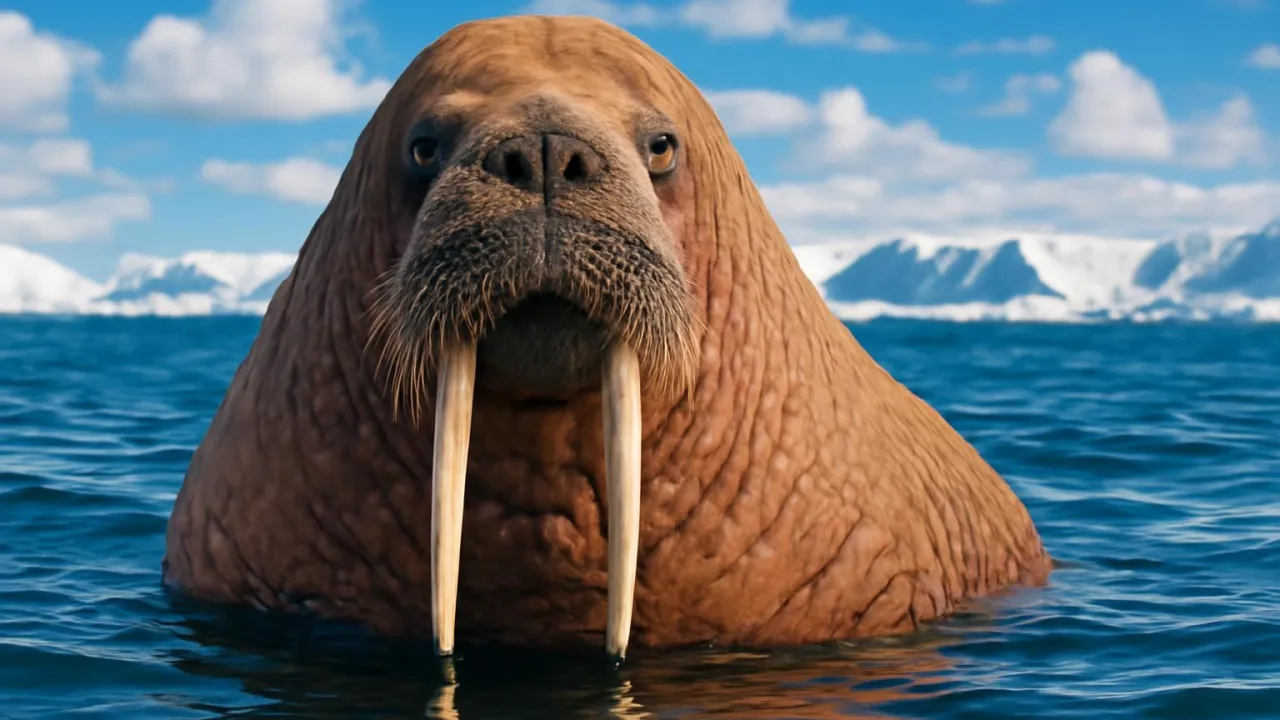
A walrus can weigh as much as a small car, up to 3,700 pounds!
✨ Word Sparks (Grade 2 Glossary)
Tap 🔊 to hear
Arctic
Very cold place near the North Pole
clams
Sea animals with hard shells that walruses eat
tusks
Long teeth walruses use to dig and pull things
🪝
Have you ever seen a walrus with huge tusks and whiskers in the cold sea?
1
Walrus Body and Tusks
Walruses have big that grow very long and strong. Their whiskers help them find food under the sea. They have thick skin to keep warm in icy water.
2
Where Walruses Live
Walruses live in the Ocean and nearby seas. They spend time on ice or beaches to rest. The cold water is their perfect home.
3
What Walruses Eat
Walruses eat , mussels, and other sea creatures. They use their to dig in the sand for food. They swallow their food whole after sucking out soft parts.
A walrus’s tusks can grow over 3 feet long and weigh up to 22 pounds each!
✨ Word Sparks (Grade 3 Glossary)
Tap 🔊 to hear
blubber
Thick fat that keeps animals warm in cold water
benthic
Living on the ocean floor
predator
An animal that hunts other animals for food
🪝
Did you know walruses use their tusks to haul themselves out of icy water?
1
Walrus Adaptations
Walruses have thick skin and that help them survive cold Arctic waters. Their long tusks serve many purposes, such as defense and hauling out of water. Their sensitive whiskers detect prey hidden under the sand.
2
Habitat and Behavior
Walruses live in the Arctic Ocean and nearby seas where ice floes provide resting spots. They gather in large groups called herds to protect themselves from . These mammals use their flippers to swim gracefully in cold water.
3
Diet and Feeding
Walruses feed mainly on invertebrates like clams and mussels found on the ocean floor. They use suction to pull soft parts from shells after digging with their tusks. This feeding method helps them get enough nutrients in a harsh environment.
4
Survival Challenges
Walruses face threats from like polar bears and killer whales. Climate change causes sea ice loss, which affects their resting and breeding areas. Their adaptations help, but these changes make survival more difficult.
Walruses can weigh up to 3,700 pounds and use tusks to pull themselves out of water onto ice.
✨ Word Sparks (Grade 4 Glossary)
Tap 🔊 to hear
blubber
Thick fat that keeps animals warm in cold water
ecosystem
Community of living and nonliving things in a place
conservation
Protecting animals and their homes from harm
🪝
How do walruses use their tusks to survive in the harsh Arctic environment?
1
Physical Adaptations and Survival
Walruses have thick and skin that protect them from freezing Arctic waters, enabling survival. Their tusks serve multiple functions, including defense against predators and helping haul their heavy bodies onto ice. Sensitive whiskers detect prey buried in the ocean floor’s sand, aiding in successful feeding. These adaptations are critical for living where temperatures often drop below freezing.
2
Role in the Arctic Ecosystem
Walruses play an important role as benthic predators, controlling populations of clams and other invertebrates on the ocean floor. They are prey for polar bears and killer whales, which helps balance the food web. Walruses also contribute to nutrient cycling by stirring up sediment while feeding, which supports other marine life. Their presence indicates a healthy Arctic marine .
3
Habitat and Geographic Range
Walruses inhabit the Arctic Ocean and surrounding seas, including areas near Alaska, Canada, Russia, and Greenland. They rely on sea ice platforms for resting, breeding, and protection from predators. Climate change threatens these ice habitats, causing shifts in walrus distribution and behavior. Scientists monitor walrus populations to understand environmental impacts.
4
Human Impact and Conservation
Humans have hunted walruses for their ivory tusks, meat, and for centuries, affecting populations historically. Today, efforts focus on protecting habitat and reducing climate change effects. International agreements regulate hunting to ensure sustainable populations. Preserving walruses helps maintain Arctic biodiversity and indigenous cultural traditions.
Walruses can dive over 230 feet deep and hold their breath for 30 minutes while hunting food.
✨ Word Sparks (Grade 5 Glossary)
Tap 🔊 to hear
pinnipeds
Sea mammals like seals, sea lions, and walruses
vibrissae
Whiskers with nerves that help find food underwater
blubber
Thick fat that keeps animals warm in cold water
🪝
What fascinating biological features allow walruses to thrive in the Arctic’s freezing waters?
1
Taxonomy and Scientific Classification
Walruses belong to the family Odobenidae and are scientifically named Odobenus rosmarus. They are , a group that includes seals and sea lions, adapted for aquatic life. Their closest relatives are eared seals, but walruses are unique due to their prominent tusks and social behavior. These mammals evolved specialized traits to survive in Arctic marine environments.
2
Physiological Mechanics and Adaptations
Walruses have a thick layer of up to 6 inches thick that insulates against freezing temperatures. Their large tusks, which can grow over 3 feet long and weigh up to 22 pounds, are used for defense, dominance displays, and hauling onto ice. Their (whiskers) contain thousands of nerve endings, allowing precise detection of prey buried in sediment. Their circulatory system can regulate blood flow to conserve heat during deep dives.
3
Ecological Role and Conservation History
As benthic predators, walruses influence Arctic marine ecosystems by controlling populations of mollusks and other invertebrates. Historically, indigenous peoples hunted walruses sustainably for meat, ivory, and oil, playing a vital cultural role. Commercial hunting in the 19th and 20th centuries severely reduced populations, prompting international protections. Modern conservation efforts focus on habitat preservation and climate change mitigation.
4
Quantitative Comparisons and Behavior
Adult male walruses can weigh up to 3,700 pounds and reach lengths of 12 feet, making them among the largest . They can dive over 230 feet deep and hold their breath for up to 30 minutes while searching for food. Walruses use their tusks to pull themselves onto ice floes, exerting great force to haul their massive bodies. Their social herds can contain hundreds of individuals, communicating through vocalizations and body language.
5
Current Challenges and Scientific Monitoring
Climate change is rapidly reducing Arctic sea ice, threatening walrus resting and breeding habitats. Scientists use satellite tracking and aerial surveys to monitor population health and migration patterns. Increased human activity in the Arctic, such as shipping and oil exploration, adds stress to walrus environments. Conservation strategies include international agreements and indigenous community involvement to ensure walrus survival.