💎 EARTH SCIENCE
🪨 Orbital Solar Geometry • Tropics of Cancer & Capricorn (23.5°N/S)
VA Science SOL 1.6, 2.6, 3.7, 4.4, 4.7, 5.8 (Weather, Rocks, Oceans & Earth Systems)
Summer & Winter Solstices
Longest Daylight and Longest Starry Night
Grade 4 • Expanding • 198 words
🌍 Earth Science TypeAstronomy, Meteorology & Earth-Sun Systems
🌋 Where It FormsOccurs Twice Yearly Around June 20–21 & December 21–22
💎 Key PropertiesMaximum 23.5° solar declination north or south of Earth's equator
⚡ Planet Earth SparkGives one hemisphere its longest sunlit day while the opposite hemisphere gets its longest night
🤯 Mind-Blowing Fact • Grade 1
At the North Pole on the June solstice, the Sun never sets at all—it circles the sky for twenty-four straight hours!
✨ Word Sparks (Grade 1 Glossary)
Tap 🔊 to hear
Solstice
Longest day or longest night of year
Daylight
Bright natural light while Sun is up
Shadow
Dark shape made when an object blocks light
🪝
Have you noticed how summer evenings stay bright past dinner while winter nights start early?
1
Super Long Summer Day
Run outside in late June! The yellow Sun climbs super high in the sky. June brings the longest of the whole year!
2
Cozy Long Winter Night
Bundle up in late December! The Sun stays low above the trees. December brings the shortest day and longest starry night.
3
Two Special Turning Days
We call these two special days . After December's solstice, each day gains a tiny bit more sunshine again!
1. In the northern half of Earth, when is the longest sunlit day of the year?
2. How high does the noon Sun climb on the December winter solstice?
🤯 Mind-Blowing Fact • Grade 2
The word 'solstice' comes from two Latin words meaning 'Sun stands still,' because for a few days the noon Sun seems to pause at its highest or lowest sky spot before turning back!
✨ Word Sparks (Grade 2 Glossary)
Tap 🔊 to hear
Hemisphere
Half of round planet Earth, north or south
Tilt
A leaning slant instead of straight up
Horizon
Line where sky seems to meet ground
🪝
Why is your noon shadow super short in June and super stretchy in December?
1
Watching Shadows Change
Stand on a sunny sidewalk at lunchtime in June and peek down at your feet—your shadow looks tiny and squished! Try the exact same spot at lunchtime in December, and your shadow stretches long across the pavement.
2
Tilted Toward or Away
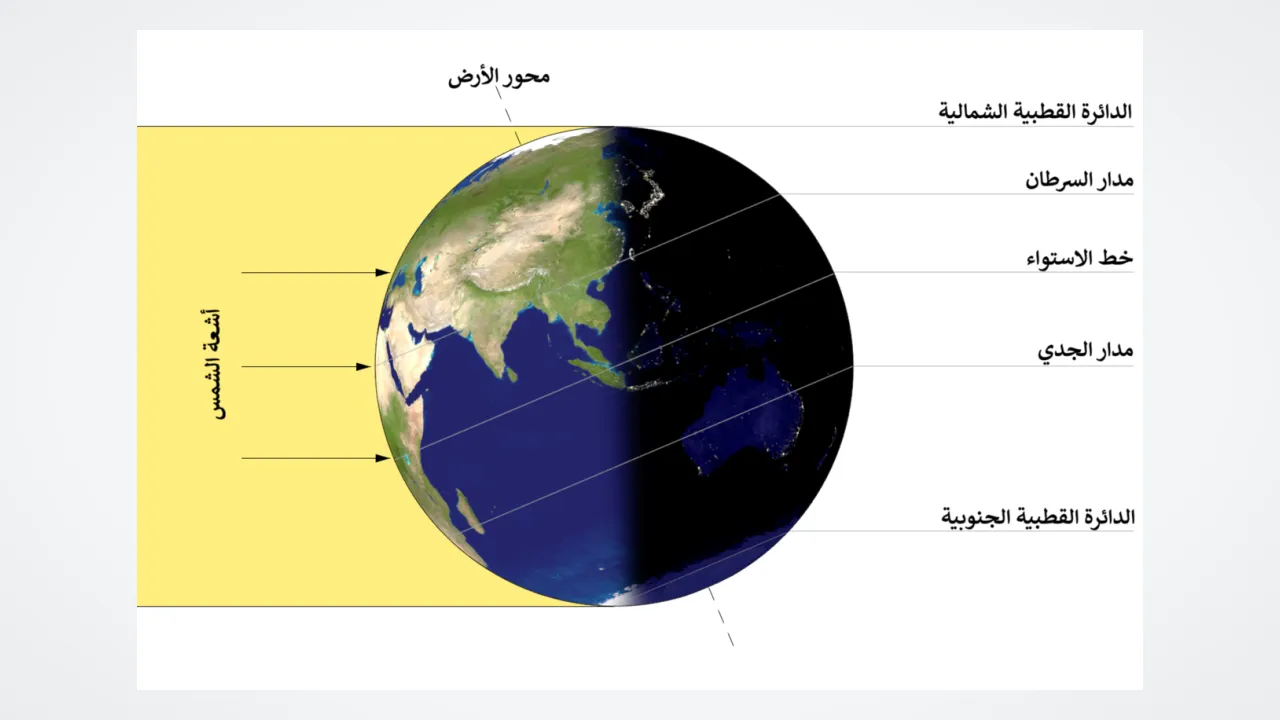
This happens because planet Earth leans slightly as it travels around the Sun. Around June 21, the Northern leans most toward the Sun, creating the summer solstice and our longest day. Around December 21, our half leans farthest away, bringing the winter solstice and our longest night.
3
Opposite Halves of Earth
Meanwhile, kids in Australia and South America experience the exact opposite! Our June summer solstice is their cozy winter solstice.
1. Why is your noon shadow shortest on the summer solstice?
2. While Virginia celebrates the June summer solstice, what season is starting in Australia?
🤯 Mind-Blowing Fact • Grade 3
In Fairbanks, Alaska, people celebrate the June summer solstice by playing an outdoor 'Midnight Sun Baseball Game' starting at 10:30 PM with zero stadium lights needed!
✨ Word Sparks (Grade 3 Glossary)
Tap 🔊 to hear
Tropic of Cancer
Northernmost latitude receiving direct overhead noon Sun
Arctic Circle
Northern polar line with summer midnight sun
Monument
A lasting stone structure built to mark something
🪝
Why did ancient builders line up giant stone circles like Stonehenge with the sunrise on one exact June morning?
1
Sky Arcs Across the Year
Watch where the Sun rises over your neighborhood trees from winter to summer, and you will spot a slow march northward along the horizon! Each day through spring, the Sun rises earlier, climbs higher at noon, and sets later—until the June 20 or 21 summer solstice.
2
Tropic of Cancer and Tropic of Capricorn
Because Earth's axis tilts 23.5 degrees, direct overhead noon sunlight reaches 23.5 degrees north—a map line called the —on the June solstice. Six months later, around December 21, overhead noon sunlight reaches 23.5 degrees south along the Tropic of Capricorn!
3
Midnight Sun and Polar Night
Above the in June, hikers can read books outdoors at midnight without a flashlight! In December, Antarctica gets twenty-four-hour sunlight while the Arctic enters starry polar night.
4
Ancient Stone Calendars
Thousands of years ago, farmers watched solstice sunrises at like England's Stonehenge and New Mexico's Chaco Canyon to track planting and winter food stores.
1. Over which map line does the noon Sun shine straight overhead on the June solstice?
2. Why did ancient communities build stone alignments pointing toward solstice sunrises?
🤯 Mind-Blowing Fact • Grade 4
More than 2,200 years ago, Greek scholar Eratosthenes measured the noon solstice shadow in Alexandria while sunlight shone straight down a deep well in Syene—calculating Earth's round circumference with astonishing accuracy!
✨ Word Sparks (Grade 4 Glossary)
Tap 🔊 to hear
Seasonal Lag
Delay between peak sunlight and hottest temperatures
Insolation
Incoming solar energy reaching Earth's surface
Circumference
Total distance all the way around a sphere
🪝
If the June solstice has the most sunlight, why do the hottest summer afternoons usually wait until July or August?
1
Geometry of the 23.5-Degree Lean
As Earth orbits the Sun at nearly 107,000 kilometers per hour, its rotational axis keeps pointing steadily toward Polaris, tilted 23.5 degrees from upright. Around June 20 or 21, the North Pole tips at its maximum angle toward the Sun, giving Virginia roughly fourteen hours and forty-five minutes of daylight while steep solar rays pack concentrated energy onto every square meter of ground.
2
December's Slanted Sunlight
Half an orbit later, around December 21 or 22, Earth reaches the opposite side of the Sun and the North Pole tips 23.5 degrees away. Daylight in Virginia shrinks to about nine hours and thirty minutes, and low-angle sunbeams spread thinly across the landscape like a flashlight tilted sideways across a floor.
3
Why July Beats June in Heat: Seasonal Lag
Here is a neat weather puzzle: if June 21 delivers peak solar energy in the Northern Hemisphere, why is late July hotter? Just as a pot of cold water on a stove takes several minutes to boil after you turn the burner to high, Earth's vast oceans and continents take weeks to warm up in summer—and weeks to cool down after December's solstice!
4
Distance Surprise: Closer in January!
In fact, Earth's slightly oval orbit actually brings us closest to the Sun in early January! That proves axial tilt—not distance—drives solstices and seasonal weather.
1. Why are July and August usually hotter than June 21 in the Northern Hemisphere?
2. When is planet Earth actually closest to the Sun in its slightly oval orbit?
🤯 Mind-Blowing Fact • Grade 5
Because Earth moves slightly slower at its July aphelion when farthest from the Sun, Northern Hemisphere astronomical spring and summer actually last about four and a half days longer than autumn and winter!
✨ Word Sparks (Grade 5 Glossary)
Tap 🔊 to hear
Ecliptic
Apparent yearly sky path of the Sun
Perihelion
Point in orbit closest to the Sun
Analemma
Figure-eight pattern of Sun photographed all year
🪝
Why doesn't the earliest sunset of winter happen on the exact same December day as the winter solstice?
1
Celestial Mechanics of the Ecliptic
Trace the Sun's apparent path against background stars across a year—a great circle astronomers call the —and you find it tilted 23.44 degrees relative to Earth's celestial equator. Solstices mark the two precise orbital instants when solar declination reaches its northern extreme (+23.44° at the Tropic of Cancer in June) and southern extreme (-23.44° at the Tropic of Capricorn in December).
2
Cosine Law of Solar Flux and Day Length
Two geometric factors combine at each solstice: photoperiod (hours above the horizon) and solar elevation angle. At 38°N latitude in central Virginia, noon solar altitude climbs to 75.4 degrees on the June solstice—delivering intense energy per square meter—whereas on the December solstice it peaks at just 28.6 degrees, forcing sunlight through a longer, scattering atmospheric path while spreading energy thinly.
3
Polar Circles and Atmospheric Refraction
North of 66.56°N (the Arctic Circle) and south of 66.56°S (the Antarctic Circle), the tilt angle equals or exceeds co-latitude, producing continuous 24-hour summer daylight. Because Earth's atmosphere bends light slightly upward at the horizon and the solar disk spans half a degree, midnight sun actually extends slightly equatorward of the geometric polar circle!
4
The Equation of Time and the Analemma
Photograph the Sun at the exact same clock minute every week for a year, and it traces a graceful figure-eight in the sky called an . Because Earth speeds up near early-January (147.1 million km) and slows near early-July aphelion (152.1 million km), solar noon drifts slightly against steady 24-hour wristwatches—causing northern mid-latitudes to see their earliest sunset around December 7, two weeks before the shortest total day on December 21!
5
Eratosthenes to Modern Climate Satellites
Around 240 BCE, Eratosthenes used June solstice geometry between Syene (on the Tropic of Cancer) and Alexandria (7.2° farther north) to multiply 7.2/360 into a remarkably accurate planetary circumference. Today, CERES radiometers on polar-orbiting satellites measure solstice insolation budgets across every latitude.