1. What two forces change older rocks into metamorphic rocks underground?
2. What happens if a rock gets so hot that it melts completely into liquid?
🤯 Mind-Blowing Fact • Grade 2
The Lincoln Memorial statue in Washington, D.C., was carved from 28 blocks of bright white Georgia marble—a metamorphic rock!
✨ Word Sparks (Grade 2 Glossary)
Tap 🔊 to hear
quartzite
Super-hard metamorphic rock made from sandstone
gneiss
Banded metamorphic rock pronounced just like nice
transform
To change completely in look or structure
🪝
How does baking cookie dough help explain how metamorphic rocks form inside Earth?
1
Baking Without Melting
Think about sliding soft chocolate-chip dough into a warm oven: heat rearranges the ingredients into a firm cookie without melting the baking pan! Deep inside Earth's crust, fierce heat and mountain-sized weight bake and squeeze older rocks into tougher metamorphic rocks.
2
Parent Rocks and New Twins
Every metamorphic rock starts out as an earlier 'parent rock'—igneous, sedimentary, or even another metamorphic stone! Soft shale presses into flat slate, gritty sandstone fuses into super-hard , and speckled granite twists into zebra-striped .
3
Wavy Stripes in Stone
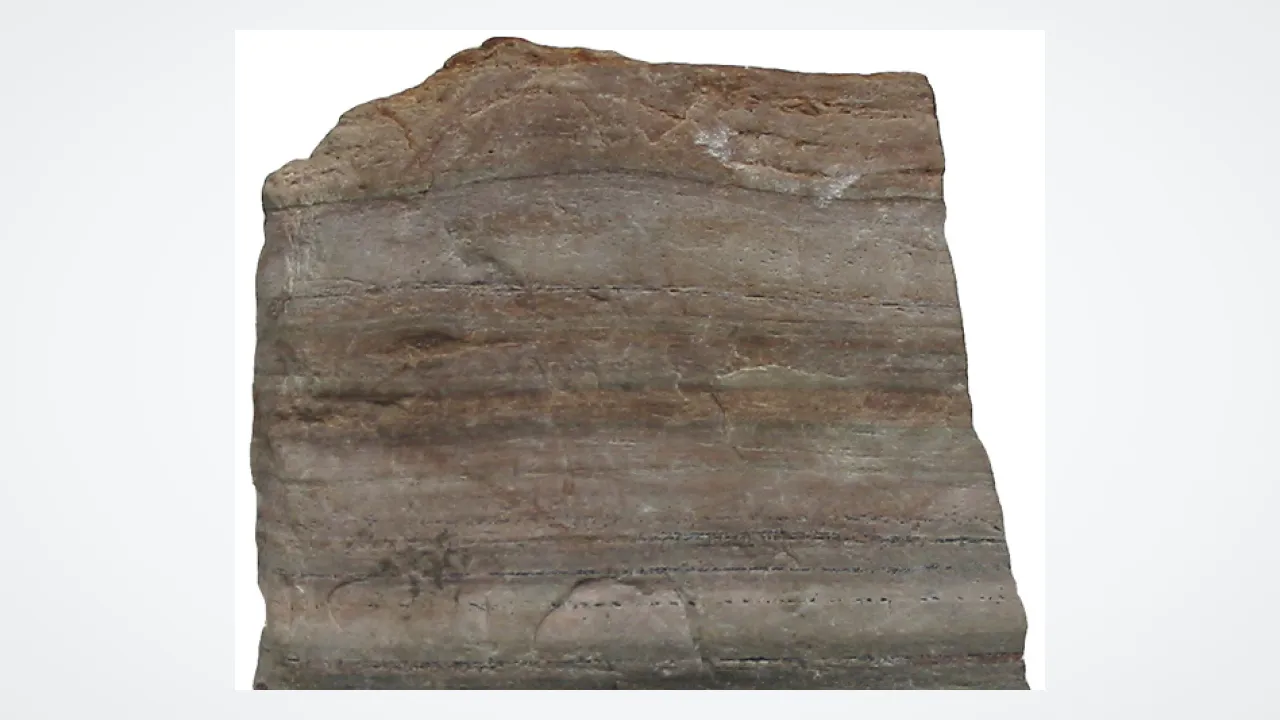
When rising mountains push inward from two sides like a giant vise, dark and light mineral crystals line up in neat wavy ribbons you can trace right with your finger!
1. Which super-hard metamorphic rock forms when sandstone is heated and squeezed?
2. How do you pronounce the striped metamorphic rock spelled G-N-E-I-S-S?
🤯 Mind-Blowing Fact • Grade 3
Red gemstone garnets often grow like sparkling twelve-sided soccer balls right inside glittering metamorphic mica schist!
✨ Word Sparks (Grade 3 Glossary)
Tap 🔊 to hear
foliated
Having minerals lined up in parallel layers
schist
Glittery foliated rock rich in mica flakes
recrystallize
Grow brand-new mineral crystals while staying solid
🪝
Why do some metamorphic rocks peel into flat sheets or show zebra stripes while others sparkle evenly?
1
Colliding Continents at Work
Imagine two giant continents crashing together in slow motion over millions of years! Miles beneath rising mountain ranges like the ancient Appalachians, buried rocks endure crushing pressure and temperatures hot enough to make solid minerals bend like warm taffy and grow brand-new crystals.
2
Foliated: Lined Up Like Leaves
When unequal mountain pressure squeezes harder from two sides, flat mica flakes and dark hornblende needles rotate into parallel sheets called foliation—from the Latin word for leaf! Smooth slate, glittery mica , and light-and-dark banded gneiss are all classic metamorphic rocks.
3
Non-Foliated: Sparkling All Over
Rocks built from just one main rounded mineral—like calcite in limestone or quartz in sandstone—do not form stripes when squeezed. Instead, they into non- white marble and tough quartzite with even, interlocking crystals.
4
Buckingham Slate in Virginia
In central Virginia's Buckingham County, skilled quarry workers have split durable, waterproof dark metamorphic slate for historic courthouse, museum, and university roofs since the 1700s!
1. What causes 'foliation' stripes or sheets inside slate, schist, and gneiss?
2. Why are marble and quartzite classified as non-foliated metamorphic rocks?
🤯 Mind-Blowing Fact • Grade 4
Canada's Acasta Gneiss in the Northwest Territories is Earth's oldest known intact bedrock outcrop—metamorphosed more than 4.0 billion years ago!
✨ Word Sparks (Grade 4 Glossary)
Tap 🔊 to hear
protolith
Original parent rock before metamorphic change
soapstone
Soft, heat-resistant talc-rich metamorphic rock
phyllite
Silky-sheen foliated rock between slate and schist
🪝
How can one humble bed of muddy shale morph through four distinct metamorphic rocks as mountain heat rises?
1
Climbing the Metamorphic Ladder
Follow an ancient ocean-floor bed of gray mudstone—shale—dragged progressively deeper beneath colliding continental plates! At moderate depth and heat, clay minerals flatten into dull, smooth-splitting roof slate. Push deeper and hotter, and microscopic mica grains give wavy a silky, pearly sheen. Deeper still, shiny visible muscovite flakes and deep-red garnet crystals sparkle inside schist—until finally, near 700°C, dark and pale minerals separate into bold zebra ribbons of tough gneiss!
2
Regional vs. Contact Metamorphism
Geologists study two major settings where rocks transform. Regional metamorphism squeezes and bakes thousands of square miles beneath colliding mountain belts like Virginia's Piedmont and Blue Ridge provinces. Contact metamorphism happens on a smaller local scale when rising molten magma pushes into cooler underground rock, baking an outer halo—much like toasting bread beside a hot cast-iron skillet—without strong sideways mountain pressure.
3
Virginia Soapstone and Quartzite Ridges
Winding across central Virginia's Piedmont is a famous belt of Alberene —a smooth, heat-resistant metamorphic rock rich in talc quarried for science laboratory countertops and cozy woodstoves! Meanwhile, super-hard Antietam and Erwin quartzites resist rain erosion so well that they hold up steep Blue Ridge summits.
4
Why Fossils Usually Disappear
Because intense underground squeezing and crystal regrowth stretch or erase delicate ancient shells, spotting even a flattened trilobite shadow inside low-grade slate is an exciting, rare discovery!
1. Which sequence shows shale changing from lowest to highest heat and pressure?
2. How does contact metamorphism differ from regional metamorphism?
🤯 Mind-Blowing Fact • Grade 5
Vibrant blue kyanite crystals mined heavily in Virginia's Willis Mountain form only under intense deep-crust pressure and are prized worldwide to line high-temperature porcelain spark plugs and kiln bricks!
✨ Word Sparks (Grade 5 Glossary)
Tap 🔊 to hear
kyanite
Blue bladed mineral formed under high pressure
migmatite
Swirled rock caught partway toward melting
lattice
Repeating three-dimensional atomic pattern in crystals
🪝
How do geologists read index minerals inside metamorphic rocks like thermometers and pressure gauges from vanished mountain roots?
1
Solid-State Atomic Rearrangement
Fifteen miles beneath a Himalayan-scale continental collision zone, overburden pressures exceed 8,000 atmospheres—eight kilobars—while temperatures climb between 200°C and 800°C. Remarkably, those buried rocks remain completely solid! Instead of melting into liquid magma, heightened thermal vibration and tiny films of chemically active hot water allow atoms of silicon, aluminum, iron, and magnesium to break unstable surface-mineral bonds and migrate micron by micron into denser, stronger crystal .
2
Index Minerals as Geologic Thermometers
Mapping the Scottish Highlands in the 1890s, pioneering geologist George Barrow realized that specific 'index minerals' crystallize only when exact temperature-and-pressure thresholds are crossed. Pale-green chlorite signals low-grade conditions around 250°C; brown biotite mica and twelve-sided red garnet mark medium grades; sky-blue bladed forms under intense deep-crust pressure; and fibrous sillimanite reveals extreme temperatures above 650°C—letting modern petrologists calculate how many kilometers deep a Virginia Piedmont outcrop once lay!
3
Subduction Blueschist and Meteorite Shock
Unusual tectonic settings forge unmistakable metamorphic signatures. Cold ocean-floor basalt dragged rapidly down deep-sea subduction trenches experiences crushing kilobar pressures at relatively cool temperatures, growing rare indigo glaucophane in blueschist and jewel-like green-and-red eclogite. Conversely, when a hypervelocity asteroid or comet slams into Earth—as occurred 35 million years ago beneath Virginia's lower Chesapeake Bay—split-second shock metamorphism stamps quartz grains with microscopic planar fractures!
4
Migmatites Right at the Melting Threshold
Push banded gneiss past 750°C in the presence of trace water, and silica-rich quartz and feldspar ribbons begin partially melting into felsic magma while iron-rich dark bands remain solid, swirling together into dramatic 'mixed rock' called right at the boundary linking metamorphic and igneous geology.
5
Exhumation to Sunlit River Gorges
Over tens of millions of years, buoyant mountain uplift paired with relentless river erosion strips away miles of overlying peaks, finally bringing deep ancient mountain roots—like the folded schists and gneisses of Mather Gorge at Great Falls along the Potomac River—into sunlit view.