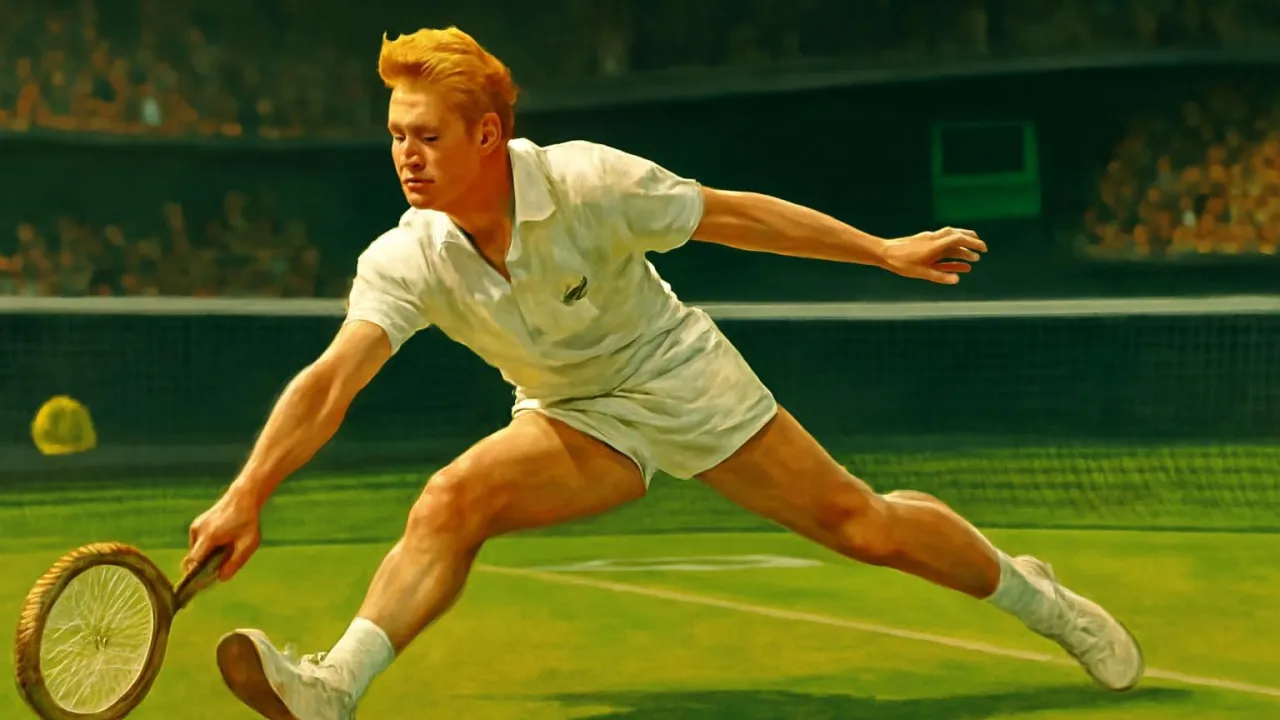
Stefan won six Grand Slam singles titles in his career!
✨ Word Sparks (Grade 2 Glossary)
Tap 🔊 to hear
trophy
A prize for winning a contest
serve
The first hit to start a point
sportsmanship
Being fair and kind in sports
🪝
What if you could win by racing to the net every time?
1
A Young Tennis Dreamer
Stefan loved tennis as a boy and practiced every day after school. He dreamed about playing on big courts and winning trophies. His favorite thing was hitting the ball fast and running to the net.
2
The Serve-and-Volley Star
Stefan learned a special style called -and-volley, where he would serve and rush forward. He practiced his quick feet and sharp eyes to win points at the net. This made him different from other players.
3
A Champion with Heart
Stefan won many big tournaments, including Wimbledon and the US Open. He was known for being fair and friendly to everyone. Even when he lost, he always showed good .
2. What did Stefan always show, even when he lost?
🤯 Mind-Blowing Fact • Grade 3
Stefan is one of only two men to win both the singles and doubles titles at Wimbledon in the Open Era!
✨ Word Sparks (Grade 3 Glossary)
Tap 🔊 to hear
footwork
How you move your feet in sports
reflexes
How fast you react to things
legacy
What people remember you for
🪝
How did Stefan Edberg’s fast moves change tennis forever?
1
Early Curiosity and Practice
As a young boy in Sweden, Stefan Edberg was curious about how tennis champions played. He practiced for hours, learning to hit the ball with both power and control. His favorite part was rushing to the net, where he could win points quickly. Stefan’s dedication helped him improve every single day.
2
Mastering the Serve-and-Volley
Stefan became famous for his serve-and-volley technique, a style where players attack the net right after serving. He moved with lightning speed, using sharp and quick to surprise his opponents. This style required confidence and perfect timing on every point. Many fans admired his graceful movements on the court.
3
Grand Slam Triumphs
Stefan’s hard work paid off when he won six Grand Slam singles titles, including Wimbledon and the US Open. He also won an Olympic gold medal as a teenager, showing his talent on the world stage. Each victory was earned through smart strategies and steady nerves. Stefan’s matches were exciting to watch because of his daring style.
4
Sportsmanship and Legacy
Stefan was respected not just for winning, but for his kindness and fairness. He always shook hands and treated others with respect, win or lose. His sportsmanship became a model for young athletes everywhere. Today, Stefan is remembered as a tennis legend who inspired players to play with both skill and heart.
Stefan Edberg is the only player to win the junior Grand Slam and six major singles titles in the Open Era!
✨ Word Sparks (Grade 4 Glossary)
Tap 🔊 to hear
agility
Moving quickly and easily
Open Era
Modern time when all pros compete
volley
Hitting the ball before it bounces
🪝
What made Stefan Edberg’s serve-and-volley game so hard to beat on grass courts?
1
Swedish Roots and Early Passion
Growing up in a small Swedish town, Stefan Edberg was fascinated by the speed and skill of professional tennis. He spent countless hours practicing his strokes, especially focusing on how to rush the net after a powerful serve. By his teenage years, Stefan’s dedication and clever footwork made him a standout junior player. His early success included winning the junior Grand Slam, a rare accomplishment for any young athlete.
2
Perfecting the Serve-and-Volley Technique
Stefan’s signature serve-and- style relied on explosive movement, precise timing, and creative shot-making. On fast grass courts, he would serve wide and immediately charge forward, putting pressure on his opponents. This aggressive approach required tremendous and split-second reflexes to intercept volleys at the net. Few players could match Stefan’s ability to turn defense into offense so quickly.
3
Historic Grand Slam and Olympic Achievements
During the 1980s and 1990s, Stefan captured six Grand Slam singles titles, including two at Wimbledon and two at the US Open. He also earned a gold medal at the 1984 Olympics, representing Sweden with pride and skill. Each championship run showcased his cool determination and strategic thinking under pressure. His doubles success at Wimbledon made him a rare all-around champion in the .
4
A Lasting Legacy of Sportsmanship
Beyond his trophies, Stefan Edberg was celebrated for his exceptional sportsmanship and respect for the game. He always greeted opponents with a handshake and a smile, win or lose, setting an example for players worldwide. His fair play earned him the ATP Sportsmanship Award five times, more than any other player. Today, Stefan’s legacy inspires young athletes to combine skill, courage, and kindness on and off the court.
Stefan Edberg is the only male player to win the junior Grand Slam and six major singles titles in the Open Era—plus five ATP Sportsmanship Awards!
✨ Word Sparks (Grade 5 Glossary)
Tap 🔊 to hear
baseline
The back line of a tennis court
versatility
Being good at many different things
humility
Staying modest, even when you win
🪝
How did Stefan Edberg’s graceful net play and sportsmanship redefine what it means to be a tennis champion?
1
A Childhood Fueled by Curiosity and Discipline
Imagine a young boy in Västervik, Sweden, watching tennis matches on television and dreaming of stepping onto the world’s biggest courts. Stefan Edberg’s fascination with the game began early, and he quickly became known for his relentless practice sessions on local courts. By age sixteen, he achieved a feat never matched before or since: winning the junior Grand Slam, which means capturing all four major junior titles in a single year. This early dominance reflected not only his natural athleticism but also his remarkable discipline and focus.
2
Mastering the Art of Serve-and-Volley
Unlike most players who preferred to stay at the , Stefan perfected the serve-and-volley style, which demands split-second decision-making and extraordinary agility. After delivering a powerful serve, he would sprint toward the net, ready to intercept the ball with a crisp volley. His footwork was so precise that he seemed to glide across the grass at Wimbledon, turning defense into offense with every point. This aggressive, elegant approach made him one of the most feared—and respected—opponents of his era.
3
Grand Slam Triumphs and Olympic Glory
Stefan’s professional career was marked by six Grand Slam singles titles: two each at Wimbledon, the US Open, and the Australian Open. He also claimed three Grand Slam doubles titles, making him one of the few players to excel in both singles and doubles at the highest level. In 1984, he won an Olympic gold medal in Los Angeles, showcasing his talent on an international stage. Over his career, Stefan amassed 41 singles titles and 18 doubles titles, demonstrating his consistency and across different surfaces.
4
The Embodiment of Sportsmanship and Fair Play
Throughout his career, Stefan Edberg was admired not only for his technical brilliance but also for his unwavering commitment to sportsmanship. He won the ATP Sportsmanship Award a record five times, always treating his opponents and officials with respect, regardless of the outcome. His calm demeanor under pressure and his willingness to acknowledge great play from others set a new standard for professional conduct in tennis. Young players around the world looked up to him as a role model for how to win with and lose with dignity.
5
Legacy and Inspiration for Future Generations
Stefan Edberg’s impact on tennis extends far beyond his impressive trophy collection. He helped revive the art of serve-and-volley in an era dominated by power, inspiring countless players to develop all-court skills. After retiring in 1996, he continued to shape the sport as a coach, including guiding Roger Federer to Grand Slam victories. Today, Stefan’s legacy is defined by the rare combination of athletic excellence, strategic intelligence, and genuine kindness—a reminder that true champions lift others up, both on and off the court.