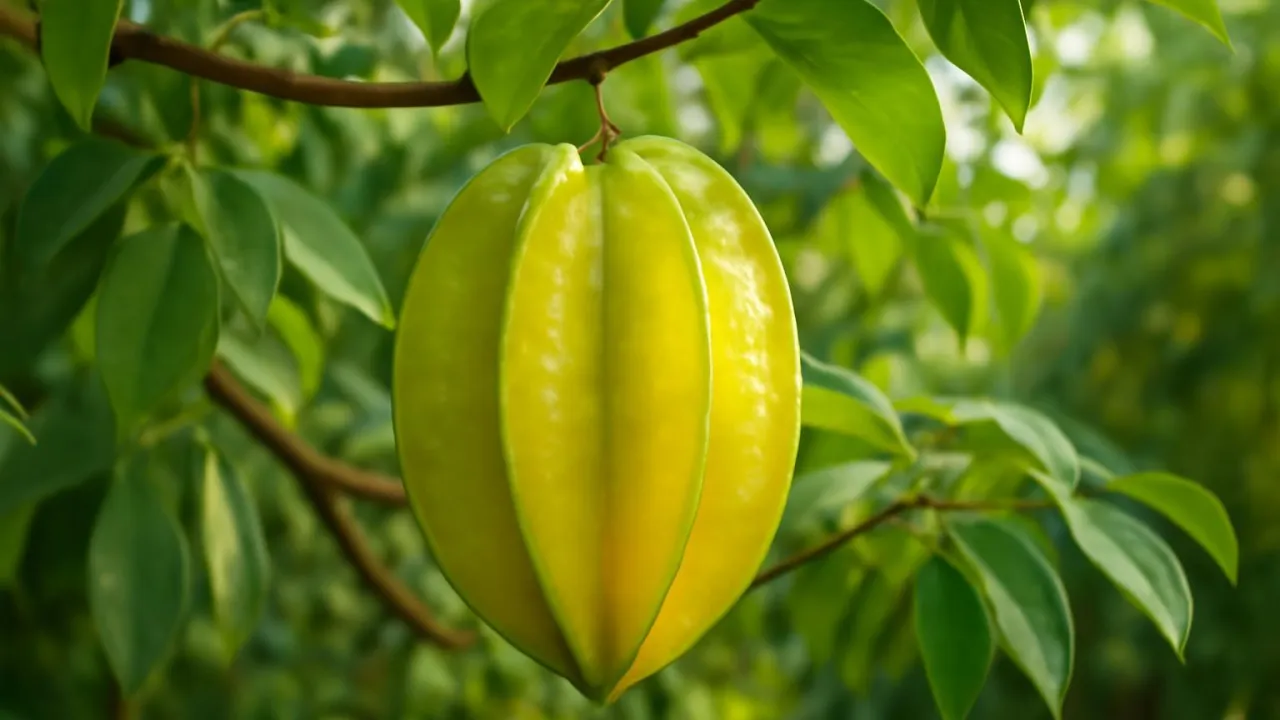
Starfruit’s star shape helps animals find and eat the fruit, spreading seeds far away!
✨ Word Sparks (Grade 3 Glossary)
Tap 🔊 to hear
seed dispersal
How seeds spread to grow new plants
adaptation
A change that helps living things survive
pollinators
Animals that help plants make seeds
🪝
Did you know starfruit’s shape helps it stand out in the forest?
1
Star-Shaped Slices
Starfruit has five ridges that form a star shape when sliced. This unique shape helps animals spot the fruit easily. The bright yellow color signals ripeness to and seed dispersers.
2
Tropical Habitat
Starfruit trees grow in tropical climates where sunlight is strong. These trees adapt to warm temperatures and need plenty of water. Their leaves help protect the fruit from too much sun.
3
Fruit and Seed Role
The fruit provides nutrients to animals that eat it and spread seeds. This process is called and helps the tree reproduce. Starfruit’s juicy texture attracts birds and mammals.
4
Adaptations for Survival
The star shape may help the fruit resist damage from falling or animals biting. Its waxy skin protects it from pests and diseases. These increase the fruit’s chance to grow new trees.
2. What does seed dispersal help the starfruit tree do?
🤯 Mind-Blowing Fact • Grade 4
Starfruit’s shape and color help it attract animals that spread its seeds across tropical forests.
✨ Word Sparks (Grade 4 Glossary)
Tap 🔊 to hear
symbiotic
A helpful relationship between living things
ecosystem
A community of plants and animals living together
cultivation
Growing plants for food or use
🪝
How does starfruit’s shape help it survive in tropical ecosystems?
1
Unique Star Shape and Color
Starfruit’s five ridges create a star shape that attracts animals and humans alike. This shape, combined with its bright yellow color when ripe, signals that the fruit is ready to eat. The waxy skin protects the fruit from pests and water loss in tropical climates. Its shiny surface also helps reflect sunlight, preventing overheating in hot environments.
2
Role in Tropical Food Webs
Starfruit provides food for many animals such as birds, bats, and insects that live in tropical forests. These animals help disperse the seeds after eating the fruit, aiding the tree’s reproduction. This relationship benefits both the fruit and the animals. Without these animals, starfruit trees would struggle to spread and grow new plants.
3
Growing Conditions and Distribution
Starfruit trees thrive in warm, humid tropical regions like Southeast Asia and parts of the Americas. They require full sun exposure and regular watering to produce healthy fruit. Human has spread starfruit to many tropical and subtropical areas worldwide. Farmers carefully manage the trees to prevent pests and diseases that could harm the crop.
4
Human Uses and Agricultural Impact
People enjoy starfruit fresh, in juices, and in cooking for its sweet and sour flavor. Its unique shape makes it popular in markets and food presentations. Cultivating starfruit supports local economies but requires careful management to avoid pests and diseases. Sustainable farming practices help maintain healthy starfruit populations while protecting the environment.
Starfruit’s five-pointed shape is a rare natural example of geometric beauty in tropical fruits.
✨ Word Sparks (Grade 5 Glossary)
Tap 🔊 to hear
mutualistic
Both living things benefit from their relationship
genetic diversity
Different genes in plants that help survival
fungal infection
A disease caused by tiny fungi on plants
🪝
What makes the starfruit a fascinating example of tropical fruit adaptation and cultivation?
1
Taxonomy and Scientific Background
Starfruit, scientifically named Averrhoa carambola, belongs to the Oxalidaceae family. It is native to tropical Southeast Asia but is now cultivated worldwide. The genus Averrhoa includes other unique fruit-bearing trees with similar ecological roles. Understanding its taxonomy helps scientists study its evolutionary relationships.
2
Physiological Mechanics and Growth
Starfruit trees grow up to 30 feet tall and produce fruit that measures 4 to 6 inches in length. The fruit’s five distinct ridges create a star shape when sliced crosswise. Its waxy skin reduces water loss and protects against common in humid climates. The fruit ripens from green to bright yellow, signaling peak nutrient content.
3
Ecological Role and Seed Dispersal
In tropical ecosystems, starfruit serves as a vital food source for birds, bats, and insects. These animals consume the fruit and disperse its seeds through droppings, facilitating forest regeneration. This interaction exemplifies coevolution between fruiting plants and their animal dispersers in biodiverse habitats.
4
Conservation and Agricultural History
Starfruit cultivation dates back centuries in Southeast Asia, where it has cultural and economic importance. Modern agricultural practices have expanded its range to tropical Americas and Africa. Conservation efforts focus on maintaining and controlling pests to ensure sustainable production. Its popularity has increased global interest in tropical fruit biodiversity.
5
Quantitative Comparisons and Uses
Starfruit weighs about 150 to 300 grams per fruit and contains high vitamin C levels, supporting immune health. It grows best in temperatures between 68 and 95 degrees Fahrenheit. The fruit’s crisp texture and balanced sweet-sour flavor make it popular in fresh markets and culinary dishes. Compared to other tropical fruits, starfruit’s unique shape enhances its market appeal.