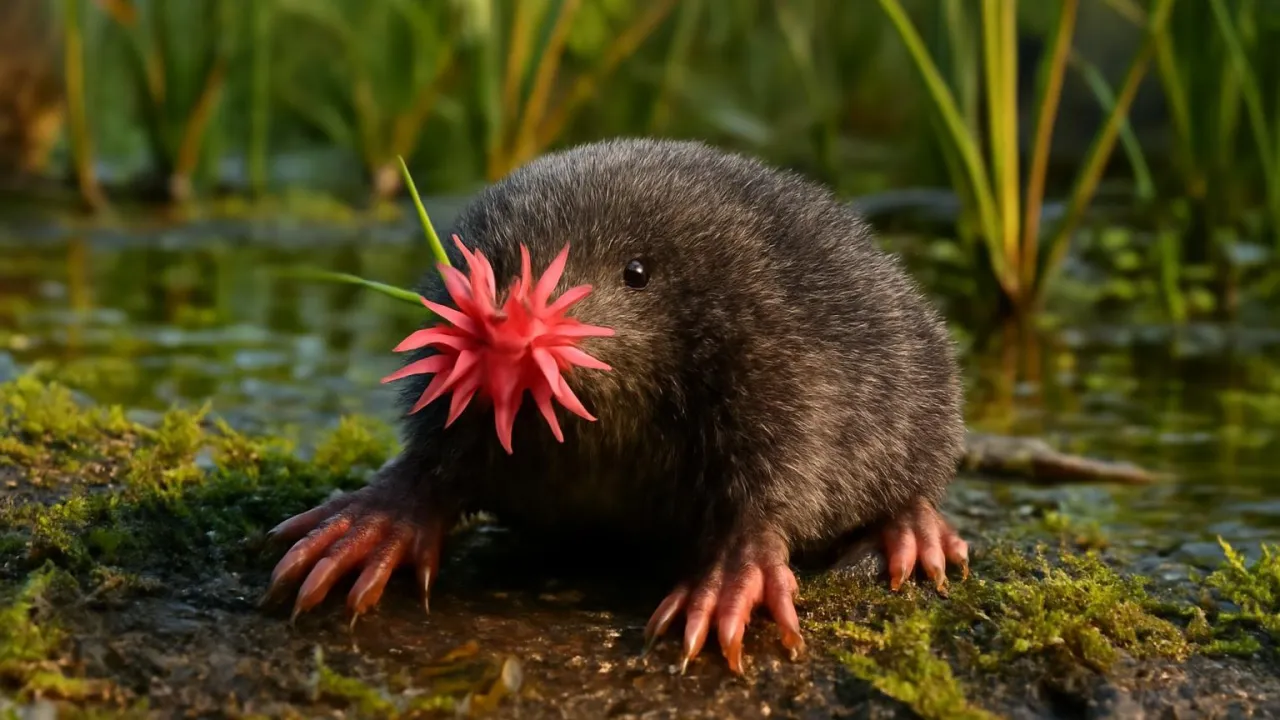
1. What does the star-nosed mole use its nose for?
2. Where does the star-nosed mole like to live?
🤯 Mind-Blowing Fact • Grade 2
The star-nosed mole can touch and identify food faster than any other mammal on Earth!
✨ Word Sparks (Grade 2 Glossary)
Tap 🔊 to hear
tentacles
Long, thin parts that help animals feel
wetlands
Soft, wet places where plants and animals live
prey
Animals that other animals hunt and eat
🪝
Have you ever seen a nose shaped like a star before?
1
Amazing Star Nose
The star-nosed mole has a unique nose with 22 pink . These tentacles help it sense things quickly. It uses them to find food in dark places.
2
Wet Home
This mole lives in and forests where the ground is soft. It digs tunnels under mud and swims well in water. The wet habitat helps it find many insects.
3
Fast Eating
The mole eats insects, worms, and small water creatures. It can find and eat its food in less than a second. Its nose helps it catch faster than other animals.
1. How many tentacles does the star-nosed mole’s nose have?
2. What helps the mole find food so fast?
🤯 Mind-Blowing Fact • Grade 3
The star-nosed mole’s nose processes touch signals faster than any other mammal’s sense of sight or sound!
✨ Word Sparks (Grade 3 Glossary)
Tap 🔊 to hear
adaptation
A body change that helps survival
sensory
Related to feeling or sensing things
predator
An animal that hunts other animals
🪝
Did you know the star-nosed mole has the fastest touch sense in the animal kingdom?
1
Unique Star Nose
The star-nosed mole’s nose has 22 pink, fleshy tentacles that act like tiny fingers. These tentacles are covered with thousands of receptors. They help the mole detect prey by touch in dark, muddy environments. This allows it to find food without using its eyes.
2
Habitat and Lifestyle
This mole lives in wetlands and forests in North America where the soil is soft and wet. It digs tunnels underwater and on land to search for food. The mole is an excellent swimmer, which helps it catch aquatic prey. Its lifestyle depends on moist, muddy places rich in insects and worms.
3
Fastest Touch Sensor
The star-nosed mole can identify and eat prey in just 120 milliseconds, making it the fastest known touch sensor. This speed helps it avoid while hunting. Its nose’s organs send signals rapidly to its brain. This quick reaction time is a vital survival skill.
4
Body Adaptations
Besides its nose, the mole has strong front claws for digging and small eyes covered by fur. Its body is streamlined for swimming and burrowing. These protect it from and help it thrive underground. The mole’s fur traps air to keep it dry while swimming.
1. Why does the star-nosed mole use its nose instead of its eyes to find food?
2. What makes the star-nosed mole’s nose special?
🤯 Mind-Blowing Fact • Grade 4
The star-nosed mole’s nose can detect and identify prey faster than the blink of an eye, making it the fastest touch organ known.
✨ Word Sparks (Grade 4 Glossary)
Tap 🔊 to hear
ecosystem
A community of plants and animals living together
aerate
To mix air into soil or water
conservation
Protecting nature and animals from harm
🪝
How does the star-nosed mole’s unique nose help it survive in wet, dark habitats?
1
The Star-Shaped Nose’s Role
The star-nosed mole’s nose has 22 fleshy tentacles covered in touch receptors, which allow it to detect tiny prey in muddy water. This sensory adaptation is crucial because the mole’s small eyes provide limited vision in its dark habitat. The nose’s rapid touch sensing helps the mole find food quickly and avoid predators.
2
Ecosystem and Habitat
This mole lives in wetlands and forested areas of North America where soft, wet soil supports abundant insect life. It plays an important role in the by controlling insect populations. Its digging and swimming behaviors also help soil and mix nutrients, benefiting plant growth.
3
Adaptations for Survival
Besides its star-shaped nose, the mole has powerful front claws for digging tunnels and dense fur that traps air for swimming. These adaptations allow it to hunt underwater and underground efficiently. The mole’s ability to quickly sense prey reduces the time it is exposed to predators, increasing its survival chances.
4
Human Impact and Conservation
Wetland drainage, pollution, and urban development threaten the star-nosed mole’s habitat by reducing food and safe living spaces. efforts focus on protecting wetlands to preserve this species and its role. Educating people about the mole’s unique adaptations helps encourage wetland preservation.
1. Why is the star-nosed mole’s nose important for survival?
2. What human activity threatens the star-nosed mole’s home?
🤯 Mind-Blowing Fact • Grade 5
The star-nosed mole’s nose processes touch faster than any other mammal’s sense, identifying prey in just 120 milliseconds.
✨ Word Sparks (Grade 5 Glossary)
Tap 🔊 to hear
Eimer’s organs
Special touch sensors on the mole’s nose
somatosensory cortex
Brain area that processes touch signals
insectivore
An animal that mainly eats insects
🪝
What makes the star-nosed mole’s nose the fastest and most sensitive touch organ in the mammal world?
1
Taxonomy and Scientific Context
The star-nosed mole, Condylura cristata, belongs to the family Talpidae, which includes other moles adapted for subterranean life. Its unique star-shaped nose with 22 fleshy appendages distinguishes it from other mole species. This specialized organ is an evolutionary adaptation to its wetland habitat in eastern North America.
2
Physiological Mechanics of Touch
Each of the 22 tentacles on the star-nosed mole’s nose contains thousands of , specialized touch receptors that transmit rapid sensory information to the brain. This allows the mole to identify prey in as little as 120 milliseconds, faster than any other known mammal. The brain’s dedicates a large area to processing these signals.
3
Conservation and Habitat Challenges
The star-nosed mole’s wetland habitats face threats from human activities such as drainage, pollution, and urban development. These actions reduce the availability of soft, moist soil and aquatic prey, impacting mole populations. Conservation programs emphasize wetland restoration to maintain biodiversity and ecosystem health.
4
Ecological Role and Behavior
As an , the star-nosed mole controls populations of aquatic and terrestrial invertebrates, contributing to balanced food webs. Its exceptional digging and swimming abilities allow it to exploit both land and water resources efficiently. The mole’s rapid prey detection minimizes exposure to predators, enhancing survival.
5
Quantitative Comparisons and Records
Measuring only 5 to 6 inches in length and weighing about 4 ounces, the star-nosed mole can identify and consume prey faster than the blink of an eye, within 120 milliseconds. Its nose’s sensory speed surpasses that of human touch and even many visual reactions. This remarkable speed makes it a unique subject for neurological studies.