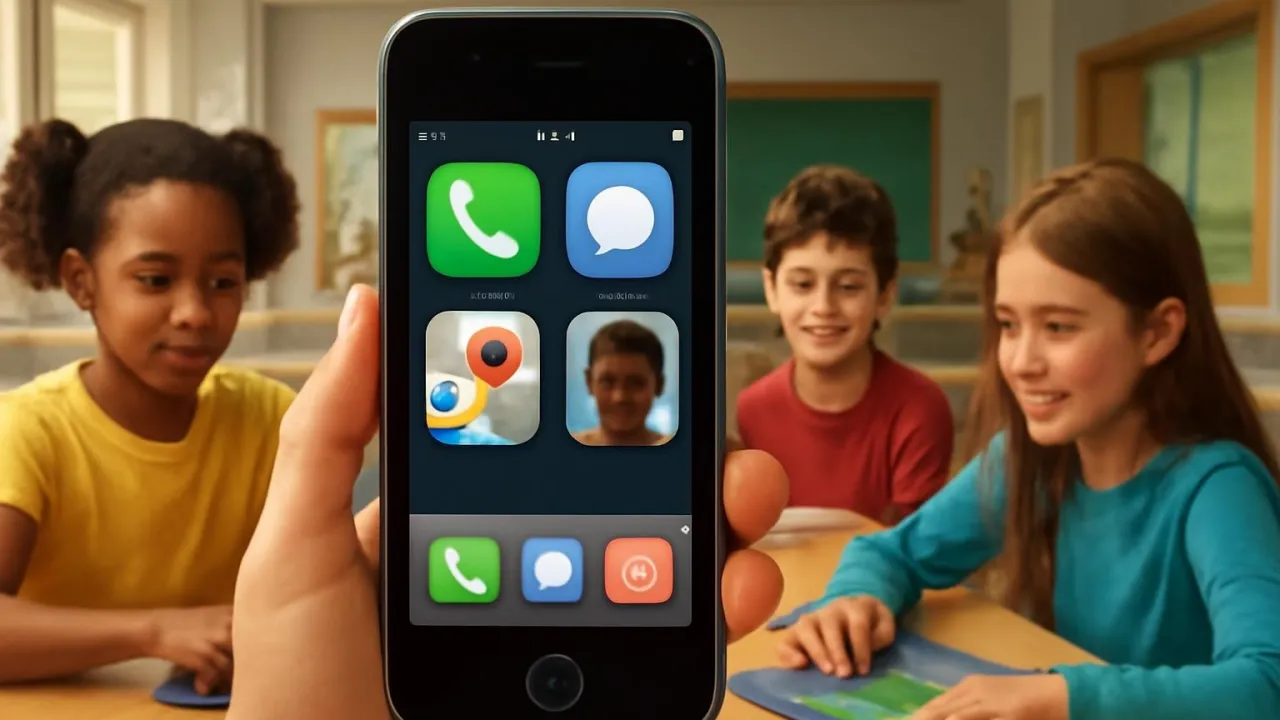
The first smartphone was made in 1992 and was called the IBM Simon!
✨ Word Sparks (Grade 2 Glossary)
Tap 🔊 to hear
touchscreen
A screen you tap or swipe
message
Words you send to someone
photo
A picture you take
🪝
Have you ever wondered how your phone lets you talk and play anywhere?
1
Touch and Go
Smartphones light up when you touch them, and they make fun sounds. You can tap the screen to play games or watch videos. Some phones even let you draw pictures or listen to music.
2
Talking Across the World
With a smartphone, you can call friends or family who live far away. You can also send and share with just a few taps. People use apps to learn, play, and even find directions.
3
A Pocket Helper
Most people carry their smartphone everywhere, like in their pockets or bags. They use it at home, school, or even in the car. Smartphones help people stay connected and have fun every day.
Today, over 6 billion people use smartphones all around the world!
✨ Word Sparks (Grade 3 Glossary)
Tap 🔊 to hear
vibration
A tiny shaking movement
sensor
A part that detects things
wireless
Works without wires or cords
🪝
What makes a smartphone so smart that it can fit a whole computer in your hand?
1
A Mini Computer
When you tap a smartphone, it lights up and responds quickly. Inside, a tiny computer chip helps it run games, apps, and videos. The bright touchscreen lets you swipe, draw, and type messages. It’s amazing how much technology fits in your pocket!
2
How Does It Work?
Smartphones use a touchscreen that senses your finger’s and movement. They connect to the internet using signals, so you can send messages or video call friends. Special help the phone know if it’s upside down or in your hand. All these parts work together to make the phone smart.
3
Changing the World
Smartphones have changed how people talk, learn, and play. You can use an app to learn new words or find your way with a map. People around the world use smartphones to share photos and videos instantly. These inventions help people feel close, even when they are far away.
4
From Past to Present
The first smartphone, called IBM Simon, came out in 1992. It had a touchscreen and could send faxes, but it was big and heavy. Modern smartphones, like the iPhone, are thin, light, and have millions of apps. New designs keep making smartphones faster and more helpful every year.
Some smartphones have more than 20 times the memory of early home computers!
✨ Word Sparks (Grade 4 Glossary)
Tap 🔊 to hear
microchip
Tiny part that stores information
navigation
Finding your way or direction
antenna
Part that catches signals
🪝
Can you imagine carrying a device that lets you learn, talk, and explore the world—all at once?
1
A World Inside Your Pocket
Picture a bright screen lighting up with a single tap, ready to help you learn, play, or talk to anyone, anywhere. That’s the magic of a smartphone—an invention that puts a world of information and fun right in your hand. When you swipe or tap, tiny electric signals race beneath the glass, making apps and games appear in a flash. It feels almost like holding a tiny, friendly robot that listens and responds to your every move.
2
From Giant to Pocket-Sized
The first smartphone, IBM Simon, was released in 1992 and was much bigger than today’s phones. It could send faxes and emails, but it was slow and heavy. In 2007, the Apple iPhone changed everything with its sleek design, multi-touch screen, and easy-to-use apps. Since then, smartphones have become thinner, lighter, and more powerful each year.
3
Connecting the Globe
Smartphones connect billions of people, allowing instant communication, learning, and creativity. People use them to video call friends across continents, share photos, and even attend online classes. Apps help us learn languages, play music, and find our way using GPS . This invention has made the world feel smaller and more connected than ever before.
4
A World of Possibilities
Smartphones are now used in almost every country, helping people in cities and villages alike. They can translate languages, measure your steps, and even check the weather. As technology grows, smartphones keep adding new features, making life easier and more exciting for everyone. The smartphone’s impact on society continues to grow with each new invention.
The world’s fastest smartphone processors can perform over 15 trillion operations per second—faster than some supercomputers from the early 2000s!
✨ Word Sparks (Grade 5 Glossary)
Tap 🔊 to hear
microprocessor
Tiny chip that acts like a brain
capacitive
Uses electric signals to sense touch
biometric
Uses body features for security
🪝
What if you could hold a supercomputer, a camera, a map, and a library—all in the palm of your hand?
1
Engineering Marvels in Your Pocket
Modern smartphones are compact marvels of engineering, combining advanced , high-resolution touchscreens, and multiple sensors in a device smaller than most notebooks. The microprocessor acts as the brain, rapidly processing billions of instructions per second, while the touchscreen uses technology to detect the tiniest electrical changes from your fingertips. Accelerometers and gyroscopes sense motion and orientation, enabling features like screen rotation and step counting. Smartphones also include radios for cellular, Wi-Fi, Bluetooth, and GPS, allowing seamless communication and navigation almost anywhere on Earth. All these components work together to create a device that is both powerful and portable.
2
A Revolution in Communication
The smartphone’s evolution began with IBM Simon in 1992, which combined a mobile phone with a touchscreen and email capabilities, though it was bulky and limited. The real revolution started in 2007, when Apple introduced the iPhone, featuring a sleek design, responsive multi-touch interface, and an app ecosystem that encouraged global innovation. Since then, smartphones have rapidly advanced, with faster processors, sharper cameras, and more sophisticated software arriving each year. Today, smartphones are central to how people communicate, replacing landlines, cameras, and even computers for billions worldwide.
3
How Smartphones Work
Smartphones operate by converting your voice, images, and data into digital signals, which are transmitted wirelessly through networks of cell towers and satellites. The touchscreen detects the electrical charge from your finger, allowing precise control of apps and features. Sensors like proximity detectors, barometers, and magnetometers add new capabilities, from face recognition to augmented reality. The operating system coordinates all hardware and software, managing memory, security, and multitasking so users can switch between apps smoothly. Battery technology and efficient chip design make it possible for smartphones to run all day on a single charge.
4
Global Impact and Challenges
Smartphones have transformed global society, enabling instant access to information, education, and entertainment for over 6 billion users. They have revolutionized industries, from medicine and journalism to transportation and finance, and have become essential tools for social connection and activism. However, smartphones also present challenges, such as electronic waste, digital distraction, and privacy concerns, which engineers and policymakers are working to address. As technology continues to evolve, smartphones are expected to become even more intelligent, sustainable, and integrated into daily life.
5
The Future in Your Hands
Each new generation of smartphones brings more advanced features, such as artificial intelligence, security, and foldable screens. Engineers are exploring new materials, like graphene, to make devices lighter and more durable, while software developers create apps that solve real-world problems. The smartphone’s journey from a bulky experiment to a sleek, powerful tool shows how human creativity and engineering can change the world. As you hold a smartphone, you’re holding the result of decades of invention and the promise of even greater discoveries ahead.