⚡ Everyday Impact SparkExplaining tricky science clearly so curious kids and adults understand how our world works
🤯 Mind-Blowing Fact • Grade 1
In 1825, British scientist Michael Faraday started holiday science talks for kids using a single burning candle to explain chemistry and physics!
✨ Word Sparks (Grade 1 Glossary)
Tap 🔊 to hear
demo
A live experiment showing how something works
fact
Something proven true by careful testing
curious
Eager to ask questions and learn
🪝
Who makes foamy volcano demos pop on stage and explains *why* it happens?
1
Whoa, Look at That!
Whoosh! Warm colorful foam fountains out of a glass bottle on stage! Kids clap and gasp in surprise. Wearing safety goggles, a smiling science communicator explains how tiny gas bubbles pushed the foam sky-high.
2
Translating Big Ideas
Scientists discover amazing things about bugs, stars, and rocks. Science communicators turn those big ideas into fun books, videos, and museum shows.
3
Sparking Curious Questions
Best of all, they invite everyone to ask 'Why?' and 'How?' Sharing true helps whole communities learn together!
1. What does a science communicator do with big scientific discoveries?
2. What safety gear should a presenter wear during a bubbly chemistry demo?
🤯 Mind-Blowing Fact • Grade 2
Before becoming TV's famous 'Science Guy,' Bill Nye worked as a mechanical engineer in Seattle designing hydraulic parts for 747 airplanes!
✨ Word Sparks (Grade 2 Glossary)
Tap 🔊 to hear
interview
Asking an expert questions to learn facts
exhibit
A museum display built for learning
podcast
An audio show people listen to
🪝
How do you explain an invisible atom or a distant galaxy using everyday objects?
1
Masters of Clever Comparisons
Imagine holding up a tiny blueberry inside a huge football stadium to show how small an atom's center is! Science communicators love inventing clever comparisons like that so invisible or giant things suddenly make sense.
2
Visiting Real Research Labs
To get every single detail right, science communicators visit laboratories and field stations to biologists, astronauts, and geologists. They take careful notes, double-check every measurement, and ask all the fun questions a curious kid at home would want answered.
3
Many Ways to Share Science
Some write colorful illustrated children's magazines and books, others design touchable hands-on museum , and many host lively or television adventures that bring wildlife, space, and inventions right into classrooms!
1. Why might a science communicator compare an atom's center to a blueberry in a stadium?
2. Why do science communicators interview researchers and double-check notes?
🤯 Mind-Blowing Fact • Grade 3
Marine biologist and author Rachel Carson combined poetic storytelling with rigorous ecology, inspiring millions of readers to protect birds, rivers, and oceans!
✨ Word Sparks (Grade 3 Glossary)
Tap 🔊 to hear
jargon
Special technical words used by experts
analogy
Comparing something unfamiliar to something familiar
hypothesis
A testable scientific idea or prediction
🪝
Why can two scientists read the same research paper cleanly while everyone else feels puzzled by the jargon?
1
Decoding Technical Jargon
Open a professional chemistry or astronomy journal and you might spot ten-syllable words and dense equations on every single line! Scientists use precise technical vocabulary—called —to share exact details quickly with other specialists. A science communicator steps in as a friendly translator, turning complex lab data into vivid, welcoming stories without losing accuracy.
2
Using Analogies and Visuals
Great communicators pair clear everyday words with memorable visuals and analogies. They might team up with medical illustrators to animate how white blood cells patrol veins like tiny guards, or film high-speed slow-motion clips showing how hummingbirds hover in midair.
3
Working at NASA, Zoos, and Parks
Public research organizations like NASA, the Smithsonian Institution, national aquariums, and the National Weather Service rely on science communicators every day to share storm forecasts, Mars rover landings, and wildlife discoveries with millions of citizens.
4
Honesty About How Science Grows
Thoughtful communicators also explain how scientists test hypotheses—showing students that asking fresh questions and updating ideas when stronger evidence arrives is science's greatest superpower!
1. What does a science communicator do with technical scientific jargon?
2. How do slow-motion cameras help science communicators teach nature concepts?
🤯 Mind-Blowing Fact • Grade 4
Astronomer Carl Sagan's 1980 television series 'Cosmos' reached more than 500 million viewers across 60 countries, inspiring a whole generation of future scientists!
✨ Word Sparks (Grade 4 Glossary)
Tap 🔊 to hear
peer-reviewed
Checked carefully by other independent scientists
prototype
Early working model built for testing
supersonic
Traveling faster than the speed of sound
🪝
What happens in the control room when a spacecraft touches down on Mars and millions of viewers tune in live?
1
Live From Mission Control
'Touchdown confirmed!' Joyful cheers erupt across NASA's Jet Propulsion Laboratory as flight engineers high-five beside blinking telemetry monitors. Seconds later, standing calmly before live broadcast cameras, a NASA science communicator holds up a scale model of the Perseverance rover's sky-crane jetpack and parachute, explaining to classrooms around the globe how physics just lowered a car-sized robot laboratory safely inside Mars's ancient Jezero Crater.
2
Separating Solid Evidence From Hype
In a modern digital world overflowing with flashy headlines and online rumors, skilled science journalists and communicators serve as trustworthy fact-checkers. Before reporting on a nutrition study, archaeological dig, or dinosaur fossil, they investigate whether independent experts the research paper, how large the test group was, and whether other scientists have reproduced the results.
3
Designing Interactive Museum Worlds
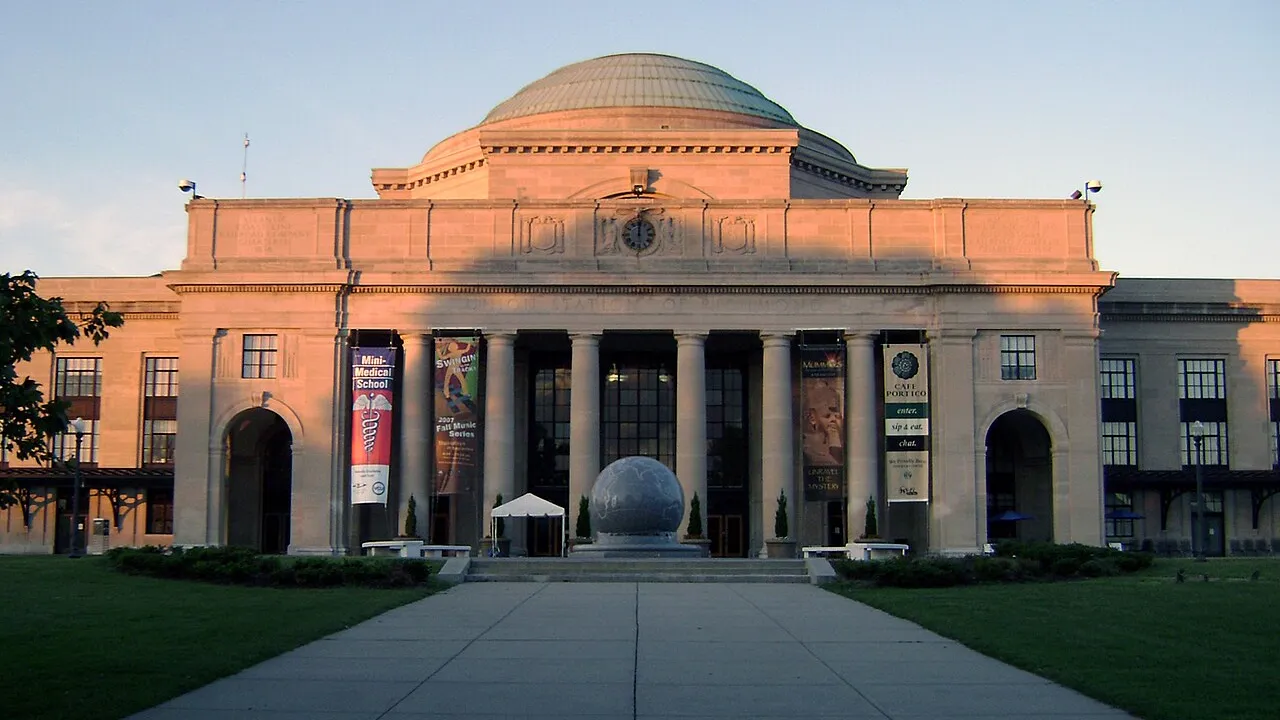
Not all science communication relies on written articles or microphones! Exhibit developers at hands-on discovery museums—like the Science Museum of Virginia or San Francisco's Exploratorium—build early wooden and test them with real visiting families, adjusting pulley cranks, mini wind tunnels, and touchable fossil casts until kids uncover physics and geology laws naturally through play.
4
Helping Communities Make Informed Choices
From broadcast meteorologists explaining hurricane storm-surge maps to park rangers leading Chesapeake Bay marsh walks and health writers clarifying nutrition labels, clear science communication empowers everyday citizens to make safe, informed choices.
1. Why does a responsible science journalist check if a study was peer-reviewed?
2. Why do museum exhibit developers test early prototypes with real kids?
🤯 Mind-Blowing Fact • Grade 5
Through citizen-science platforms co-designed by science communicators and astronomers, everyday volunteers including middle schoolers have helped discover real exoplanets and rare 'Green Pea' galaxies!
✨ Word Sparks (Grade 5 Glossary)
Tap 🔊 to hear
misconception
A mistaken belief based on misunderstanding
infographic
Visual chart explaining data and facts
turbidity
Cloudiness of water from floating particles
🪝
Why is bridging the gap between specialized scientific research and everyday citizens essential in a modern society?
1
Where Specialized Discovery Meets Public Understanding
Every single year, researchers across the globe publish more than two million peer-reviewed papers spanning fields from quantum computing and CRISPR gene editing to deep-core paleoclimatology and exoplanet spectroscopy. Without skilled science communicators distilling that mountain of technical data into vivid prose, documentaries, classroom curricula, , and museum exhibits, humanity's most exciting discoveries would remain locked behind dense disciplinary terminology.
2
The Craft of Simplifying Without Distorting
Physicist Albert Einstein is famously linked with the principle that scientific explanations should be made 'as simple as possible, but no simpler.' Science communicators walk a delicate tightrope between accessibility and accuracy: if a metaphor oversimplifies how messenger RNA proteins fold or how tectonic subduction triggers earthquakes, readers may form stubborn ; yet if an article drowns in unexplained calculus, curiosity shuts down. Balancing narrative arc, clear data visualization, and cognitive load lets complex truths shine accurately.
3
Two-Way Dialogue and Citizen Science
Modern communication scholars emphasize respectful two-way engagement over top-down lecturing. Through participatory citizen-science initiatives—where students and families tag migrating monarch butterflies, classify distant spiral galaxies on Zooniverse, log backyard rain gauges for CoCoRaHS, or measure neighborhood creek —communicators invite communities right inside the scientific method.
4
Risk Communication in Urgent Moments
During volcanic unrest, coastal hurricanes, droughts, or municipal water-quality alerts, specialized crisis science communicators work alongside agencies like NOAA, NASA, and the U.S. Geological Survey to explain forecast uncertainties and protective steps clearly—helping communities prepare calmly without either panic or complacency.
5
Diverse Routes Into the Profession
Some science communicators complete laboratory PhDs in biology, chemistry, or astrophysics before moving into documentary filmmaking or museum curation; others pair undergraduate STEM degrees with graduate training in science journalism, medical illustration, or educational media—proving that clear empathy and storytelling are vital partners to discovery.