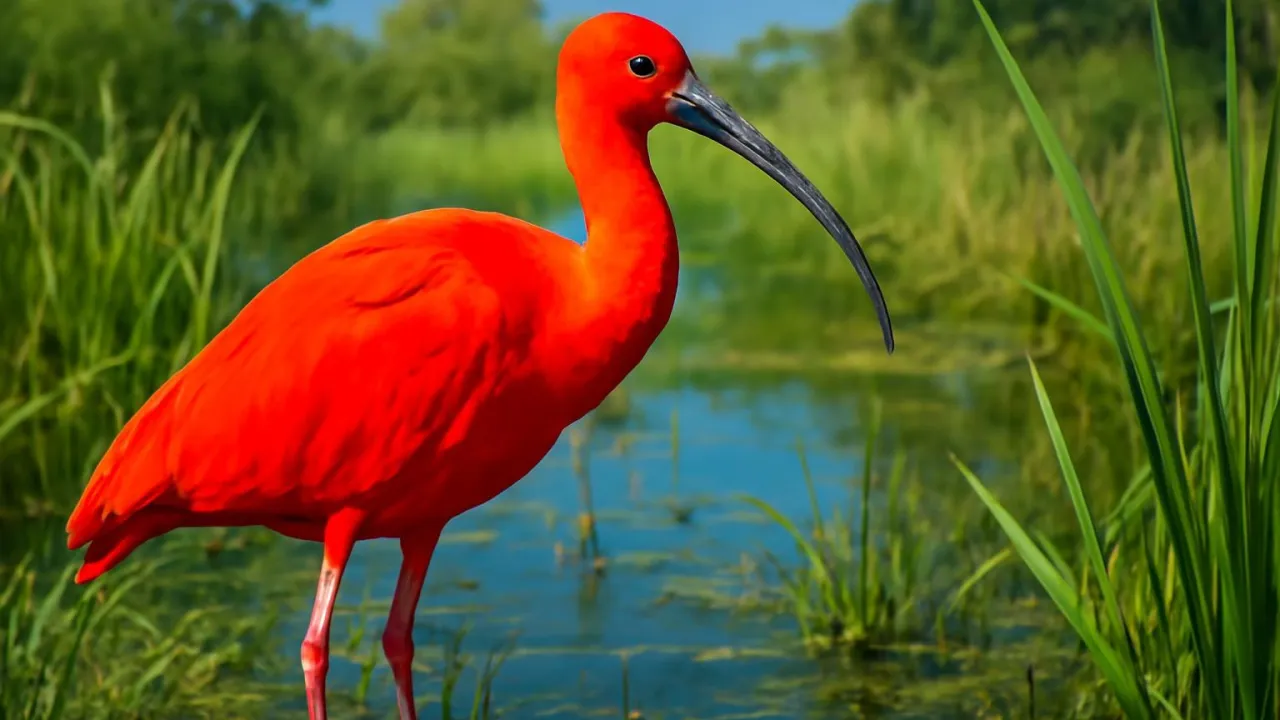
The scarlet ibis’s red color comes from eating red shrimp and tiny crustaceans!
✨ Word Sparks (Grade 2 Glossary)
Tap 🔊 to hear
crustaceans
Small animals with shells that live in water
mangroves
Trees that grow in salty water near the sea
predators
Animals that hunt other animals for food
🪝
Have you ever seen a bird as red as a bright fire?
1
A Bird That Stands Out
The scarlet ibis has bright red feathers that shine in sunlight. It has long legs and a curved beak that helps it find food. This bird is easy to spot because of its bright color. It walks slowly in shallow water to catch small animals.
2
Where It Makes Its Home
Scarlet ibises live in warm wetlands and near the ocean. They build nests in trees or bushes close to water. These places give them food and safety from . The climate is hot and humid where they live.
3
What It Likes to Eat
This bird eats small like shrimp and crabs that live in mud. The red color comes from these tiny animals it eats every day. Its long beak helps it reach food hidden in the mud. Eating these animals keeps the bird healthy and colorful.
Scarlet ibises get their red color from carotenoids in the shrimp and crabs they eat.
✨ Word Sparks (Grade 3 Glossary)
Tap 🔊 to hear
camouflage
Colors or shapes that help animals hide
carotenoids
Natural pigments that make animals red or orange
migration
Moving to new places when seasons change
🪝
Why does the scarlet ibis wear bright red feathers instead of dull colors?
1
Bright Feathers and Camouflage
The scarlet ibis has bright red feathers that help it blend into red mangrove trees. This protects it from predators in its wetland home. Its long, curved beak is perfect for probing mud to find food. These adaptations help the ibis survive in its environment.
2
Life in Wetlands
Scarlet ibises live in tropical wetlands where water and mud are plentiful. They use their long legs to walk through shallow water searching for crustaceans. Wetlands provide nutrients that support many animals in the food web. The ibis plays an important role by eating small creatures.
3
Eating and Color
The scarlet ibis’s diet includes shrimp and small crabs that contain pigments called . These pigments give the bird its bright red color after digestion. This color signals health and attracts mates during breeding season. The bird’s beak shape allows efficient feeding in muddy places.
4
Migration and Behavior
Some scarlet ibises migrate short distances to find food when water levels change. They often live in large flocks to protect each other from predators. Their loud calls help keep the group together while flying or feeding. This social behavior increases their survival chances.
1. What helps the scarlet ibis hide from predators?
2. Why do scarlet ibises sometimes migrate?
🤯 Mind-Blowing Fact • Grade 4
The scarlet ibis’s diet directly changes its feather color and helps it hide from predators.
✨ Word Sparks (Grade 4 Glossary)
Tap 🔊 to hear
ecosystem
A community of plants and animals living together
conservation
Protecting nature and animals from harm
nutrients
Food parts that help plants and animals grow
🪝
How does the scarlet ibis’s bright red color affect its role in the ecosystem?
1
Color and Survival
The scarlet ibis’s bright red feathers come from eating crustaceans rich in carotenoids, which helps it blend into red mangrove trees and wetlands. This camouflage reduces the risk of being caught by predators, increasing its chances of survival. Its long, curved beak allows it to probe deep into mud for food. These adaptations show how diet directly affects physical traits and survival.
2
Role in the Food Web
Living in tropical wetlands, the scarlet ibis feeds on small crustaceans and insects, controlling their populations and maintaining balance in the . It is also prey for larger animals like hawks and snakes, making it an important link in the food web. The ibis’s feeding habits help recycle in wetland soils, supporting plant growth and other wildlife.
3
Ecosystem and Human Impact
Wetlands where scarlet ibises live are sensitive to pollution and habitat loss caused by human activities such as farming and development. Protecting these areas helps preserve the ibis’s habitat and the many species that depend on wetlands. efforts include creating protected reserves and educating people about wetland importance.
4
Geographic Range and Behavior
The scarlet ibis is found mainly in northern South America and the Caribbean, especially in Venezuela and Trinidad. It often forms large flocks for feeding and protection, using loud calls to communicate. Seasonal changes in water levels cause some movement, but most stay within tropical wetland areas year-round.
1. Why does the scarlet ibis’s red color help it survive?
2. How do humans affect the scarlet ibis’s home?
🤯 Mind-Blowing Fact • Grade 5
The scarlet ibis’s red feathers are a living record of its diet and habitat health.
✨ Word Sparks (Grade 5 Glossary)
Tap 🔊 to hear
molting
When birds lose old feathers and grow new ones
hybridizes
When two similar animals make babies together
fragmentation
When habitats break into smaller, separated parts
🪝
What fascinating scientific traits make the scarlet ibis a unique tropical bird?
1
Taxonomy and Scientific Classification
The scarlet ibis, scientifically named Eudocimus ruber, belongs to the family Threskiornithidae, which includes ibises and spoonbills. It is classified within the order Pelecaniformes, known for water birds with webbed feet and long bills. This species is closely related to the American white ibis, with which it sometimes . Its classification reflects evolutionary adaptations to wetland habitats.
2
Physiological Adaptations and Coloration
The scarlet ibis’s brilliant red coloration results from carotenoid pigments obtained through its diet of shrimp and other crustaceans. These pigments are metabolized and deposited in feathers during , providing both camouflage and mating signals. Its long, decurved bill is specialized for probing soft mud for prey, while its lightweight bones aid in flight efficiency. Additionally, its webbed feet facilitate walking in muddy wetlands.
3
Conservation Status and Historical Context
Historically, scarlet ibis populations declined due to habitat destruction and hunting, but conservation efforts in countries like Trinidad and Venezuela have stabilized numbers. Protected wetland reserves and legal protections have helped preserve critical breeding and feeding grounds. Continued monitoring is necessary to address threats from pollution, climate change, and habitat . The scarlet ibis is currently listed as Least Concern by the IUCN.
4
Ecological Role and Quantitative Comparisons
As a mid-level predator in tropical wetland food webs, the scarlet ibis controls crustacean populations, which helps maintain ecosystem balance. Adults typically weigh about 2.5 pounds (1.1 kilograms) and measure approximately 27 inches (70 centimeters) in length. They can fly at speeds up to 30 miles per hour (48 kilometers per hour) during migration. Their nesting colonies often contain hundreds of individuals, demonstrating social behavior.
5
Behavioral Ecology and Migration Patterns
Scarlet ibises exhibit partial migratory behavior, moving short distances in response to seasonal water fluctuations. They form large flocks for foraging and protection, communicating with loud, raucous calls. Breeding season occurs during the rainy months, with nests built in mangrove trees. Their social structure and feeding strategies reflect adaptations to dynamic wetland environments.