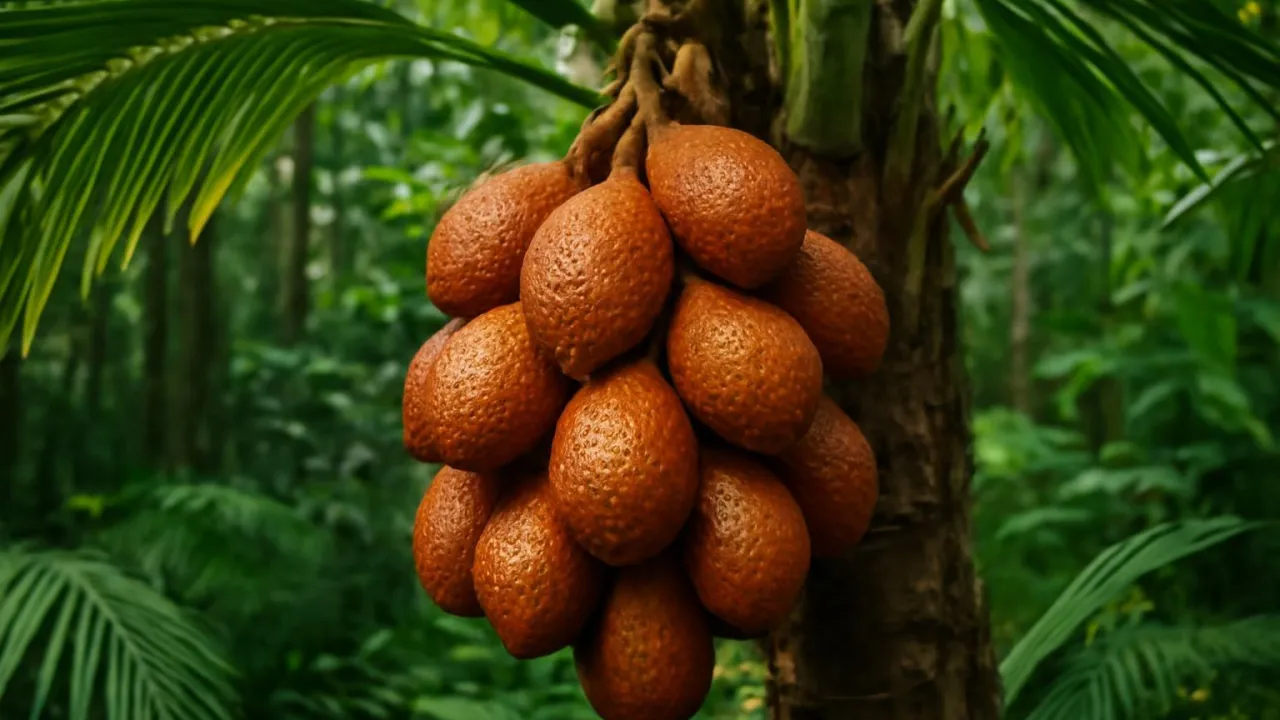
Salak is nicknamed snake fruit because its skin looks like snake scales!
✨ Word Sparks (Grade 2 Glossary)
Tap 🔊 to hear
protects
Keeps safe from harm or danger
flesh
The soft part inside a fruit
tropical
Warm and rainy places near the equator
🪝
Have you ever seen a fruit that looks like snake skin?
1
Spiky Skin Protects Salak
Salak fruit has brown, spiky skin that it from animals. The spikes are sharp and rough to touch. This helps keep the fruit safe until it is ripe.
2
Sweet and Crunchy Inside
Inside the fruit, the is sweet and crunchy like apples. Many people enjoy eating salak fresh or in desserts. The taste is a mix of sweet and tangy flavors.
3
Tropical Home and Growth
Salak grows on short palm trees in forests. It needs warm weather and lots of water to grow well. Farmers often grow salak in Southeast Asia countries.
Salak’s spiky skin is both a physical barrier and a natural camouflage!
✨ Word Sparks (Grade 3 Glossary)
Tap 🔊 to hear
adaptation
A change that helps survival
camouflage
Hiding by blending with surroundings
symbiotic
Living together and helping each other
🪝
Did you know salak’s spiky skin is a clever adaptation?
1
Spiky Skin and Camouflage
Salak fruit’s spiky skin acts as , blending with tree bark. This helps hide it from predators. The rough spikes also physically protect the fruit from animals trying to eat it.
2
Sweet Flesh and Seeds
Inside, the sweet flesh contains nutrients that attract animals for seed dispersal. The fruit has a crunchy texture and a tangy flavor. Seeds inside help the plant reproduce and grow new trees.
3
Tropical Habitat and Growth
Salak palms grow in tropical rainforests of Southeast Asia where humidity is high. The plant needs rich soil and plenty of water to thrive. Its growth cycle includes flowering, fruiting, and seed spreading stages.
4
Role in Ecosystem
Salak fruits feed many animals like birds and monkeys, helping spread seeds. This relationship benefits both the plant and the animals. Humans also cultivate salak for food and sale in local markets.
Salak’s spiky skin not only protects but also supports tropical forest ecosystems through seed dispersal!
✨ Word Sparks (Grade 4 Glossary)
Tap 🔊 to hear
biodiversity
Many different plants and animals living together
regeneration
Nature’s way of growing back plants and trees
cultivation
Growing plants carefully for food or use
🪝
How does salak’s spiky skin affect its place in the tropical ecosystem?
1
Protective Skin and Survival
Salak’s spiky skin serves as a physical barrier that deters many predators from eating the fruit, increasing its chance to ripen fully. This cause-and-effect relationship shows how the fruit’s unique texture helps it survive in a competitive environment. The spikes make it difficult for animals to bite or carry the fruit away.
2
Ecosystem Role and Food Web
Salak fruits provide food for various animals such as birds and monkeys, which in turn disperse the seeds through their droppings. This symbiotic relationship supports forest and maintains within tropical rainforests. Without these animals, seed dispersal would be limited and forest growth slowed.
3
Geographic Distribution and Cultivation
Native to Indonesia and parts of Malaysia, salak palms thrive in humid tropical climates with rich, well-drained soils. Human has expanded its range to other Southeast Asian countries, where it is valued both as food and for local markets. Farmers carefully manage soil and water to optimize fruit production.
4
Human Impact and Agriculture
Farmers cultivate salak carefully to protect the fruit from pests and diseases, using sustainable methods to maintain soil health. This agricultural practice supports local economies while preserving the natural habitat of the salak palm. Efforts include crop rotation and organic pest control to reduce environmental damage.
Salak’s spiky skin is a remarkable evolutionary adaptation that balances protection and seed dispersal efficiency!
✨ Word Sparks (Grade 5 Glossary)
Tap 🔊 to hear
exocarp
The tough outer skin of a fruit
mesocarp
The juicy, edible part inside a fruit
herbivores
Animals that eat plants and fruits
🪝
What fascinating adaptations and ecological roles make salak a unique tropical fruit?
1
Taxonomy and Botanical Classification
Salak, scientifically named Salacca zalacca, belongs to the Arecaceae family, commonly known as palm trees. This species is native to tropical Southeast Asia, particularly Indonesia and Malaysia. Its classification places it among other important fruit-bearing palms that thrive in humid climates. Understanding its taxonomy helps scientists study its relationships with other plants.
2
Physiological Mechanics of Salak Fruit
The salak fruit’s tough, spiky protects the edible pulp from and physical damage. Inside, the is crunchy and rich in sugars, providing energy for seed dispersers. The fruit’s structure facilitates seed protection and dispersal, crucial for the plant’s reproductive success. This combination of features is a remarkable evolutionary adaptation.
3
Ecological and Conservation Importance
Salak palms play a vital role in tropical forest ecosystems by providing food for wildlife such as birds, primates, and insects. These animals aid in seed dispersal, promoting forest regeneration and biodiversity. Conservation efforts focus on sustainable cultivation to prevent habitat loss and maintain ecosystem balance. Protecting salak habitats helps preserve many other species.
4
Agricultural History and Human Use
Humans have cultivated salak for centuries, valuing its unique taste and nutritional benefits. Traditional farming practices in Southeast Asia include selective harvesting and pest management, which support both fruit quality and environmental health. Salak is also economically significant in local markets, contributing to farmers’ livelihoods and regional food cultures.
5
Quantitative Comparisons and Growth Conditions
Salak fruits typically measure 2 to 3 inches (5 to 7.5 centimeters) long and weigh about 30 to 50 grams each. The palms thrive in temperatures ranging from 77 to 95 degrees Fahrenheit (25 to 35 degrees Celsius) with high humidity. These precise conditions optimize fruit yield and quality, making salak a highly specialized tropical crop. Understanding these factors helps improve cultivation techniques.