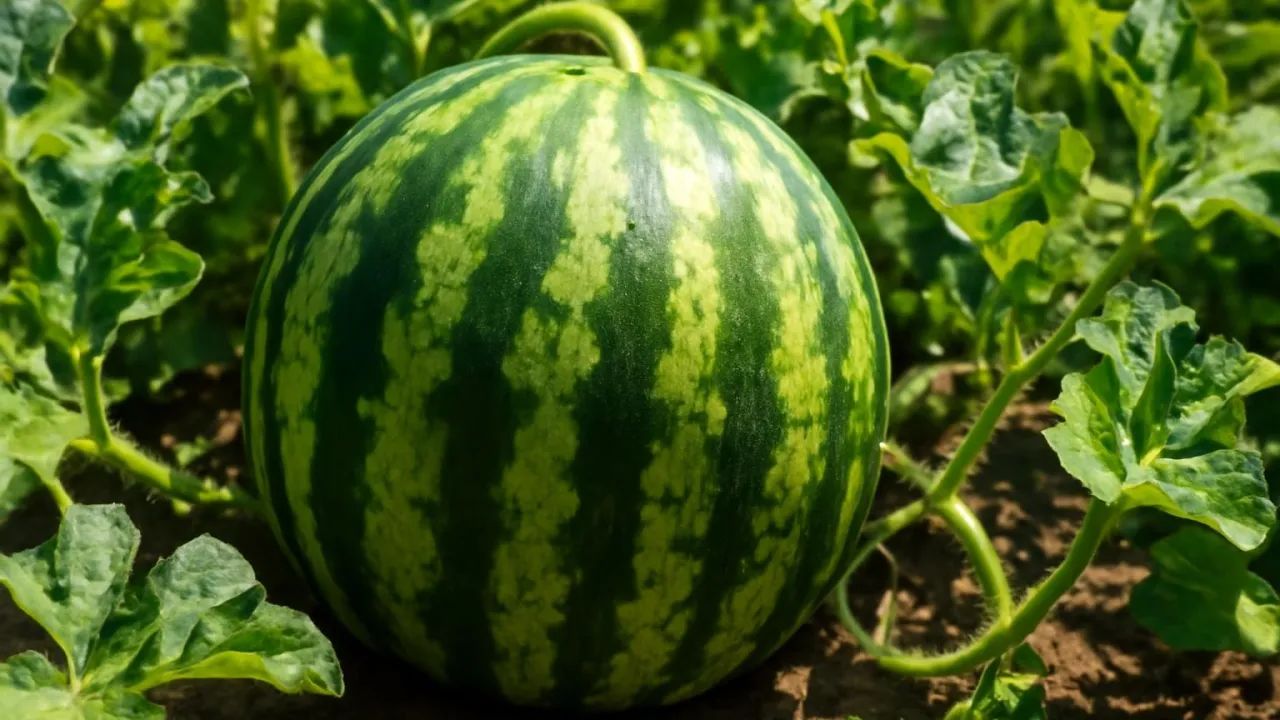
Watermelon is more than 90% water, making it a natural thirst quencher in summer!
✨ Word Sparks (Grade 2 Glossary)
Tap 🔊 to hear
rind
The hard green outside part of a fruit
harvest
To pick fruits or vegetables when they are ready
nutrients
Good things plants get from soil to grow
🪝
Have you ever tasted a watermelon that feels like eating water?
1
Big and Colorful Fruit
Watermelons are large fruits with green striped skin and bright red flesh inside. They have black seeds scattered throughout the juicy flesh. People enjoy eating watermelon during hot summer days because it is very refreshing.
2
Where Watermelons Grow
Watermelon plants grow best in warm places with lots of sunlight and water. They spread long vines across the ground to find space and . Farmers plant watermelons in fields during spring and them in late summer.
3
A Cool Feature
Watermelons are made up of over ninety percent water, which helps keep people hydrated. Their thick green protects the sweet inside from bugs and weather. This fruit is a favorite for picnics and parties because it tastes so good.
1. What part of the watermelon protects the inside?
2. When do farmers pick watermelons?
🤯 Mind-Blowing Fact • Grade 3
Watermelon seeds can sprout into new plants, continuing the watermelon’s life cycle naturally!
✨ Word Sparks (Grade 3 Glossary)
Tap 🔊 to hear
camouflage
Colors or patterns that help hide something
pollination
When bees help flowers make fruit
predator
An animal that hunts other animals
🪝
Did you know watermelons use their thick rind to protect themselves from predators?
1
Watermelon’s Protective Rind
The watermelon’s thick green rind acts as in the garden. This tough skin helps protect the juicy fruit inside from insects and animals that might want to eat it. The rind’s stripes blend well with leaves and soil, helping it hide from .
2
How Watermelons Grow
Watermelon plants grow long vines that spread across the soil surface. These vines absorb nutrients and water needed for growth. happens when bees visit flowers, helping the fruit develop. After pollination, the watermelon slowly grows bigger over several weeks.
3
Juicy and Sweet Inside
Inside the watermelon, the red flesh is full of water and natural sugars. This juicy flesh provides hydration and energy to animals and humans who eat it. The black seeds inside can grow into new watermelon plants, continuing the life cycle.
4
Watermelon’s Place in Nature
Watermelons are part of warm climate ecosystems where they provide food for many animals. Their vines also help prevent soil erosion by covering the ground. Farmers grow watermelons worldwide because they are a popular fruit that supports local economies.
1. What helps protect the watermelon from animals?
2. What do bees help with in watermelon plants?
🤯 Mind-Blowing Fact • Grade 4
Watermelon vines help prevent soil erosion by covering and protecting the ground in fields.
✨ Word Sparks (Grade 4 Glossary)
Tap 🔊 to hear
erosion
When soil is worn away by wind or water
ecosystem
All plants and animals living together in one place
sustainable
Using resources carefully to protect nature
🪝
How do watermelons survive in hot climates and help their ecosystems?
1
Adaptations for Hot Climates
Watermelons have thick, striped rinds that protect them from harsh sunlight and drying winds, helping to conserve water inside. Their vines spread wide across the soil to absorb nutrients and moisture, which supports their rapid growth in warm weather. This adaptation allows them to thrive in regions with long, hot summers where water can be scarce.
2
Role in Food Webs and Ecosystems
Watermelons serve as a food source for many animals, including birds, insects, and mammals, which eat the fruit and seeds. These animals help disperse watermelon seeds, aiding the plant’s reproduction and spread. Additionally, watermelon vines help prevent soil by covering and stabilizing the ground in agricultural fields and wild areas.
3
Human Impact and Agriculture
Farmers cultivate watermelons worldwide because they are a popular fruit that supports local economies and diets. However, watermelon farming requires significant water resources, which can impact local water supplies in dry regions. farming practices are being developed to reduce water use and protect while maintaining crop yields.
4
Geographic Distribution
Originally from southern Africa, watermelons are now grown in many warm regions around the world, including the United States, China, and Turkey. They prefer well-drained soils and full sunlight, which are common in subtropical and tropical climates. Their global spread reflects their agricultural importance and adaptability to diverse environments.
Watermelons can contain up to 92% water, making them one of the most hydrating fruits on Earth!
✨ Word Sparks (Grade 5 Glossary)
Tap 🔊 to hear
photosynthesis
How plants use sunlight to make food
drought-resistant
Plants that can live with little water
selective breeding
Choosing plants with good traits to grow better fruits
🪝
What scientific secrets help watermelons grow juicy and survive worldwide climates?
1
Scientific Classification and Origins
Watermelon, scientifically named Citrullus lanatus, belongs to the Cucurbitaceae family, which includes cucumbers and squash. It originated in southern Africa, where wild varieties grew before humans began cultivating them thousands of years ago. has produced the large, sweet fruits common today, adapted to various climates globally.
2
Physiological Mechanics of Watermelon Growth
Watermelons use a combination of and efficient water storage to grow large fruits rich in water and sugars. Their thick rind contains specialized cells that reduce water loss, while the internal flesh stores up to 92% water content. The plant’s extensive vine system maximizes nutrient uptake from soil, supporting rapid fruit development.
3
Conservation and Agricultural History
Watermelon cultivation has a long history, with evidence of farming dating back over 4,000 years in Egypt. Today, global production exceeds 100 million tons annually, making it one of the most widely grown fruits. Conservation efforts focus on breeding varieties to cope with climate change and reduce water consumption in agriculture.
4
Quantitative Comparisons and Growth Data
Typical watermelons weigh between 5 and 15 pounds (2.3 to 7 kilograms), with some varieties reaching over 50 pounds (22.7 kilograms). They grow best in temperatures between 70 and 85 degrees Fahrenheit (21 to 29 degrees Celsius). Watermelons can contain up to 92% water, making them one of the most hydrating fruits available.
5
Global Importance and Future Challenges
Watermelons are economically important worldwide, with China leading production, followed by Turkey and the United States. Future challenges include managing water resources sustainably and developing varieties resistant to pests and diseases. Advances in agricultural science aim to improve yield and environmental impact while maintaining fruit quality.