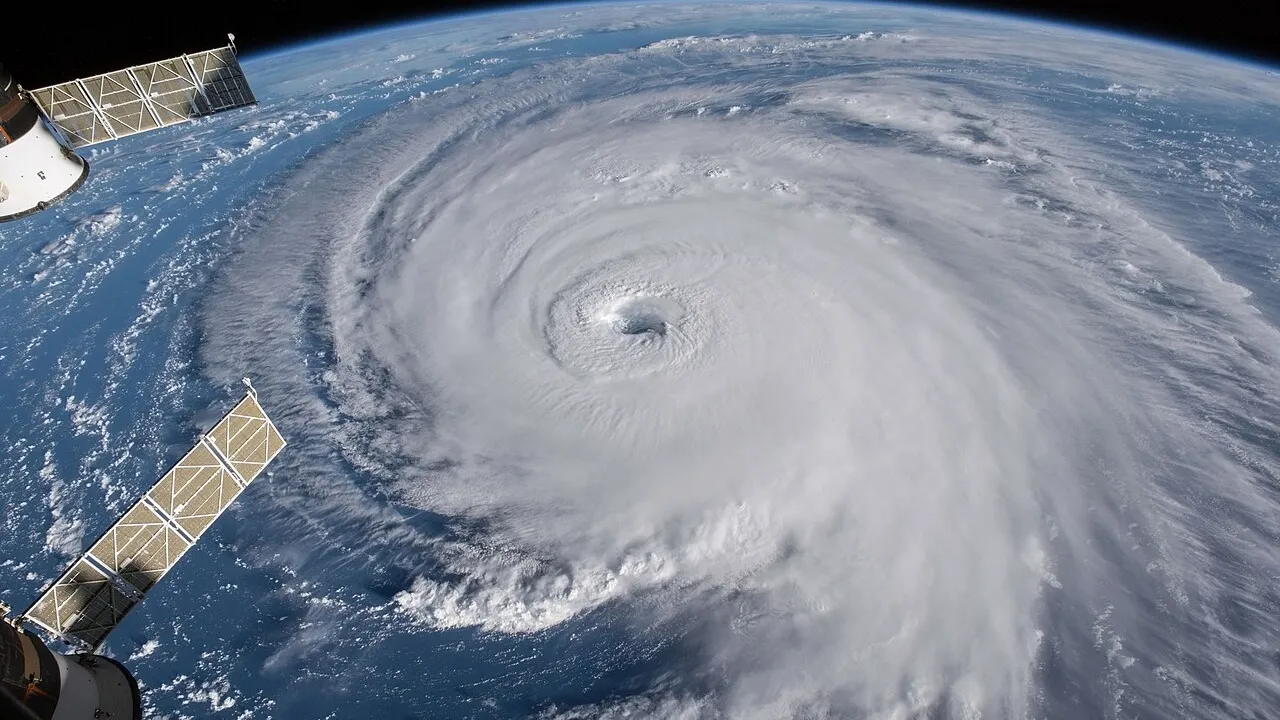
1. Which category number stands for the fastest hurricane winds on the scale?
2. Why do weather forecasters share a hurricane's category number on TV and radio?
🤯 Mind-Blowing Fact • Grade 2
Herbert Saffir got the idea for his five-level hurricane scale after studying how scientists rated earthquakes!
✨ Word Sparks (Grade 2 Glossary)
Tap 🔊 to hear
sustained
Steady wind blowing without stopping right away
engineer
Person who designs safe buildings and machines
flooding
Water covering land that is usually dry
🪝
Why did an engineer and a hurricane scientist team up to invent a five-step storm scale?
1
Two Clever Minds Team Up
Imagine trying to explain a giant ocean storm using only long charts of numbers. In 1971, structural Herbert Saffir and Hurricane Center director Robert Simpson teamed up to solve that puzzle. Together they created a simple one-to-five rating system.
2
Checking Wind Speed
The Saffir-Simpson Hurricane Wind Scale measures a hurricane's wind speed. Category 1 starts at 74 miles per hour, while Category 3 reaches 111 miles per hour and marks a major hurricane.
3
Wind Is Only Part of the Story
This scale predicts wind damage to trees, power lines, and buildings. Even a Category 1 storm can still bring heavy rain and coastal , so families listen carefully to every warning!
1. At which category does a storm first count as a 'major hurricane' on the scale?
2. What exact feature of a hurricane does the modern Saffir-Simpson scale measure?
🤯 Mind-Blowing Fact • Grade 3
Hurricane Hunter crews drop GPS parachute tubes called dropsondes into the storm's eyewall to clock winds every half second as they fall!
✨ Word Sparks (Grade 3 Glossary)
Tap 🔊 to hear
eyewall
Ring of fiercest winds around hurricane's center
dropsonde
Parachute weather sensor dropped from an airplane
benchmark
Standard number used to test or compare
🪝
How do Hurricane Hunter airplanes measure winds inside a storm to pick the right category?
1
Flying Into the Eyewall
High above the Atlantic Ocean, brave crews aboard Hurricane Hunter aircraft steer straight through a spinning wall of clouds. They drop tube-shaped sensors called on tiny parachutes to measure wind speed, temperature, and pressure all the way to the waves. Back in Miami, forecasters plug those wind speeds into the Saffir-Simpson Hurricane Wind Scale.
2
Categories 1 Through 5
Each step up the scale warns of stronger one-minute sustained winds. Category 1 (74–95 mph) snaps branches and shingles. Category 2 (96–110 mph) causes widespread power outages. Categories 3 (111–129 mph), 4 (130–156 mph), and 5 (157 mph or higher) are major hurricanes capable of tearing roofs and snapping sturdy trees.
3
Why Engineers Use It
Herbert Saffir originally studied how strong winds push against homes and bridges for the United Nations. Building codes in Florida, Virginia, and Gulf Coast states use his wind to design hurricane straps and shatter-resistant windows.
4
Look Beyond the Number
Because the scale measures only wind, a slow-moving Category 1 hurricane can still dump twenty inches of rain, so smart citizens check rainfall and flood forecasts too!
1. Where inside a hurricane do dropsondes usually find the fastest sustained winds?
2. Why can a Category 1 hurricane still be very dangerous even with the lowest number on the scale?
🤯 Mind-Blowing Fact • Grade 4
Wind force grows much faster than wind speed: a Category 4 hurricane blowing at 150 mph pushes against walls with roughly four times the force of a 75 mph Category 1 storm!
✨ Word Sparks (Grade 4 Glossary)
Tap 🔊 to hear
barometric
Relating to the weight and pressure of air
streamline
Make simpler, clearer, and more effective
landfall
Moment a storm's center crosses onto land
🪝
Why did the National Hurricane Center remove air pressure and storm surge from the Saffir-Simpson scale in 2010?
1
Born From Engineering and Meteorology
In 1969, civil engineer Herbert Saffir studied wind damage to low-cost housing around the world and organized wind impacts into five tiers, much like earthquake intensity scales. Two years later, National Hurricane Center director Robert Simpson added expected storm surge heights and central pressure ranges so emergency managers along the Atlantic and Gulf Coasts could grasp a storm's power at a glance. By 1975, the public knew it as the Saffir-Simpson Scale.
2
Why the Scale Changed in 2010
Experience with massive storms revealed a tricky surprise. In 2005, Hurricane Katrina made Gulf Coast as a giant Category 3 windstorm yet pushed a twenty-eight-foot wall of ocean water ashore—higher than typical Category 5 charts predicted! Three years later, Category 2 Hurricane Ike flooded Texas coastlines because its wind field was enormous. Realizing that ocean depth, coastline shape, and storm width control flooding separately from peak wind speed, scientists streamlined the system in 2010 into the Saffir-Simpson Hurricane Wind Scale.
3
The One-Minute Sustained Rule
Before a tropical storm earns Category 1 status, its maximum sustained winds—averaged over one full minute at ten meters (33 feet) above open water—must reach 74 mph. Brief three-second gusts often blow twenty percent faster than that sustained rating!
4
Protecting Virginia and Coastal States
Today, emergency teams pair the wind category with separate Storm Surge Watches and Flood Warnings, giving coastal Virginia and Tidewater families complete, accurate guidance.
1. Why did scientists update the scale in 2010 to measure ONLY wind speed?
2. How is 'sustained wind' measured by the National Hurricane Center?
🤯 Mind-Blowing Fact • Grade 5
Hurricane Patricia set the Western Hemisphere record in October 2015 with one-minute sustained winds of 215 miles per hour—nearly sixty miles per hour above the Category 5 starting line!
✨ Word Sparks (Grade 5 Glossary)
Tap 🔊 to hear
threshold
Exact starting value for a new level
radiometer
Sensor measuring energy waves from ocean foam
reconnaissance
Exploratory flight mission to gather scientific data
🪝
Why does doubling a hurricane's wind speed quadruple the physical force slamming into coastal buildings?
1
Quantifying Tropical Cyclone Wind Thresholds
Across the North Atlantic and Northeast Pacific basins, the Saffir-Simpson Hurricane Wind Scale (SSHWS) classifies tropical cyclones that surpass tropical-storm strength (39–73 mph) into five categories based strictly on maximum 1-minute sustained wind speed at the standard meteorological height of 10 meters over unobstructed exposure. Expressed in knots, miles per hour, and kilometers per hour, the step upward cleanly: Category 1 (74–95 mph / 119–153 km/h), Category 2 (96–110 mph / 154–177 km/h), Category 3 (111–129 mph / 178–208 km/h), Category 4 (130–156 mph / 209–251 km/h), and open-ended Category 5 (157+ mph / 252+ km/h).
2
Nonlinear Wind-Load Physics
Herbert Saffir spaced those five categories to match real structural engineering failure points because aerodynamic wind pressure increases with the square of velocity ($P \propto v^2$), while destructive kinetic power scales roughly with the cube of velocity. Consequently, when sustained winds double from 75 mph (Category 1) to 150 mph (high Category 4), dynamic pressure pushing against roofs, windows, and transmission towers multiplies fourfold, explaining why Category 3 marks the critical jump to a 'major hurricane.'
3
Aircraft Reconnaissance and Dvorak Satellite Estimates
Determining a storm's exact category requires high-precision instrumentation. NOAA WP-3D Orion and Air Force Reserve WC-130J aircraft fly radial passes through the eyewall using Stepped Frequency Microwave (SFMR)—which calculate surface wind speed from sea-foam microwave brightness—alongside GPS dropsondes. Where aircraft cannot fly, analysts apply the Dvorak technique, comparing infrared eye warmth against surrounding cold cloud-top temperatures.
4
Global Basin Differences
Meteorological agencies in Australia, Japan, and the Indian Ocean average sustained winds over ten minutes rather than one minute and use regional typhoon or cyclone scales, requiring careful conversion factors when scientists compare global climate records.
5
Debating a Hypothetical 'Category 6'
As warming oceans fuel ultra-intense storms such as Hurricane Patricia (215 mph in 2015), researchers occasionally debate adding a 'Category 6' above 192 mph. However, National Hurricane Center experts note that Category 5 already warns of catastrophic wind destruction—and emphasize communicating water hazards like storm surge and inland flash flooding.