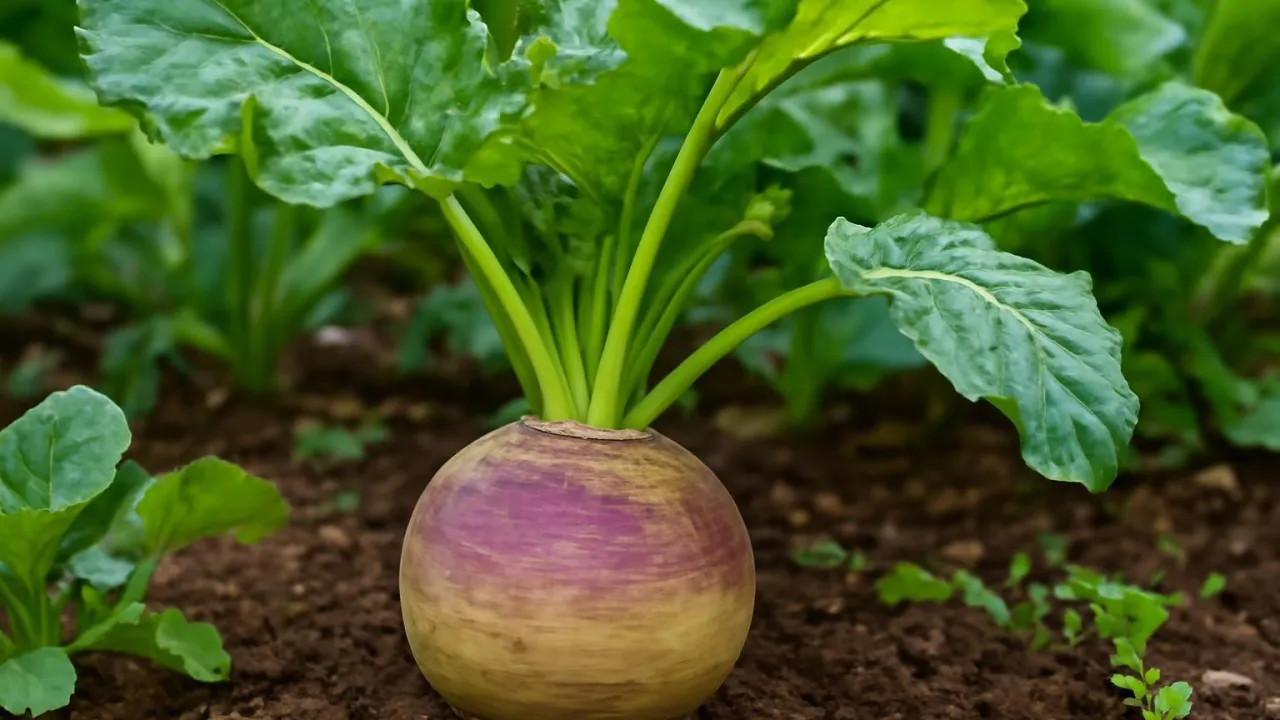
Rutabagas are a mix between cabbage and turnip, giving them a unique taste!
✨ Word Sparks (Grade 2 Glossary)
Tap 🔊 to hear
harvest
To pick plants when they are ready
vegetable
A plant we eat for food
fiber
A part of plants that helps your tummy
🪝
Have you ever eaten a vegetable that grows like a hidden treasure underground?
1
Rutabaga’s Appearance and Growth
Rutabagas are round with yellow skin and green leaves on top. They grow underground in cool weather. Farmers plant seeds in spring and them in fall.
2
Where Rutabagas Live
Rutabagas grow best in cool places like Northern Europe and Scandinavia. They need full sun and regular water to grow big and sweet. The soil must be soft so roots can grow deep.
3
Tasty and Healthy Roots
Rutabagas taste sweet with a hint of spice and are cooked in many dishes. They provide vitamins and that help people stay healthy. Many families enjoy them in soups and stews.
Rutabagas are a hybrid of cabbage and turnip, combining traits from both plants!
✨ Word Sparks (Grade 3 Glossary)
Tap 🔊 to hear
photosynthesis
How plants use sunlight to make food
predator
An animal that eats other animals or plants
nutrients
Food parts that help plants and animals grow
🪝
Did you know rutabagas are root vegetables with a sweet, spicy flavor and thick skin?
1
Rutabaga’s Unique Root Structure
Rutabagas grow underground as thick roots with rough, waxy skin that protects them. Their leaves grow above ground to catch sunlight for . This adaptation helps them survive cold climates.
2
Where Rutabagas Thrive
They grow best in cool climates such as Northern Europe and Scandinavia where the soil is soft. Rutabagas need and water from the soil to develop their sweet flavor. Farmers often rotate crops to keep soil healthy.
3
Rutabagas in the Food Web
Rutabagas provide food for humans and some animals like rabbits and deer. Their thick skin helps protect them from many and pests. They also contribute back to the soil when composted.
4
A Vegetable with History and Flavor
Rutabagas were first cultivated hundreds of years ago as a hardy crop for cold regions. Their sweet and slightly spicy taste makes them popular in soups and stews. They are a great example of plant adaptation to environment.
Rutabagas improve soil health and support animals in cold climate food webs through nutrient recycling!
✨ Word Sparks (Grade 4 Glossary)
Tap 🔊 to hear
ecosystem
A community of plants and animals living together
symbiosis
A helpful relationship between living things
crop rotation
Planting different crops to keep soil healthy
🪝
Have you ever wondered how rutabagas survive cold climates and help ecosystems?
1
Adaptations for Cold Climates
Rutabagas have thick, waxy skin that protects their root from freezing temperatures and pests. Their leaves grow above ground to capture sunlight, enabling photosynthesis even in short growing seasons. This adaptation allows them to thrive in Northern Europe and Scandinavia where winters are long and cold.
2
Role in Ecosystems and Food Webs
Rutabagas serve as a food source for humans and animals like rabbits and deer, linking them to local food webs. Their roots store nutrients that enrich the soil when decomposed, supporting other plants. This symbiotic relationship helps maintain healthy farmland and supports biodiversity.
3
Agricultural Importance and Human Impact
Farmers grow rutabagas as a hardy crop that tolerates poor soils and cold weather, helping sustain food supplies. with rutabagas improves soil health by reducing pests and diseases. However, over-farming can deplete nutrients, so sustainable practices like composting and cover crops are important.
4
Geographic Distribution and Growth Conditions
Rutabagas are mainly grown in cool temperate regions like Northern Europe, Canada, and parts of the northern United States. They require full sun and moist, well-drained soil to develop their sweet flavor and firm texture. Ideal temperatures range between 45 and 75 degrees Fahrenheit, which supports steady root growth.
2. Why do farmers use crop rotation with rutabagas?
🤯 Mind-Blowing Fact • Grade 5
Rutabagas are hybrids of cabbage and turnip, uniquely adapted to survive cold climates and nourish people!
✨ Word Sparks (Grade 5 Glossary)
Tap 🔊 to hear
hybrid
A plant made by mixing two different plants
photosynthesis
How plants use sunlight to make food
carbohydrates
Plant sugars that give energy to grow
🪝
What makes the rutabaga a fascinating root vegetable adapted for cold climates and human use?
1
Taxonomy and Botanical Classification
Rutabaga, scientifically named Brassica napus subsp. rapifera, belongs to the Brassicaceae family, which includes cabbage and turnips. It is a species derived from crossing turnip (Brassica rapa) and cabbage (Brassica oleracea). This hybridization gives rutabaga its unique characteristics, combining traits from both parent plants.
2
Physiological Adaptations and Growth Mechanics
The rutabaga’s thick, waxy skin protects its root from frost damage and insect predation, allowing it to survive harsh winters. Its large leaves perform efficiently during short growing seasons, storing in the root. This storage enables the plant to regrow annually and provides a nutritious food source.
3
Conservation, Agricultural History, and Human Impact
Historically, rutabagas have been cultivated since the 17th century as a reliable crop in cold northern climates. Sustainable farming practices, including crop rotation and soil management, are essential to prevent nutrient depletion and maintain soil health. Modern agriculture balances rutabaga production with environmental conservation efforts.
4
Quantitative Comparisons and Growth Conditions
Rutabagas typically grow 3 to 5 inches in diameter and can weigh between 1 and 3 pounds (0.5 to 1.4 kilograms). They thrive best in temperatures ranging from 45 to 75 degrees Fahrenheit (7 to 24 degrees Celsius). Compared to turnips, rutabagas have a sweeter flavor and denser flesh, making them a popular choice in northern diets.
5
Culinary Uses and Nutritional Benefits
Rutabagas are rich in vitamin C, fiber, and antioxidants, contributing to a healthy diet. They are commonly prepared by boiling, roasting, or mashing, often featured in stews and casseroles. Their sweet, slightly spicy flavor adds depth to dishes and makes them a versatile vegetable in global cuisines.