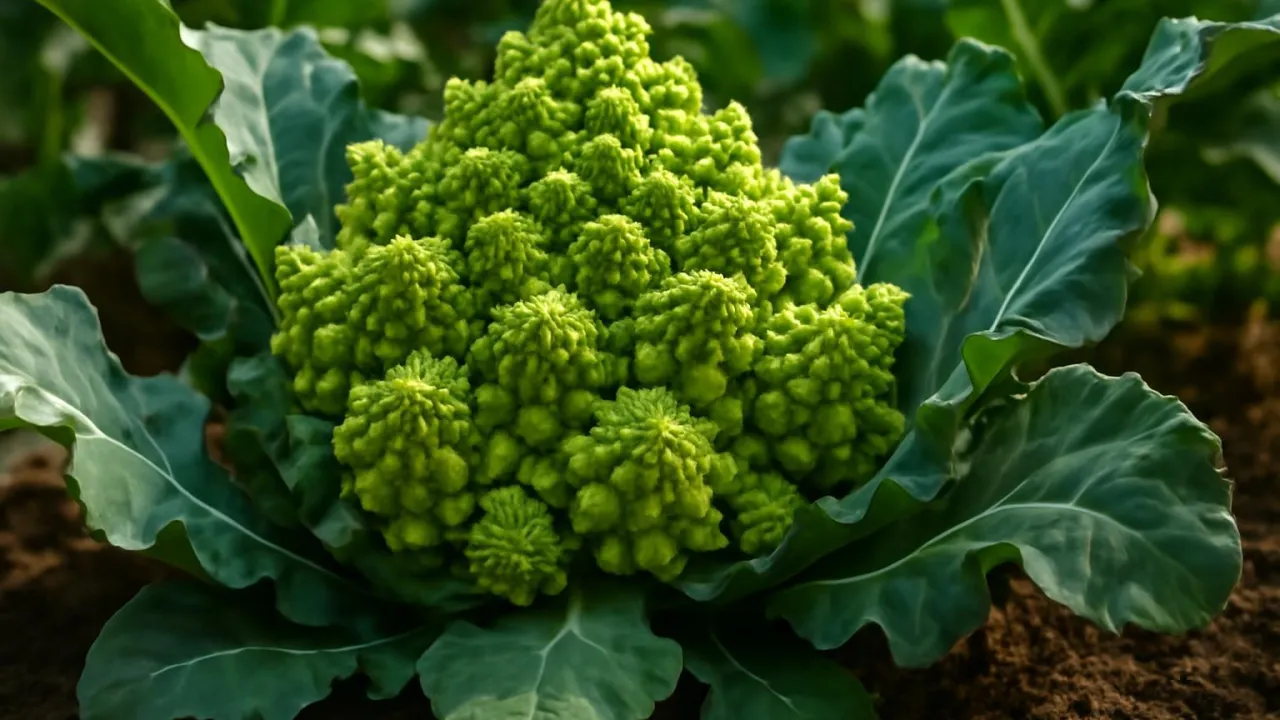
Romanesco broccoli’s spiral shapes follow a special math pattern called fractals!
✨ Word Sparks (Grade 2 Glossary)
Tap 🔊 to hear
spiral
A shape that curls around like a coil
harvest
To pick plants when they are ready
crunchy
Makes a loud sound when you bite it
🪝
Have you ever seen a vegetable shaped like a green spiral tower?
1
Amazing Shape
Romanesco broccoli has a bright green color and a shape. It looks like many small cones that fit together. This pattern is very special and fun to see.
2
Where It Grows
This vegetable grows best in gardens with full sun and plenty of water. It comes from the Mediterranean region, especially Italy. Farmers it when the are big and fresh.
3
How It Tastes
Romanesco broccoli tastes like a mix of broccoli and cauliflower. People eat it cooked or raw in salads. It is and has a fresh, mild flavor.
1. What kind of pattern does Romanesco broccoli have?
2. Where did Romanesco broccoli originally grow?
🤯 Mind-Blowing Fact • Grade 3
Romanesco broccoli’s fractal spirals follow the Fibonacci sequence found in nature’s patterns!
✨ Word Sparks (Grade 3 Glossary)
Tap 🔊 to hear
fractal
A shape that repeats smaller parts again and again
camouflage
Colors or shapes that help hide from predators
nutrients
Food parts plants need to grow healthy
🪝
Did you know Romanesco broccoli grows in fractal spirals like a natural math puzzle?
1
Unique Fractal Shape
Romanesco broccoli has a unique shape that repeats smaller cones in spirals. This pattern helps it grow evenly and catch sunlight well. The cones look like tiny green pinecones arranged perfectly. This natural design is rare in vegetables.
2
Where It Thrives
This vegetable grows in the Mediterranean climate with mild temperatures and plenty of sun. It needs rich soil and regular watering to get . Romanesco is often grown in gardens and farms for fresh harvests. It adapts well to cool weather.
3
How It Survives
The pattern helps Romanesco broccoli protect itself from predators by looking complex and unusual. Its bright green color can also among leafy greens. The vegetable’s structure allows good airflow to prevent rot and disease.
4
Tasty and Healthy
Romanesco broccoli tastes like a mix of cauliflower and broccoli with a crunchy texture. It contains vitamins C and K that help keep people healthy. People cook it steamed or eat it raw in salads. It is a nutritious choice for meals.
1. How does the fractal shape help Romanesco broccoli?
2. What vitamins does Romanesco broccoli have?
🤯 Mind-Blowing Fact • Grade 4
Romanesco broccoli’s fractal spirals follow a mathematical pattern called the Fibonacci sequence found in pinecones and shells!
✨ Word Sparks (Grade 4 Glossary)
Tap 🔊 to hear
photosynthesis
How plants use sunlight to make food
ecosystem
A community of plants, animals, and environment
cultivate
To care for plants to help them grow
🪝
Have you ever wondered why Romanesco broccoli looks like a natural fractal masterpiece?
1
Fractal Geometry in Nature
Romanesco broccoli’s fractal geometry results from its unique growth patterns that repeat smaller cones in spirals. This cause-and-effect relationship allows the vegetable to maximize sunlight exposure for . Its structure also helps reduce damage from pests by confusing predators visually. These spirals follow the Fibonacci sequence, a famous natural pattern.
2
Ecosystem Role and Growth
Romanesco broccoli grows mainly in Mediterranean climates with mild winters and warm summers, thriving in fertile soil with regular watering. It plays a role in local food webs by providing nutrients to humans and animals. Farmers it carefully to maintain its unique shape and nutritional value. Its growth depends on adequate sunlight and water.
3
Human Impact and Uses
Humans have cultivated Romanesco broccoli for centuries, appreciating its unusual appearance and health benefits. It is used in cooking worldwide, often steamed or roasted to preserve nutrients. Agricultural practices impact its growth, requiring sustainable methods to protect soil health. Its popularity helps farmers diversify crops and support local economies.
4
Geographic Distribution
Originally from Italy, Romanesco broccoli is now grown in many temperate regions around the world. It adapts well to various climates but prefers cooler temperatures for optimal growth. Gardeners and farmers it in North America, Europe, and Asia. Its spread shows how human cultivation influences plant distribution globally.
1. Why does Romanesco broccoli have fractal spirals?
2. Where is Romanesco broccoli originally from?
🤯 Mind-Blowing Fact • Grade 5
Romanesco broccoli’s fractal cones grow at angles of about 137.5 degrees, matching the golden angle in nature’s math!
✨ Word Sparks (Grade 5 Glossary)
Tap 🔊 to hear
meristematic tissue
Plant cells that help new growth form
taxonomy
How scientists group living things by traits
biomimicry
Using nature’s designs to solve human problems
🪝
What makes Romanesco broccoli a fascinating example of fractal geometry in plants?
1
Scientific Classification and Taxonomy
Romanesco broccoli belongs to the species Brassica oleracea, variety botrytis, which includes cauliflower and broccoli. Its classification reflects shared genetic traits, yet its fractal structure makes it unique among cultivars. This variety has been selectively bred over centuries for its distinct appearance and flavor profile. Understanding its helps scientists study plant evolution and diversity.
2
Physiological Mechanics of Growth
The fractal spirals of Romanesco broccoli develop through repeated growth of at the tips of cones. This growth follows the Fibonacci sequence, producing self-similar patterns at different scales. The plant’s vascular system efficiently transports water and nutrients to support this complex structure. Its bright green color results from chlorophyll concentration optimized for photosynthesis.
3
Conservation and Botanical History
Romanesco broccoli has been cultivated since the 16th century in Italy, where it was prized for its unusual form. Conservation efforts focus on preserving heirloom varieties amid modern agricultural changes. Botanical gardens and seed banks maintain genetic diversity to protect this vegetable’s unique traits. Its history reflects human influence on plant domestication and biodiversity.
4
Quantitative Comparisons and Measurements
Romanesco broccoli typically grows 6 to 12 inches tall and weighs between 0.5 and 2 pounds. Its fractal cones number in the dozens, each following the Fibonacci spiral with angles close to 137.5 degrees. It thrives best in temperatures between 60 and 70 degrees Fahrenheit, requiring regular watering for optimal growth. These precise measurements highlight its specialized adaptation.
5
Ecological and Agricultural Importance
Romanesco broccoli contributes to sustainable agriculture by diversifying crop options and supporting soil health through crop rotation. Its nutrient-rich profile provides vitamins C and K, benefiting human diets worldwide. Farmers must balance pest management with environmental care to maintain healthy yields. Its unique form also inspires research in science and design.