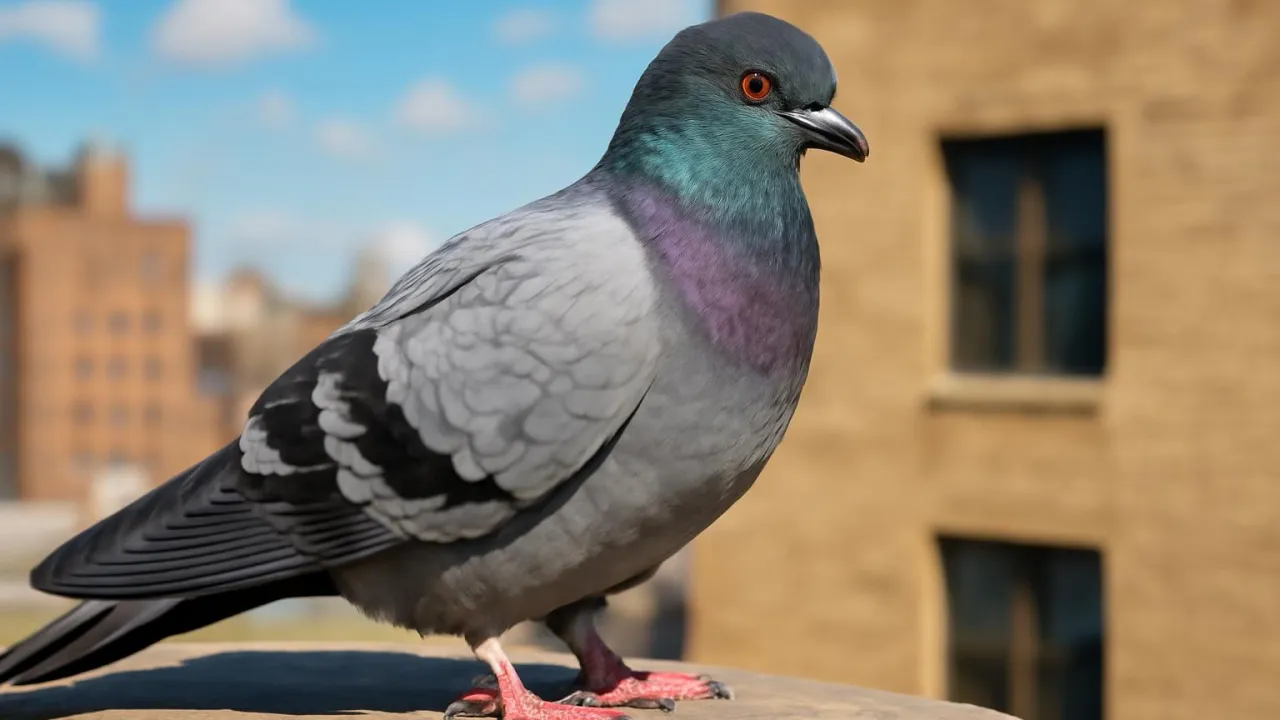
Rock pigeons can remember their way home even from hundreds of miles away!
✨ Word Sparks (Grade 2 Glossary)
Tap 🔊 to hear
nest
A bird’s home made from sticks and grass
predator
An animal that hunts other animals for food
diet
The food an animal usually eats
🪝
Have you ever seen a bird fly home from far away?
1
Colorful City Birds
Rock pigeons have gray and white feathers with shiny patches on their necks. They often live in cities where tall buildings give them safe places to build . These birds fly quickly and can often be seen pecking for food on the ground.
2
Homes on High Places
They like to build on ledges and rooftops, which protect their eggs from . Rock pigeons lay two eggs that hatch after about 18 days. The baby birds grow fast and learn to fly in about a month.
3
Eating Seeds and Bugs
Their mostly includes seeds, grains, and small insects they find on the ground. They drink water by dipping their beaks into puddles or fountains. This diet helps them stay strong and healthy every day.
Pigeons can fly over 600 miles to find their way back home!
✨ Word Sparks (Grade 3 Glossary)
Tap 🔊 to hear
camouflage
Colors that help animals hide from others
homing
The ability to find one’s way home
nutrients
Food parts that help animals grow strong
🪝
How do rock pigeons find their way home from far away places?
1
Color and Camouflage
Rock pigeons have gray feathers with shiny green and purple patches on their necks. This coloring helps them blend into city buildings and rocky cliffs. Their feathers also protect them from cold and rain. helps pigeons hide from predators like hawks.
2
Nesting and Life Cycle
These birds build nests on ledges or cliffs using twigs and grass. They lay two eggs that hatch after about 18 days. Baby pigeons, called squabs, grow quickly and learn to fly in about four weeks. This fast growth helps them avoid predators.
3
Diet and Survival
Rock pigeons eat seeds, grains, and small insects found on the ground. Their strong beaks help them peck and eat tough seeds. Eating a variety of foods gives them the needed for energy and health. This diet helps pigeons survive in many environments.
4
Amazing Homing Ability
Rock pigeons have a special sense called that helps them find their way home from far away. Scientists believe pigeons use the sun, earth’s magnetic field, and landmarks to navigate. This adaptation helps them return to their nests safely. Homing pigeons have been used by humans for messages.
Rock pigeons are found on every continent except Antarctica because of their adaptability.
✨ Word Sparks (Grade 4 Glossary)
Tap 🔊 to hear
ecosystem
A community of animals and plants living together
symbiotic
A close relationship where both help each other
adaptability
The ability to change to live in new places
🪝
Why do rock pigeons thrive in cities all over the world?
1
Adaptations for Urban Life
Rock pigeons have adapted well to urban environments because their feathers provide excellent camouflage against buildings and rocks. Their strong wings allow them to fly quickly between food sources and nesting sites. This adaptation helps them avoid predators like hawks and falcons common in cities. Their ability to nest on ledges mimics their natural cliff habitats, making cities ideal homes.
2
Role in the Ecosystem
Pigeons play an important role in urban food webs by eating seeds and insects, which helps control pest populations. They also serve as prey for urban predators such as hawks and owls. Humans have historically used pigeons for communication because of their remarkable homing ability. This relationship shows how pigeons and humans impact each other’s lives.
3
Geographic Distribution
Originally native to Europe and Asia, rock pigeons have spread worldwide due to human activity. They now live on every continent except Antarctica. Their ability to survive in diverse climates, from cold mountains to hot cities, shows their impressive . This wide distribution makes them one of the most common birds in the world.
4
Cause and Effect of City Living
Living in cities provides pigeons with abundant food but also exposes them to pollution and predators. Their diet changes to include human food scraps, which can affect their health. However, their fast breeding cycle helps maintain population numbers despite these challenges. This cause-and-effect balance allows pigeons to thrive in urban areas.
1. How do rock pigeons help control pests in cities?
2. What is one reason pigeons thrive in cities?
🤯 Mind-Blowing Fact • Grade 5
Rock pigeons can fly up to 60 miles per hour and navigate over 600 miles home using magnetic fields.
✨ Word Sparks (Grade 5 Glossary)
Tap 🔊 to hear
taxonomy
The science of naming and classifying living things
navigation
Finding the way from one place to another
ecological
Relating to how living things affect their environment
🪝
What scientific secrets enable the rock pigeon to navigate thousands of miles home?
1
Scientific Classification and Origins
The rock pigeon, scientifically named Columba livia, belongs to the family Columbidae, which includes doves and pigeons. Native to Europe, North Africa, and parts of Asia, this species has been domesticated and introduced worldwide. Its ability to thrive in urban environments has made it one of the most widespread birds globally. Understanding its helps scientists study its evolutionary adaptations.
2
Physiological Mechanics of Flight and Navigation
Rock pigeons possess powerful flight muscles and aerodynamic wing shapes that enable sustained long-distance flying. Their brains contain specialized cells that detect Earth’s magnetic field, aiding in . They also use visual landmarks and the position of the sun to orient themselves during flight. This complex sensory system allows pigeons to home accurately over hundreds of miles.
3
Conservation and Historical Significance
While rock pigeons are abundant, their wild populations have declined in some native areas due to habitat loss. Historically, humans have bred pigeons for food, sport, and communication, especially during wartime. The use of homing pigeons to carry messages showcases their importance in human history. Conservation efforts focus on protecting wild populations and managing urban flocks.
4
Ecological Role and Urban Impact
In urban ecosystems, rock pigeons contribute to seed dispersal and serve as prey for raptors like hawks and falcons. Their presence affects human environments both positively and negatively, as they can carry diseases but also help control insect pests. Their adaptability to various climates and food sources demonstrates remarkable plasticity. Urbanization has significantly influenced their behavior and population dynamics.
5
Quantitative Comparisons and Records
Rock pigeons typically measure 12 to 14 inches in length and weigh between 9 to 13 ounces. They can fly at speeds up to 60 miles per hour and cover distances exceeding 600 miles during homing flights. Their eggs incubate for about 18 days, and squabs fledge within four weeks. These measurable traits highlight their efficiency as urban survivors and skilled navigators.