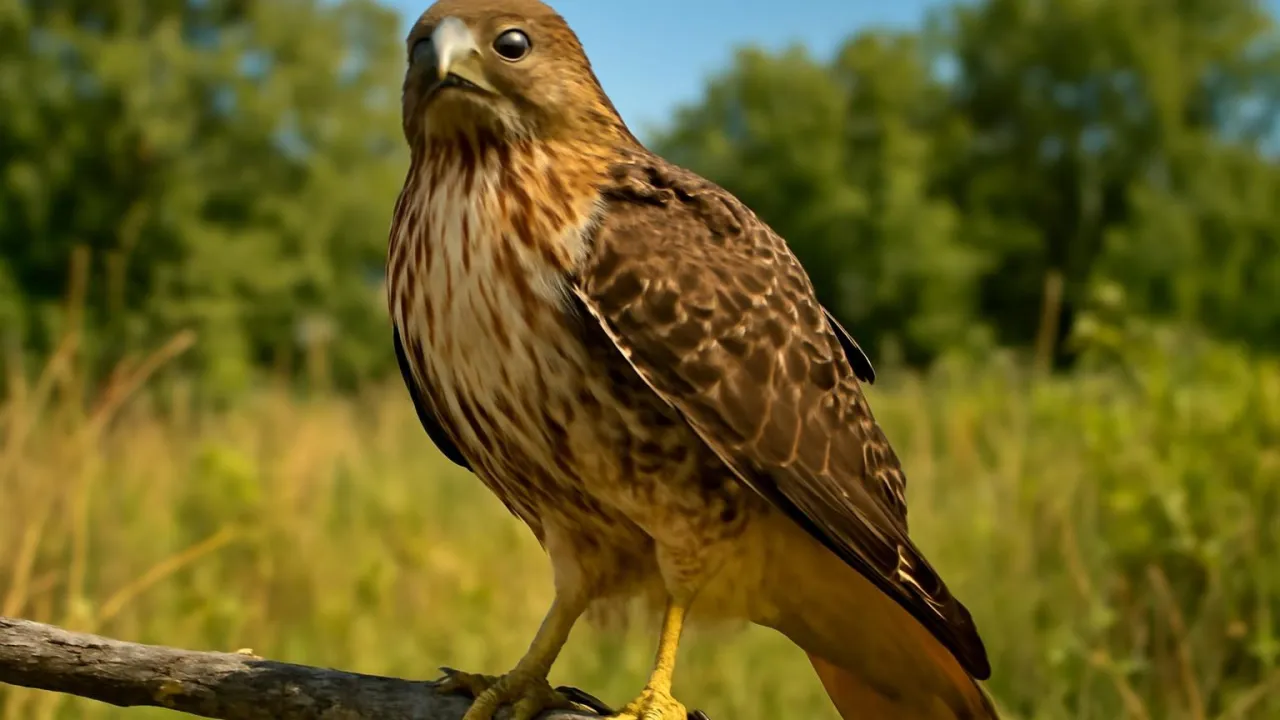
Red-tailed hawks can see prey from more than a mile away using their amazing eyesight.
✨ Word Sparks (Grade 2 Glossary)
Tap 🔊 to hear
prey
Animals that hawks hunt for food
claws
Sharp nails used to catch prey
nest
Birds’ home where they lay eggs
🪝
How does a red-tailed hawk spot tiny animals from so high in the sky?
1
Colors and Features
The red-tailed hawk has brown feathers with a bright red tail. Its sharp eyes help it see far away. It has strong to catch quickly.
2
Where It Lives
This hawk lives in open fields and forests across North America. It builds high in tall trees. It likes places where it can see its food easily.
3
Hunting and Food
Red-tailed hawks hunt small animals like mice, birds, and reptiles. They fly high and swoop down fast to catch . Their sharp and beak help them eat their food.
2. What kind of places does the hawk like to live in?
🤯 Mind-Blowing Fact • Grade 3
Red-tailed hawks can see four to eight times better than humans, helping them catch prey easily.
✨ Word Sparks (Grade 3 Glossary)
Tap 🔊 to hear
camouflage
Colors that help animals hide in nature
talons
Strong, sharp claws birds use to catch prey
food web
How animals eat and depend on each other
🪝
Did you know the red-tailed hawk uses camouflage and sharp eyesight to survive?
1
Physical Features and Adaptations
The red-tailed hawk has brown feathers that help it blend into trees and fields. Its bright red tail is easy to spot when it flies. Sharp eyesight allows it to spot prey from high above. Its strong help it catch and hold onto animals.
2
Hunting and Diet
This hawk hunts small mammals, birds, and reptiles by soaring high in the sky. It uses its keen vision to find prey hidden on the ground. When it spots food, it swoops down quickly to catch it. Its sharp beak helps tear meat for eating.
3
Habitat and Range
Red-tailed hawks live in many habitats, including forests, fields, and deserts across North America. They build nests high in tall trees or on cliff edges. Their wide range helps them find food in many environments. They adapt well to both rural and urban areas.
4
Survival and Behavior
Red-tailed hawks use to hide from predators and sneak up on prey. They play an important role in the by controlling small animal populations. Their sharp senses and flying skills help them survive. They often soar in circles to search for food.
2. What role do red-tailed hawks play in the food web?
🤯 Mind-Blowing Fact • Grade 4
Red-tailed hawks can see ultraviolet light, which helps them detect prey urine trails invisible to humans.
✨ Word Sparks (Grade 4 Glossary)
Tap 🔊 to hear
predator
An animal that hunts other animals for food
ecosystem
All living and nonliving things in an area
symbiosis
When two living things help each other
🪝
How does the red-tailed hawk’s sharp vision affect its role in ecosystems across North America?
1
Physical Adaptations and Hunting
The red-tailed hawk’s sharp eyesight allows it to spot prey from high altitudes, giving it a hunting advantage. Its strong talons and hooked beak are perfectly designed to catch and tear apart small mammals and birds. The bright red tail feathers help with flight control and communication with other hawks. These adaptations enable the hawk to be an efficient in many environments.
2
Habitat and Geographic Range
This species inhabits a wide range of habitats including forests, deserts, grasslands, and urban areas across North America. It builds large nests in tall trees or on cliff ledges, often reusing the same nest for years. The hawk’s ability to adapt to different environments allows it to thrive in both rural and city landscapes. Its presence is a sign of a healthy .
3
Ecosystem Role and Food Web
As a top , the red-tailed hawk helps control populations of rodents, rabbits, and other small animals. This predation maintains balance in the food web and prevents overpopulation of prey species. The hawk’s hunting also indirectly supports plant health by reducing herbivore numbers. Symbiotic relationships occur when hawks benefit from open habitats created by other animals or humans.
4
Human Impact and Conservation
Human activities like habitat destruction and pollution can threaten red-tailed hawk populations. However, these hawks often adapt well to urban environments where food is plentiful. Conservation efforts include protecting nesting sites and reducing pesticide use to ensure healthy prey populations. Public education helps people appreciate the hawk’s important role in .
1. How do red-tailed hawks help keep ecosystems balanced?
2. What human action helps protect red-tailed hawks?
🤯 Mind-Blowing Fact • Grade 5
Red-tailed hawks can dive at speeds up to 120 miles per hour to catch prey with precise accuracy.
✨ Word Sparks (Grade 5 Glossary)
Tap 🔊 to hear
raptor
A bird that hunts other animals for food
acuity
Sharpness of vision or hearing
apex predator
Top hunter with no natural enemies
🪝
What unique physiological traits allow the red-tailed hawk to be a dominant raptor across diverse North American habitats?
1
Taxonomy and Scientific Classification
The red-tailed hawk, scientifically named Buteo jamaicensis, belongs to the family Accipitridae, which includes hawks, eagles, and kites. It is classified as a , a bird of prey that hunts live animals using keen senses and powerful flight. This species is widespread across North America, showing remarkable adaptability to various ecosystems. Its taxonomy reflects evolutionary traits suited for predation and survival.
2
Physiological Mechanics and Adaptations
Red-tailed hawks possess extraordinary visual , estimated to be four to eight times sharper than human eyesight, enabling detection of prey from over a mile away. Their wingspan ranges from 3.3 to 4.8 feet, facilitating soaring flight with minimal energy expenditure. Strong talons and a hooked beak allow efficient capture and dismemberment of prey. Their respiratory and muscular systems support sustained flight and rapid dives during hunting.
3
Ecological Role and Conservation Status
As , red-tailed hawks regulate populations of rodents, rabbits, and other small animals, maintaining ecological balance. They occupy diverse habitats including forests, deserts, grasslands, and urban areas, demonstrating ecological plasticity. Conservation efforts focus on habitat preservation, reducing pesticide use, and mitigating human-wildlife conflicts. Currently, their population is stable, but ongoing monitoring is essential to detect environmental threats.
4
Botanical History and Nesting Behavior
Red-tailed hawks build large nests primarily in tall trees or on cliff ledges, often reusing nests annually. Nest materials include sticks, leaves, and sometimes human debris, reflecting adaptability. Nesting success depends on availability of suitable sites and minimal disturbance. Their reproductive cycle involves laying one to five eggs, with incubation lasting about a month before hatching.
5
Quantitative Comparisons and Flight Dynamics
The red-tailed hawk weighs between 2 and 4.5 pounds and can reach flight speeds up to 120 miles per hour during hunting dives. Their wingspan allows them to soar efficiently for hours while searching for prey. Compared to other , their moderate size and versatile flight patterns enable survival in varied climates and terrains. Temperature tolerance ranges from cold northern forests to hot southwestern deserts.