Purple Top Turnip
The Root with a Royal Crown
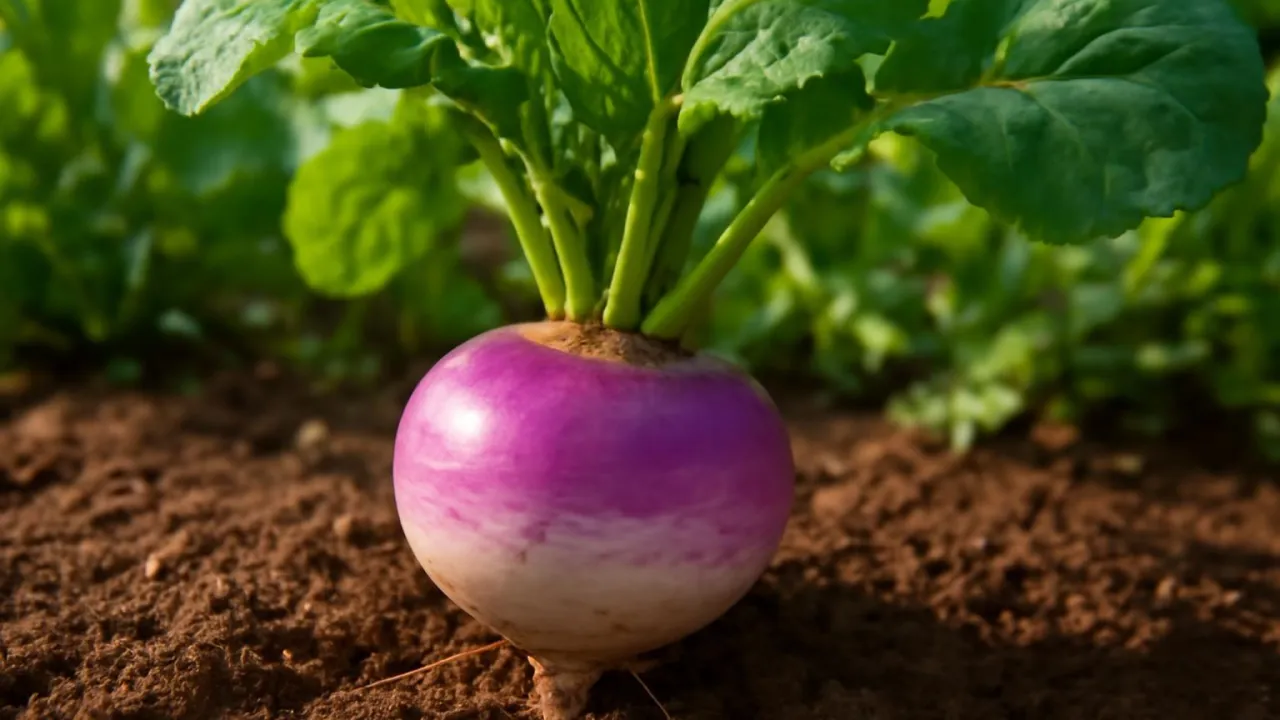
Turnips can break up hard soil, making it easier for other plants to grow later!
1 The Turnip’s Unique Look
Purple top turnips are easily recognized by their vibrant purple upper root and smooth white bottom. The purple color comes from , which are natural pigments that help protect the plant from sunlight and pests. Their broad, green leaves rise above the soil, gathering sunlight for photosynthesis. Both the root and the leaves are edible, making turnips a versatile vegetable.
2 Growing and Spreading
Turnips thrive in cool seasons and need well-drained, fertile soil with plenty of moisture. Farmers plant them in early spring or fall, and the seeds germinate quickly, producing edible roots in about two months. If left in the ground, turnips will flower and produce seeds for the next generation. Today, purple top turnips are grown all over the world, from Europe and Asia to North America.
3 Turnips and the Food Web
Turnips play an important role in gardens and food chains. Their roots provide food for people and animals like rabbits and deer, while the leaves are enjoyed by insects and some livestock. Turnips also help enrich the soil by breaking up hard ground and adding organic matter when their leaves . Farmers sometimes use turnips as a to protect and improve their fields.
4 Human Impact and Uses
People have grown and eaten turnips for thousands of years, especially in places with cool climates. Turnips are valued for their nutrition, providing vitamin C, fiber, and minerals. In some cultures, turnip roots are roasted, mashed, or pickled, while the leaves are cooked like spinach. Because turnips grow quickly and can improve soil health, they are an important crop for sustainable farming.
1. How do turnips help the soil?
2. Why are turnips called a cover crop?