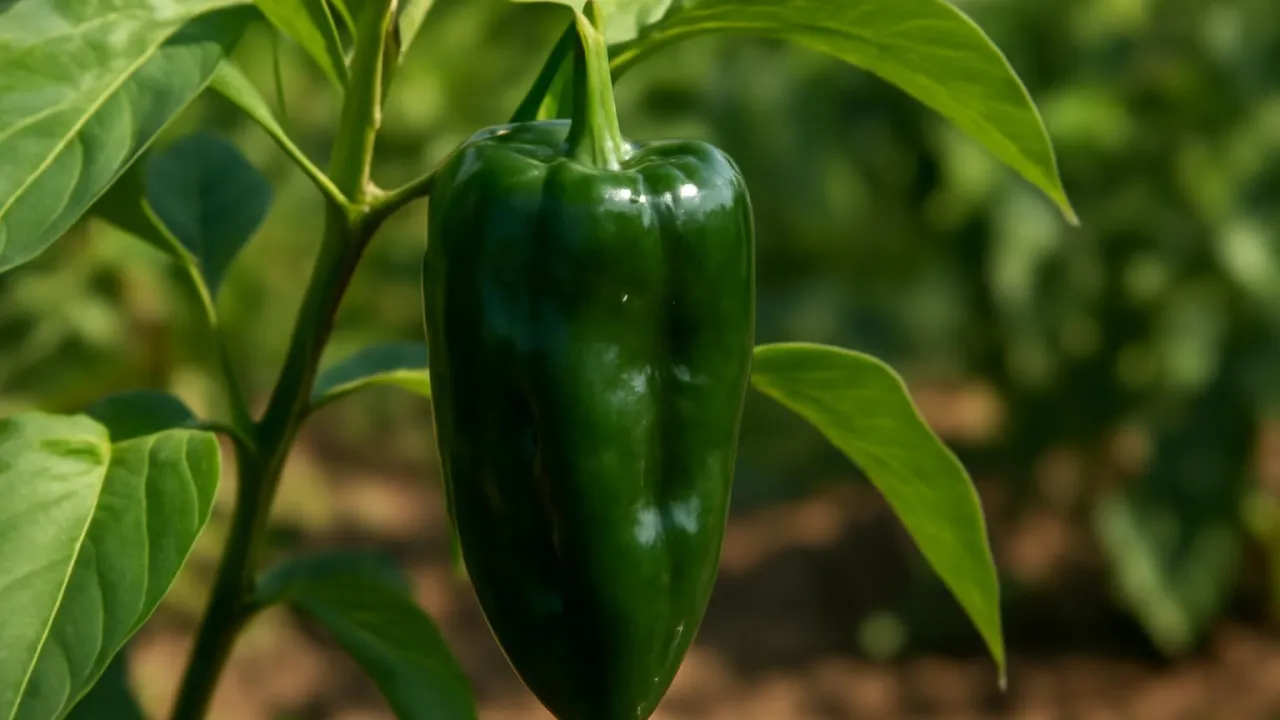
Poblano peppers are often dried to make a spicy chili called ancho!
✨ Word Sparks (Grade 2 Glossary)
Tap 🔊 to hear
shiny
Bright and smooth like a clean apple
spicy
Tastes hot or warm in your mouth
ripe
Ready to eat or pick from the plant
🪝
Have you ever tasted a pepper that is big but not too hot?
1
What Is a Poblano Pepper?
Poblano peppers are large and green with a skin. They grow on plants in warm places. People use them in cooking for their mild flavor.
2
Where Poblanos Grow
Poblanos grow best in sunny gardens with plenty of water. They come from Mexico and like warm weather. The plants can grow tall and strong in these conditions.
3
A Special Pepper
Poblanos have a mild heat that is less than other peppers. When , they turn dark red or brown. This change shows they are ready to eat or cook.
Poblano peppers dry into ancho chilis, a key ingredient in many Mexican dishes.
✨ Word Sparks (Grade 3 Glossary)
Tap 🔊 to hear
species
A group of plants or animals that are alike
pollinators
Animals that help plants make seeds and fruit
adaptation
A change that helps a plant or animal survive
🪝
Did you know poblano peppers change color as they grow and ripen?
1
Poblano Pepper Basics
Poblano peppers belong to the Capsicum annuum . They grow large and have a glossy green skin. Their mild heat makes them popular in cooking. These peppers are harvested before they fully ripen.
2
How Poblanos Grow
Poblanos grow on sturdy plants that thrive in warm climates. They need full sun and regular water to develop properly. The peppers start green and turn dark red or brown when ripe. This color change signals their maturity.
3
Adaptations for Survival
The thick skin of poblano peppers protects them from pests and drying out. Their mild spicy flavor helps deter some predators but attracts humans. This balance aids their survival and spread. The plant’s height helps leaves get enough sunlight.
4
Poblanos in Ecosystems
Poblanos contribute to food webs by feeding insects and animals. They rely on like bees to produce fruit. Farmers cultivate them for human use, affecting local ecosystems. Drying poblanos creates ancho chilis, used worldwide.
1. What color are poblano peppers before they ripen?
2. Why does the poblano’s thick skin help it survive?
🤯 Mind-Blowing Fact • Grade 4
Poblano peppers are a key ingredient in traditional Mexican dishes like chiles rellenos.
✨ Word Sparks (Grade 4 Glossary)
Tap 🔊 to hear
pollination
When pollen helps plants make seeds and fruit
biodiversity
Many different plants and animals living together
cultivate
To grow plants for food or use
🪝
How do poblano peppers fit into their environment and food webs?
1
Growing Conditions and Habitat
Poblano peppers thrive in warm, sunny climates where they receive ample sunlight and water. These conditions allow the plants to grow tall and produce large fruits. The peppers develop from green to dark red as they mature, signaling readiness for harvest. Warm temperatures directly affect their growth rate and flavor intensity.
2
Role in the Ecosystem
Poblano plants support local ecosystems by providing food for insects and small animals. Pollinators such as bees and butterflies visit the flowers, enabling fruit production through . The peppers’ mild heat helps deter some herbivores, balancing protection with seed dispersal. This interaction shows the plant’s role in maintaining .
3
Human Impact and Agriculture
Farmers poblano peppers extensively in Mexico and parts of the United States. Their mild flavor makes them popular in many dishes, increasing demand. Agricultural practices affect soil health and water use, requiring sustainable methods to protect the environment. Drying poblanos to make ancho chilis creates economic value but also changes local resource use.
4
Geographic Distribution
Originally native to Mexico, poblano peppers are now grown worldwide in temperate and subtropical regions. Their adaptability to different soils and climates has expanded their cultivation. However, they still prefer warm, sunny environments to thrive. This distribution highlights how human agriculture spreads plant species globally.
Poblano peppers have a Scoville rating of 1,000 to 2,000, making them mild but flavorful.
✨ Word Sparks (Grade 5 Glossary)
Tap 🔊 to hear
Scoville
A scale that measures how spicy peppers are
capsaicin
The chemical that makes peppers taste spicy
botanical
Relating to plants and how they grow
🪝
What makes the poblano pepper a unique member of the Capsicum annuum species?
1
Taxonomy and Scientific Context
The poblano pepper, scientifically known as Capsicum annuum, belongs to the Solanaceae family. It is classified as a mild chili pepper with a heat rating between 1,000 and 2,000 units. This species includes many peppers, but the poblano is distinguished by its large size and thick, dark green skin. Its classification helps scientists understand its relationships with other peppers.
2
Physiological Mechanics and Growth
Poblano peppers develop on bushy plants that reach about 2 to 3 feet tall. The fruit grows 3 to 6 inches long and requires full sun and consistent watering to mature properly. Their thick skin protects against dehydration and some insect damage, while their mild content deters certain herbivores. The peppers change color from green to dark red or brown as they ripen, signaling chemical changes inside.
3
Conservation and Botanical History
Native to Mexico, poblano peppers have been cultivated for centuries by indigenous peoples. Their popularity has spread globally due to their culinary versatility and mild heat. While not endangered, sustainable farming practices are important to prevent soil depletion and water waste. studies continue to explore their genetic diversity and potential for breeding more resilient varieties.
4
Quantitative Comparisons
Poblano peppers measure roughly 3 to 6 inches long and weigh about 2 to 3 ounces each. They grow best in temperatures between 70 and 85 degrees Fahrenheit (21 to 29 degrees Celsius). Compared to hotter peppers like jalapeños, which can reach 3,500 to 8,000 units, poblanos are much milder. Their relatively large size and thick flesh make them ideal for stuffing and roasting.
5
Culinary and Cultural Importance
Poblano peppers are essential in Mexican cuisine, especially in dishes like chiles rellenos and mole sauces. Their mild heat and rich flavor provide balance without overwhelming spiciness. Drying poblano peppers creates ancho chilis, which add smoky depth to many recipes. This cultural significance highlights the poblano’s role beyond botany, connecting people to tradition and flavor.