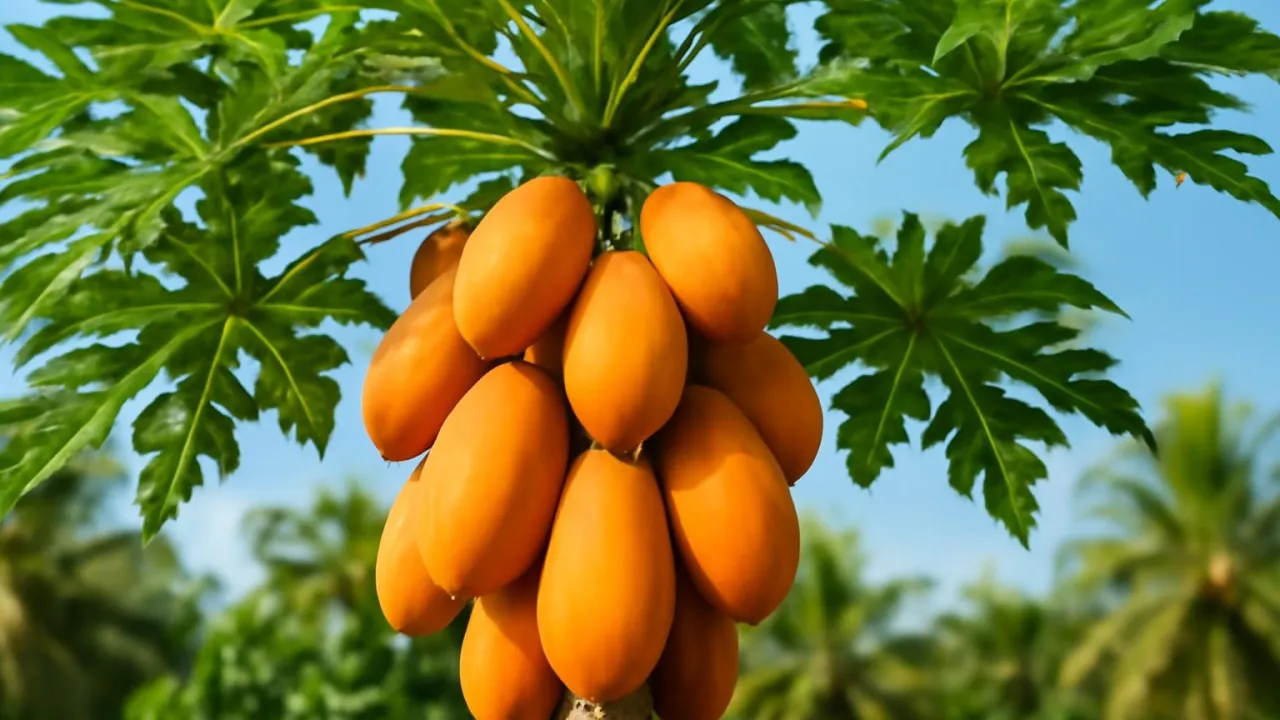
Papaya seeds can be eaten and taste a bit like black pepper!
✨ Word Sparks (Grade 2 Glossary)
Tap 🔊 to hear
enzyme
A helper in food that breaks things down
tropical
A warm place near the equator
seed
A tiny part inside fruit that grows a new plant
🪝
Have you ever seen a fruit that grows on a tree like a papaya?
1
Papaya’s Sweet Taste
Papayas have soft orange flesh and a sweet smell that many people enjoy. They grow on tall trees that reach up to ten feet high. The fruit is large and shaped like a melon. Inside, many small black are found clustered in the center.
2
Where Papayas Grow
Papayas grow best in warm climates with lots of sunshine and water. They are native to Central America but now grow in many tropical countries. The trees do not like cold weather at all. Farmers plant papayas in sunny places where they can get enough water.
3
A Special Feature
Papayas contain a special called papain that helps people digest food better. This enzyme breaks down proteins in the stomach. People also use papaya to make juices and salads. It is a healthy fruit that provides vitamins A and C.
1. What special helper does papaya have inside it?
2. Where do papayas grow best?
🤯 Mind-Blowing Fact • Grade 3
Papaya seeds are edible and have a peppery flavor that can spice up dishes!
✨ Word Sparks (Grade 3 Glossary)
Tap 🔊 to hear
enzyme
A natural helper that breaks down food
pollination
When pollen moves to help plants make seeds
nutrients
Food parts that help plants and animals grow
🪝
Did you know papayas have a natural enzyme that helps digestion?
1
Papaya’s Appearance and Taste
Papayas have bright orange flesh that is soft and juicy when ripe. Their skin can be green or yellow depending on ripeness. The fruit’s sweet flavor makes it popular in many tropical dishes. Inside, hundreds of black seeds are clustered in the central cavity.
2
Where Papayas Thrive
Papayas grow best in tropical climates where sunlight is plentiful and temperatures stay warm. They cannot survive frost or cold weather. These trees need rich soil with good drainage to absorb . Farmers often plant papayas in orchards that receive plenty of water.
3
How Papayas Help Digestion
Papayas contain an called papain that breaks down proteins during digestion. This helps the stomach process food more efficiently and reduces bloating. Papain is also used in some meat tenderizers because it softens tough meat fibers. This natural adaptation helps both the plant and animals that eat it.
4
Papaya’s Role in Nature
Papaya trees provide food for many tropical animals like birds and bats that eat the fruit. These animals help spread papaya seeds through droppings, aiding and growth. The plant also contributes to local food webs by supporting insects and small animals. Humans cultivate papayas for fresh eating and cooking worldwide.
Papaya’s enzyme papain is widely used in medicine and food industries worldwide.
✨ Word Sparks (Grade 4 Glossary)
Tap 🔊 to hear
symbiotic
When two living things help each other
pollinators
Animals that help plants make seeds
enzyme
A natural helper that breaks down food
🪝
How does the papaya’s enzyme papain impact both nature and people?
1
Papaya’s Physical Features and Growth
Papaya trees grow quickly in tropical climates where temperatures remain warm year-round, and they reach heights of up to ten feet. The fruit’s skin changes color from green to yellow or orange as it ripens, signaling it is ready to eat. Their large, soft orange flesh is rich in vitamins and antioxidants that promote health. Papayas develop from flowers that rely on like bees and bats for reproduction.
2
Ecosystem Roles and Pollination
Papaya trees support many animals by providing nutritious fruit that birds, bats, and insects consume, helping spread seeds across the forest floor. This seed dispersal is vital for papaya reproduction and forest regeneration, creating a relationship between plants and animals. Additionally, papayas contribute to local food webs by offering nectar to , which in turn help other plants grow. Human cultivation of papayas has expanded their geographic range beyond native tropical America.
3
Cause and Effect of Papain Enzyme
The papain in papayas breaks down proteins, aiding digestion for animals and humans who eat the fruit, which improves nutrient absorption. This enzyme also tenderizes meat, making papaya useful in cooking and food processing industries. Because of papain’s effects, papaya fruit has economic importance in agriculture and culinary arts. However, papaya trees are vulnerable to cold temperatures and diseases, which can limit their growth in some regions.
4
Geographic Distribution and Human Impact
Originally native to southern Mexico and Central America, papayas are now cultivated in tropical regions worldwide, including Asia and Africa. Their adaptability to warm climates has allowed farmers to grow papayas commercially in many countries. Human farming practices have increased papaya availability but also introduced pests and diseases that threaten crops. Conservation efforts focus on breeding disease-resistant varieties to sustain papaya production globally.
1. What role do pollinators play for papaya trees?
2. Why is papain important for people?
🤯 Mind-Blowing Fact • Grade 5
Papain enzyme from papayas is used worldwide in medicine, food processing, and cosmetics.
✨ Word Sparks (Grade 5 Glossary)
Tap 🔊 to hear
proteolytic
Breaking down proteins into smaller parts
hermaphroditic
Having both male and female parts in one flower
latex
A sticky liquid inside some plants like papaya
🪝
Did you know papaya’s enzyme papain has important scientific and culinary uses worldwide?
1
Scientific Classification and Origin
Papaya, scientifically named Carica papaya, belongs to the family Caricaceae and is native to tropical regions of southern Mexico and Central America. It is a fast-growing, short-lived tree that reaches heights between five to ten feet, thriving in warm, frost-free environments. The plant’s flowers are typically unisexual, with some trees producing male, female, or flowers, which affects fruit production. Papayas have been cultivated for thousands of years and spread globally due to their nutritional and economic value.
2
Physiological Mechanics of Papain Enzyme
Papain is a enzyme found in the of papaya fruit and leaves, which breaks down complex proteins into simpler peptides and amino acids. This enzymatic action aids digestion in humans and animals by improving nutrient absorption and reducing gastrointestinal discomfort. Papain is also used industrially as a meat tenderizer and in pharmaceuticals for wound debridement due to its protein-digesting properties. The enzyme remains active across a wide pH range, making it versatile for various applications.
3
Botanical and Culinary History
Historically, papayas have been valued both as a fresh fruit and for their medicinal properties across indigenous cultures in the Americas. The fruit’s sweet flavor and soft texture made it a staple in tropical diets, while papain’s digestive benefits were recognized in traditional medicine. Today, papayas are cultivated in over 50 countries, with India, Indonesia, and the Philippines among the largest producers. The fruit is used in fresh consumption, juices, cooking, and as a meat tenderizer in many cuisines.
4
Quantitative Comparisons and Growth Conditions
Papaya trees typically grow between five and ten feet tall, with fruits weighing between one to ten pounds (0.5 to 4.5 kilograms). They require temperatures between 70 and 90 degrees Fahrenheit (21 to 32 degrees Celsius) and well-drained soil with regular watering to thrive. The fruit ripens within six to nine months after flowering, depending on climate conditions. Papayas produce containing papain, which can cause skin irritation in sensitive individuals.
5
Conservation and Agricultural Impact
Papaya cultivation faces challenges from diseases like papaya ringspot virus, which can devastate crops and reduce yields significantly. Efforts to develop genetically resistant papaya varieties have helped sustain production, especially in Hawaii and other major growing regions. Sustainable farming practices and integrated pest management are essential to protect papaya crops and maintain biodiversity. Papayas contribute economically to tropical agriculture, supporting livelihoods and food security in many developing countries.