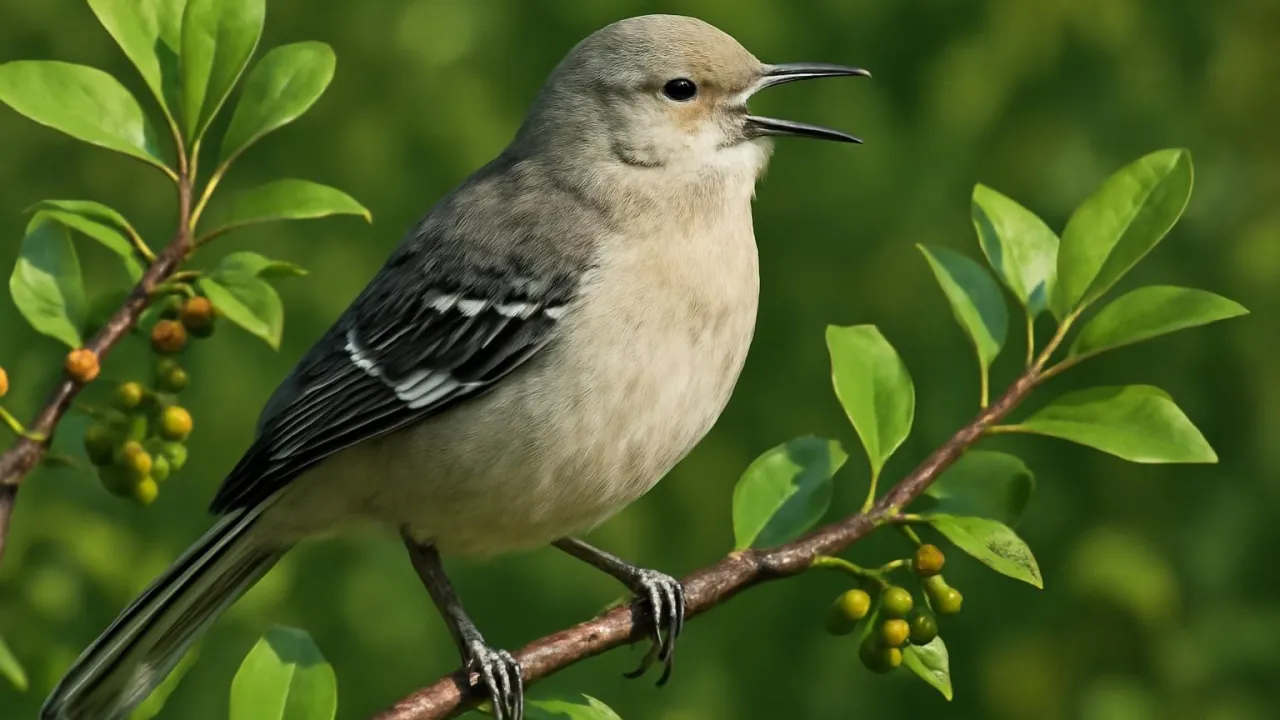
1. What is special about the mockingbird’s singing?
2. Where might you see a mockingbird?
🤯 Mind-Blowing Fact • Grade 2
Mockingbirds can sing for hours without repeating the same song!
✨ Word Sparks (Grade 2 Glossary)
Tap 🔊 to hear
insect
A small animal with six legs
shrubs
Short, bushy plants or small trees
repeat
To do or say again
🪝
Have you ever heard a bird sing like a car alarm?
1
Amazing Song Skills
The Northern Mockingbird is famous for copying sounds. It can sing songs from other birds, frogs, and even machines. This bird can remember and over 200 different sounds. Its singing can be heard both day and night.
2
Where Mockingbirds Live
Mockingbirds like to live in open areas with bushes and trees. You can find them in parks, backyards, and gardens. They build cup-shaped nests in or small trees. These birds are common in North America.
3
What They Eat
Mockingbirds eat like beetles, ants, and grasshoppers. They also eat berries and small fruits when insects are hard to find. Sometimes, they hop on the ground to catch bugs. Their varied diet helps them survive in many places.
Some mockingbirds can learn over 200 different songs in their lifetime!
✨ Word Sparks (Grade 3 Glossary)
Tap 🔊 to hear
mimicry
Copying sounds or actions of others
territorial
Protecting a space from others
omnivore
An animal that eats plants and animals
🪝
Did you know some birds can trick other animals with their songs?
1
Master of Mimicry
Northern Mockingbirds are famous for their amazing skills. They can imitate the calls of other birds, frogs, and even man-made noises like alarms. This special ability helps them fool predators and attract mates. Sometimes, their concerts last all night during spring.
2
Where They Make Their Homes
These birds live across North America, especially in open fields, parks, and suburban areas. They build sturdy nests in shrubs or low trees to protect their eggs. Mockingbirds are very and will chase away other birds. Their habitats provide plenty of insects and berries for food.
3
How They Find Food
Mockingbirds eat insects, fruits, and berries, making them . Their sharp beaks help them catch bugs and pick fruit. In the summer, they eat more insects for protein. In winter, they switch to berries and fruit when bugs are scarce.
4
A Bird With a Purpose
Mockingbirds help control insect populations and spread seeds by eating fruit. Their loud songs warn other birds to stay away from their territory. They are important to their ecosystem because they keep nature balanced. Their ability to mimic sounds is an amazing adaptation for survival.
A single mockingbird can sing up to 60 different songs in just one hour!
✨ Word Sparks (Grade 4 Glossary)
Tap 🔊 to hear
mimicry
Copying sounds or actions from others
territory
An area an animal protects
predator
An animal that hunts other animals
🪝
Can you imagine hearing a bird sing like a frog, a cat, or even a cellphone?
1
Nature’s Sound Machine
The Northern Mockingbird is famous for its ability to mimic a huge variety of sounds, including other birds, insects, animals, and even mechanical noises like car alarms. This is most impressive during mating season, when males sing loudly to attract females and defend their . Some mockingbirds can sing for hours without repeating the same song, creating a fascinating concert of sounds for anyone nearby. Their vocal skills are a powerful adaptation for survival and communication.
2
Where Mockingbirds Thrive
Northern Mockingbirds are found throughout most of North America, from southern Canada to Mexico. They thrive in open habitats like fields, parks, and neighborhoods with plenty of shrubs and small trees for nesting. These birds prefer areas where both insects and fruits are available, allowing them to adapt to seasonal changes in food supply. Their ability to live near humans has helped their populations remain strong, even as some natural habitats shrink.
3
Life Cycle and Family Life
Mockingbirds build cup-shaped nests from twigs, grass, and leaves, usually in dense bushes or low trees. Females lay three to five pale blue eggs, which hatch after about two weeks. Both parents work together to feed and protect the chicks, fiercely defending the nest from like snakes, cats, and crows. Young mockingbirds leave the nest after about twelve days, but their parents continue to care for them for several more weeks.
4
Ecosystem Helpers
Northern Mockingbirds play an important role in their ecosystems by controlling insect populations and spreading seeds from the fruits they eat. Their aggressive territorial behavior can also help protect other small birds nesting nearby. However, habitat loss and pesticide use can threaten their food sources and nesting sites, making it important to protect green spaces where they live. These birds remind us how every species has a part to play in nature’s balance.
A Northern Mockingbird can sing at over 70 decibels—almost as loud as a vacuum cleaner!
✨ Word Sparks (Grade 5 Glossary)
Tap 🔊 to hear
syrinx
A bird’s special voice box for singing
omnivorous
Eating both plants and animals
incubation
Keeping eggs warm until they hatch
🪝
What bird can mimic over 200 sounds, from other birds to barking dogs and car alarms?
1
Masters of Imitation
Northern Mockingbirds (Mimus polyglottos) are renowned for their extraordinary vocal mimicry, which includes imitating not only other bird species but also frogs, insects, and even mechanical noises such as car alarms and cell phone ringtones. This ability stems from a highly developed —the bird’s vocal organ—which allows them to produce a remarkable range of pitches and tones. Mockingbirds use their mimicry to defend their territory, attract mates, and sometimes even confuse potential predators. During the breeding season, a single male may sing for hours, rarely repeating the same sequence, and can remember complex songs for years.
2
Habitat and Range
Northern Mockingbirds are native to North America and are found from southern Canada through the United States and into Mexico. They are highly adaptable and thrive in diverse environments, including open woodlands, suburban gardens, farmland, and city parks. Their preference for areas with both open ground for foraging and dense shrubs for nesting helps them succeed in human-altered landscapes. Despite urbanization, their population numbers remain stable, partly because they can exploit a wide variety of habitats and food sources.
3
Diet and Foraging Behavior
Mockingbirds are , feeding on insects such as beetles, caterpillars, and grasshoppers during spring and summer, and switching to fruits and berries in fall and winter. Their diet flexibility allows them to survive seasonal changes in food availability. They often forage by hopping or running on the ground, using their sharp eyesight to spot prey. In addition to eating native berries, they may also consume cultivated fruits from gardens, sometimes leading to conflicts with humans. On average, an adult mockingbird weighs about 1.75 ounces (50 grams) and can eat up to 15% of its body weight daily.
4
Life Cycle and Parental Care
The breeding season for Northern Mockingbirds typically begins in early spring and may last through late summer, with pairs raising two or even three broods per year. Females construct cup-shaped nests from twigs, grass, and leaves, usually hidden in dense shrubs or low trees. Each clutch contains three to five pale blue or greenish eggs, which hatch after about 12–13 days of . Both parents vigorously defend the nest and feed the chicks, which fledge around 12 days after hatching. Mockingbirds are known for their aggressive defense, sometimes attacking much larger animals that approach their nests.
5
Role in Ecosystems and Conservation
Northern Mockingbirds play a vital ecological role by controlling insect populations and dispersing seeds from the fruits they consume, supporting plant diversity and growth. Their territorial singing can benefit other small birds by deterring predators from shared habitats. While currently listed as Least Concern by the IUCN, habitat loss and pesticide use can threaten local populations. Protecting native shrubs and reducing chemical use in gardens and parks help ensure mockingbirds continue to thrive and enchant us with their remarkable voices for generations to come.