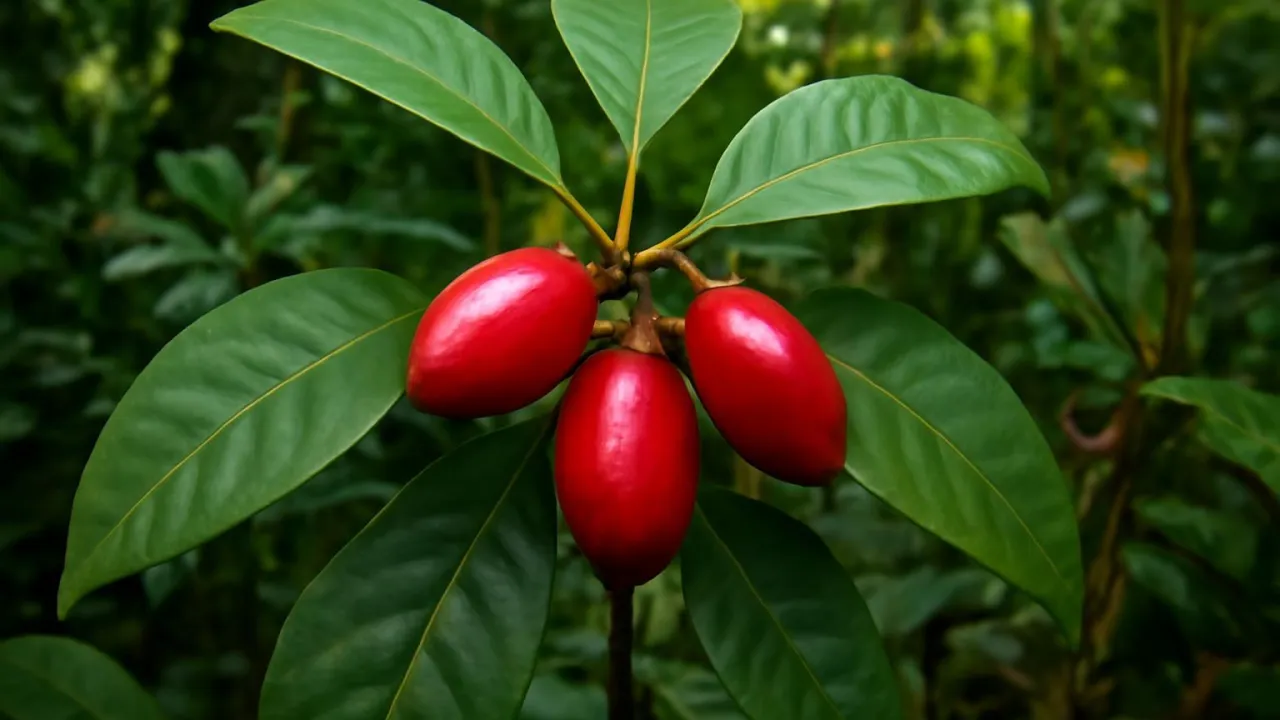
Miracle fruit can make a whole lime taste like candy for almost an hour!
✨ Word Sparks (Grade 2 Glossary)
Tap 🔊 to hear
miraculin
A part of the berry that changes taste.
taste buds
Tiny parts on your tongue that sense flavor.
rainforest
A warm, wet forest with many plants.
🪝
What if a berry could turn sour into sweet right on your tongue?
1
A Berry That Surprises Your Mouth
Imagine popping a little red berry in your mouth and then tasting a lemon. Instead of puckering up, you taste sweetness! Miracle fruit does this amazing trick, making sour foods taste sweet for almost an hour.
2
Where the Magic Grows
Miracle fruit bushes grow in warm, rainy places in West Africa. The plants love lots of sunlight and moist soil, and people have picked these berries for hundreds of years. Some gardeners even grow miracle fruit at home today.
3
How Does It Work?
Miracle fruit has something special inside called . Miraculin sticks to your and changes how you taste sour foods. It does not add sugar, but it makes your mouth think sour things are sweet until the effect wears off.
Miracle fruit can make even spicy vinegar taste like fruit punch for an hour!
✨ Word Sparks (Grade 3 Glossary)
Tap 🔊 to hear
protein
A building block found in living things.
adaptation
A feature that helps something survive.
botanical
Related to plants and how they grow.
🪝
How could a tiny red berry make a lemon taste like candy?
1
A Taste-Bud Trickster
Imagine tasting a slice of lemon and expecting a sour face, but instead you smile! Miracle fruit, a bright red berry, can make this happen. It grows on a leafy shrub in the warm, rainy forests of West Africa. The berry is about the size of a grape and looks shiny and smooth.
2
How the Magic Works
Inside miracle fruit is a special called miraculin. When you eat the berry, miraculin covers your taste buds and changes how you sense sour flavors. For about an hour, foods like lemons, limes, and vinegar taste sweet instead of sour. Your tongue is not actually tasting sugar, but your brain thinks you are!
3
Why People Use Miracle Fruit
In West Africa, people sometimes eat miracle fruit before sour or unripe foods. This helps them enjoy foods that might taste too sharp or bitter otherwise. Today, some people use miracle fruit to help patients who have trouble tasting sweetness, like those going through medical treatments. It is also used for fun at flavor-tripping parties.
4
A Botanical Berry with a Special Adaptation
Miracle fruit is a berry, which means it grows from a flower and has seeds inside. Even though it is not sweet itself, it has a big effect on how other foods taste. The plant needs lots of water, sunlight, and warm temperatures to grow well. Its special helps it survive in the rainforest’s rich, competitive environment.
1. What happens if you eat miracle fruit before a lemon?
2. What is the special protein in miracle fruit called?
🤯 Mind-Blowing Fact • Grade 4
Miracle fruit’s effect can last up to an hour, making even pickles taste like candy!
✨ Word Sparks (Grade 4 Glossary)
Tap 🔊 to hear
receptors
Parts of your body that sense things.
ecosystem
A community of living things in one place.
illusion
Something that tricks your senses.
🪝
What if your tongue could turn lemons into lemonade without adding sugar?
1
A Tiny Berry With a Big Effect
The miracle fruit, or Synsepalum dulcificum, is a small red berry native to West African rainforests. This berry grows on evergreen shrubs that can reach up to 20 feet tall in the wild. Although the berry itself tastes only mildly sweet, it contains a protein called miraculin that creates an amazing taste . For centuries, people have used miracle fruit to make sour or bitter foods taste sweet.
2
How Miraculin Tricks Your Taste Buds
When you eat miracle fruit, miraculin binds to your taste buds and temporarily changes how they work. For about 30 to 60 minutes, foods that normally taste sour, like lemons or vinegar, become deliciously sweet. This happens because miraculin changes shape in acidic conditions, activating your sweet taste instead of sour ones. Your brain is fooled into thinking you are eating something sugary!
3
Miracle Fruit’s Role in Its Ecosystem
Miracle fruit shrubs thrive in warm, humid climates with rich, well-drained soil and partial shade. They play a part in rainforest food webs by providing berries for birds and small mammals. These animals help spread the seeds, allowing new shrubs to grow. Miracle fruit’s unique adaptation helps it compete for survival in a dense, biodiverse .
4
Modern Uses and Global Spread
Today, miracle fruit is grown in tropical and subtropical regions around the world, including parts of the United States. It is used in 'flavor-tripping' parties and as a natural aid for people undergoing medical treatments that affect taste, such as chemotherapy. Scientists are studying miraculin for possible use as a low-calorie sweetener, which could help people reduce sugar in their diets.
Miraculin can make a slice of lemon taste as sweet as a sugar cookie for up to an hour!
✨ Word Sparks (Grade 5 Glossary)
Tap 🔊 to hear
glycoprotein
A protein with sugar parts that affects the body.
biodiversity
The variety of life in one place.
pH
A number showing how acidic something is.
🪝
What if a single berry could convince your brain that a lemon is as sweet as candy?
1
Scientific Identity and Botanical Background
Miracle fruit, scientifically known as Synsepalum dulcificum, belongs to the Sapotaceae family and is classified as a true botanical berry. Native to the lowland rainforests of West Africa, this evergreen shrub can reach heights of 15 to 20 feet in optimal conditions. The plant produces glossy, elliptical leaves and small, white flowers before developing its signature bright red berries. Each berry measures about 0.8 inches (2 centimeters) long and contains a single seed surrounded by mildly sweet pulp.
2
The Miraculin Mechanism: How Taste Is Transformed
The miracle fruit’s most astonishing property comes from a called miraculin, which binds to the sweet receptors on your tongue. Under neutral conditions, miraculin does not taste sweet, but when you eat sour or acidic foods, the protein changes shape and activates your sweet taste receptors. This physiological trickery can last from 30 minutes to over an hour, during which foods like lemons, limes, and vinegar taste remarkably sweet. Miraculin does not add sugar or calories, making it a fascinating subject for nutrition science and food technology.
3
Ecological Role and Global Cultivation
In its native habitat, miracle fruit shrubs thrive in acidic, well-drained soils with partial sunlight and high humidity, typically at temperatures between 70°F and 85°F (21°C–29°C). Birds and small mammals eat the berries and disperse the seeds, aiding in the plant’s reproduction and maintaining rainforest . Today, miracle fruit is cultivated in tropical regions worldwide, including Southeast Asia, Central America, and southern Florida, where growers must carefully mimic its natural environment.
4
Human Uses: From Tradition to Modern Science
For centuries, West African communities have used miracle fruit to sweeten sour foods and beverages, especially during ceremonial meals. In recent decades, the berry has gained global attention for its use in 'flavor-tripping' parties and as a natural taste modifier for cancer patients experiencing taste loss. Researchers are exploring miraculin’s potential as a low-calorie, non-sugar sweetener that could help reduce sugar consumption and support healthier diets worldwide.
5
Quantitative Wonders and Conservation Concerns
A single miracle fruit berry can alter taste perception for up to 60 minutes, affecting foods with values as low as 2.0. The shrub can produce hundreds of berries per year under ideal conditions, but wild populations face threats from deforestation and habitat loss. Conservationists are working to protect natural stands of Synsepalum dulcificum while encouraging sustainable cultivation. The miracle fruit’s unique chemistry continues to inspire scientists, chefs, and health professionals alike.