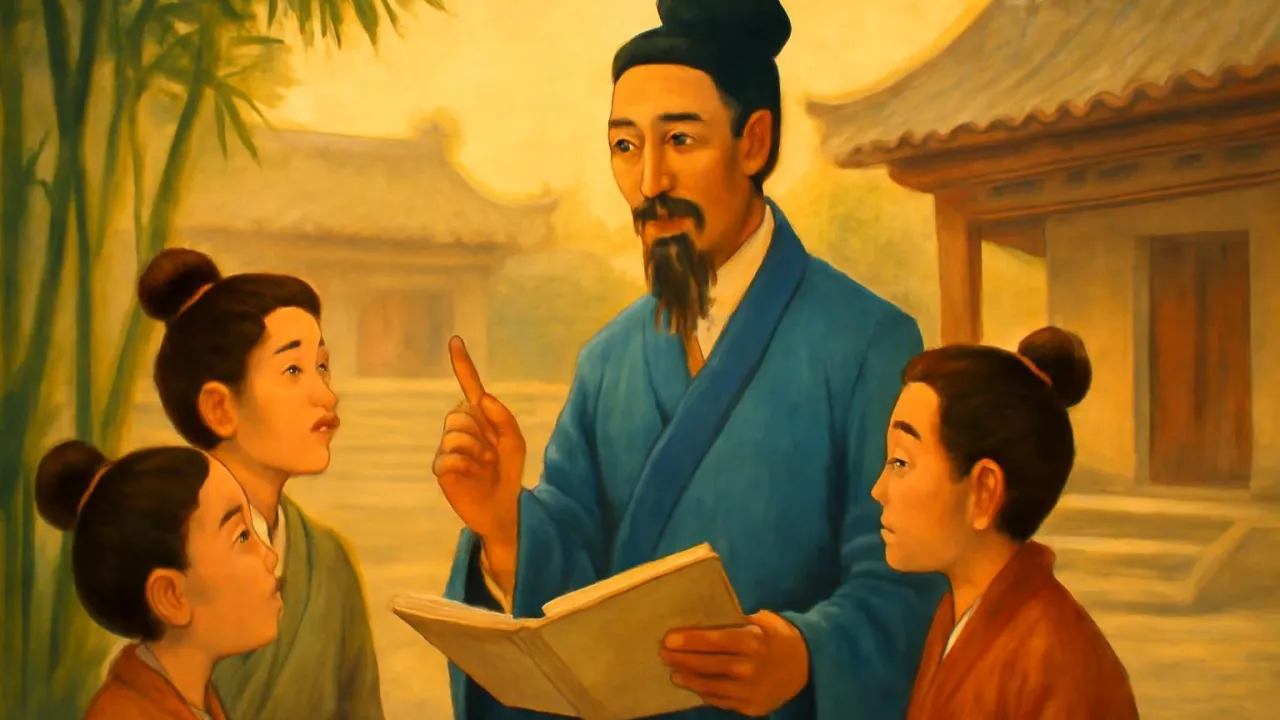
Mencius’s mother moved their house three times so he could have the best learning place.
✨ Word Sparks (Grade 2 Glossary)
Tap 🔊 to hear
goodness
Doing what is right and kind
lesson
Something important you learn
famous
Known by many people
🪝
Have you ever wondered if everyone can be kind at heart?
1
A Spark of Curiosity
Imagine a boy who always asked, 'Why do people help each other?' That was Mencius, full of questions about kindness and life. He learned from his mother that being good matters most. Her made him want to understand people even more.
2
Learning and Working Hard
Mencius read stories and listened to wise teachers every day. His mother even moved their house to help him learn better. He worked hard to become wise and kind. Mencius believed that practice and learning can help anyone grow.
3
Sharing Goodness With Others
When he grew up, Mencius became a teacher. He taught that everyone is born with a good heart. Mencius used stories to show how kindness can grow. His ideas helped many people think about being good.
Mencius’s book, called the “Mencius,” is still read by students in China today.
✨ Word Sparks (Grade 3 Glossary)
Tap 🔊 to hear
debate
A careful talk about big ideas
Confucius
A famous teacher before Mencius
nature
How something is on the inside
🪝
Can you imagine a world where everyone believes people are good inside?
1
A Boy With Big Questions
Young Mencius often sat under a tree, thinking about why people act kindly or mean. He was inspired by his mother, who believed learning and goodness were very important. She even moved their home to help him find better teachers. Mencius grew up loving to read and ask questions about life.
2
Learning From the Past
Mencius studied the teachings of , a wise philosopher before him. He read ancient books and talked with other students about what makes a good person. He practiced debating and sharing his ideas with others. Through hard work, he became a respected thinker in his land.
3
The Power of Kindness
Mencius believed that all people are born with a heart of kindness. He taught that goodness is like a seed that can grow when we help others. He used stories and examples to show how caring for people makes the world better. His students learned that being kind is a powerful choice.
4
Changing Minds
Mencius traveled to many cities, sharing his ideas about human . He spoke with rulers and leaders, encouraging them to rule with fairness and care. His teachings helped shape the way people thought about right and wrong. Today, his ideas are still studied all over the world.
Mencius’s teachings were so important they became one of the “Four Books” of Confucianism.
✨ Word Sparks (Grade 4 Glossary)
Tap 🔊 to hear
philosophy
A way of thinking about life
legacy
Something important left behind
compassion
Caring deeply about others
🪝
What would happen if leaders listened to teachers who believed everyone has a good heart?
1
A Mother’s Wisdom
Long ago in ancient China, Mencius’s mother knew the right environment could shape a child’s future, so she moved their home three times to help him learn from the best. Her dedication inspired Mencius to value education and kindness above all else. He became curious about why people act kindly or cruelly. This early guidance set him on a path of lifelong learning and questioning.
2
Following Confucius’s Footsteps
Mencius devoted himself to studying the teachings of Confucius, who believed in respect, learning, and harmony. He read ancient texts, debated with scholars, and developed his own about human nature. Mencius argued that every person is born with a heart that wants to do good, which was a bold idea at the time. He believed education and a caring society help people grow into their best selves.
3
Teaching Rulers and Students
Mencius traveled across different kingdoms, meeting with kings and students to share his . He used stories and clever debates to show that kindness and fairness make a strong country. Mencius taught that rulers should care for their people like loving parents. His advice helped some leaders make wiser, more compassionate decisions.
4
A Lasting Legacy
The book of Mencius, filled with his conversations and teachings, became a classic in Chinese culture. His belief in the goodness of people influenced schools, families, and governments for centuries. Even today, students in China and around the world study his ideas about kindness and leadership. Mencius’s teachings remind us that caring for others can change the world.
1. Why did Mencius’s mother move their home several times?
2. What did Mencius teach rulers to do?
🤯 Mind-Blowing Fact • Grade 5
Mencius’s teachings helped shape the civil service exams that chose government leaders in China for over 1,000 years.
✨ Word Sparks (Grade 5 Glossary)
Tap 🔊 to hear
virtue
Doing what is morally right and good
empathy
Understanding and caring about others’ feelings
civil service
Jobs where people help run the government
🪝
Imagine a world where every leader truly believed that people are born with the seeds of kindness—how might history have changed?
1
A Childhood Shaped by Wisdom
In the ancient State of Zou, Mencius’s mother recognized that her son’s surroundings would shape his character and future. Her remarkable decision to move their home three times, each time seeking a better environment for learning, became a famous story in Chinese culture. This dedication taught Mencius the importance of education, perseverance, and moral values from an early age. Inspired by his mother’s sacrifices, Mencius developed a deep curiosity about human nature and society. These early experiences laid the foundation for his lifelong pursuit of wisdom and .
2
Building on Confucius’s Teachings
As a young scholar, Mencius immersed himself in the teachings of Confucius, reading classic texts and engaging in rigorous debates with other thinkers. He expanded Confucius’s philosophy by arguing that all people are born inherently good, possessing what he called the 'heart of compassion.' This idea challenged other philosophers who believed people needed strict rules to behave well. Mencius believed that education, positive role models, and a supportive community could help everyone develop their natural goodness. His persuasive arguments and memorable stories made his teachings widely respected.
3
A Philosopher on the Road
Mencius traveled from kingdom to kingdom, meeting with rulers, officials, and students to discuss the best ways to govern and live. He used vivid stories and sharp reasoning to persuade leaders that kindness and fairness would create a stronger, more peaceful society. Mencius taught that a ruler should care for the people as a parent cares for children, emphasizing compassion, justice, and wise decision-making. His ability to debate and inspire others helped spread his ideas far beyond his own time and place. Many rulers listened, but not all followed his advice.
4
The Book of Mencius and Its Influence
After his death, Mencius’s conversations and teachings were collected in a book called the 'Mencius,' which became one of the Four Books of Confucianism. This text has been studied by generations of scholars, students, and leaders in China and beyond. Mencius’s belief in the goodness of human nature influenced not only government and education, but also family life and personal behavior. His ideas about moral leadership and the importance of remain relevant today, inspiring people to think about how kindness can shape a better world.
5
Legacy of Kindness and Moral Courage
Mencius’s legacy is measured not by wealth or power, but by the lasting impact of his ideas on society and philosophy. He showed that moral courage—standing up for what is right, even when it is difficult—can change hearts and minds across centuries. Modern philosophers and leaders continue to explore his teachings, asking how to build fairer, kinder communities. Mencius’s life reminds us that one person’s wisdom and compassion can influence millions. His belief in the goodness of people challenges us all to nurture kindness in ourselves and others.