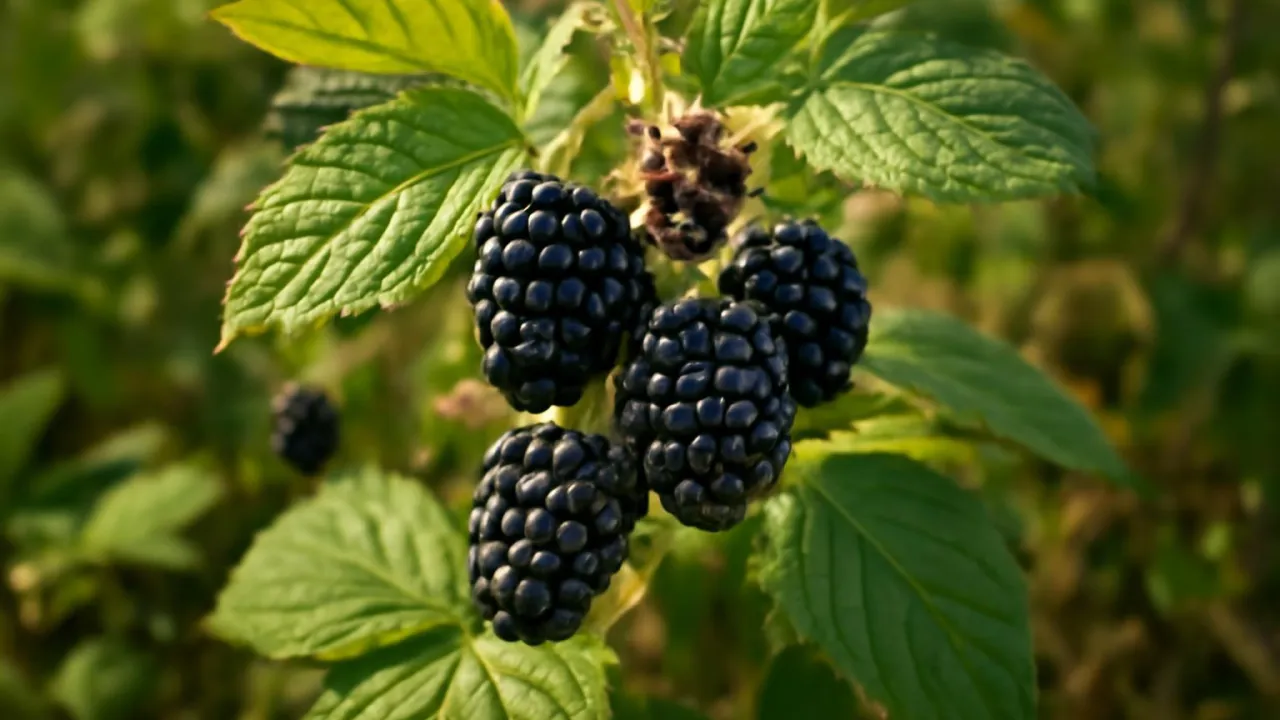
Marionberries were first created by farmers in Oregon in 1956!
✨ Word Sparks (Grade 2 Glossary)
Tap 🔊 to hear
thorny
Having sharp points like tiny needles
ripe
Ready to eat and sweet
smoothie
A cold drink made from blended fruit
🪝
Have you ever tasted a berry that is both sweet and tart?
1
What Marionberries Look Like
Marionberries are dark purple and shiny with many small bumps. They grow on green bushes in gardens. The berries are soft and juicy when .
2
Where They Grow
Marionberries grow best in the Pacific Northwest where the weather is mild. They need full sun and plenty of water to grow well. Farmers pick the berries when they are and sweet.
3
Why People Love Them
These berries taste both sweet and a little tart, making them special. People use marionberries to make pies, jams, and . Birds also enjoy eating marionberries in the wild.
Marionberries are a special blackberry hybrid developed for better flavor and growth!
✨ Word Sparks (Grade 3 Glossary)
Tap 🔊 to hear
hybrid
A mix of two plants to make a new one
pollination
When pollen moves to help plants make seeds
ecosystem
All living things and their homes together
🪝
Did you know marionberries are a hybrid berry with a unique flavor?
1
What Is a Marionberry?
Marionberries are a between two types of blackberries. Their dark purple color helps them hide from predators. The berry’s many drupelets hold sweet juice inside. This adaptation helps protect the seeds.
2
Where Marionberries Grow
These berries grow mainly in the Pacific Northwest of the United States. They thrive in mild climates with full sun and rich soil. Farmers carefully cultivate the thorny bushes to produce many berries. The bushes also provide shelter for small animals.
3
How Marionberries Help the Ecosystem
Marionberries provide food for birds and insects, supporting . Their flowers attract bees that help spread pollen. This symbiotic relationship helps plants reproduce. The berries also supply nutrients to animals that eat them.
4
Why People Love Marionberries
People enjoy marionberries for their sweet and tart flavor in many foods. The berries are soft and juicy, perfect for pies and jams. Their rich antioxidants also support human health. This fruit’s unique taste comes from its nature.
Marionberries were created to combine the best traits of two blackberries for tastier fruit and stronger plants.
✨ Word Sparks (Grade 4 Glossary)
Tap 🔊 to hear
symbiotic
A helpful relationship between two living things
pollinators
Animals that help plants make seeds
agritourism
Visiting farms to learn and pick fruit
🪝
What makes marionberries a key fruit in Pacific Northwest ecosystems and farms?
1
Origins and Growth
Marionberries are a hybrid blackberry developed in Oregon in 1956, combining two species for better flavor and yield. They grow on thorny bushes that thrive in the Pacific Northwest’s mild climate with rich, well-drained soil. These bushes require full sun and regular watering to produce large, juicy berries. Their thorny stems protect the fruit from many herbivores, allowing more berries to mature.
2
Ecosystem Role
Marionberries play an important role in local food webs by providing nourishment for birds, mammals, and insects. Their flowers attract like bees, which helps with pollination and fruit production. This relationship supports biodiversity and healthy ecosystems. Additionally, the berries’ seeds are spread by animals, aiding plant reproduction and growth in surrounding habitats.
3
Human Use and Agriculture
Farmers cultivate marionberries mainly in Oregon and Washington for commercial sale due to their unique sweet-tart flavor. They are popular in pies, jams, and juices, contributing to local economies. Sustainable farming practices help maintain soil health and reduce pesticide use. Marionberries also support , where visitors enjoy picking berries and learning about farming.
4
Geographic Distribution and Challenges
While native to the Pacific Northwest, marionberries are now grown in other temperate regions with similar climates. However, they require careful management to prevent diseases like root rot and fungal infections. Climate changes, such as warmer temperatures and droughts, may affect future growth and yields. Conservation of genetic diversity in marionberry plants helps farmers adapt to these challenges.
2. What role do pollinators play for marionberries?
🤯 Mind-Blowing Fact • Grade 5
Marionberries were scientifically bred to improve flavor, yield, and disease resistance in berry crops.
✨ Word Sparks (Grade 5 Glossary)
Tap 🔊 to hear
hybridization
Crossing two plants to make a new kind
photosynthesis
How plants use sunlight to make food
anthocyanins
Natural pigments that give berries their color
🪝
How do marionberries combine science and nature to create a delicious, resilient fruit?
1
Scientific Classification and Hybrid Origins
Marionberries belong to the genus Rubus and are a hybrid between Rubus ursinus and Rubus idaeus species. This cross was developed in Oregon in 1956 to combine the best traits of trailing and erect blackberries. The improved fruit size, flavor, and plant hardiness. Understanding this taxonomic background helps scientists breed better berry cultivars.
2
Physiological Traits and Growth Mechanics
Marionberry plants have thorny canes that grow up to 6 feet tall, supporting heavy clusters of berries. The berries consist of many small drupelets that protect seeds and hold sweet juice. in the leaves provides energy for fruit development, while deep roots absorb water and nutrients efficiently. This physiology allows marionberries to thrive in the Pacific Northwest’s temperate climate.
3
Conservation and Agricultural History
Since their creation, marionberries have become a staple crop in Oregon, supporting local economies and food culture. Conservation efforts focus on maintaining genetic diversity to resist diseases and climate stress. Sustainable farming techniques reduce pesticide use and improve soil health. Historical research shows how selective breeding has enhanced berry quality over decades.
4
Quantitative Comparisons and Environmental Needs
Marionberries typically weigh about 5 grams each and measure approximately 1 inch long. They require 6 to 8 hours of sunlight daily and consistent watering to produce optimal yields. Compared to other blackberries, marionberries have higher sugar content, making them sweeter. Their thorny canes can grow up to 6 feet tall, providing structural support for heavy fruit clusters.
5
Culinary Uses and Nutritional Benefits
Marionberries are prized for their rich flavor, combining sweet and tart notes ideal for pies, jams, and juices. They contain antioxidants like vitamin C and , which support human health. The berries’ soft texture makes them easy to blend into smoothies or desserts. Their unique taste and nutritional value make marionberries a popular fruit worldwide.