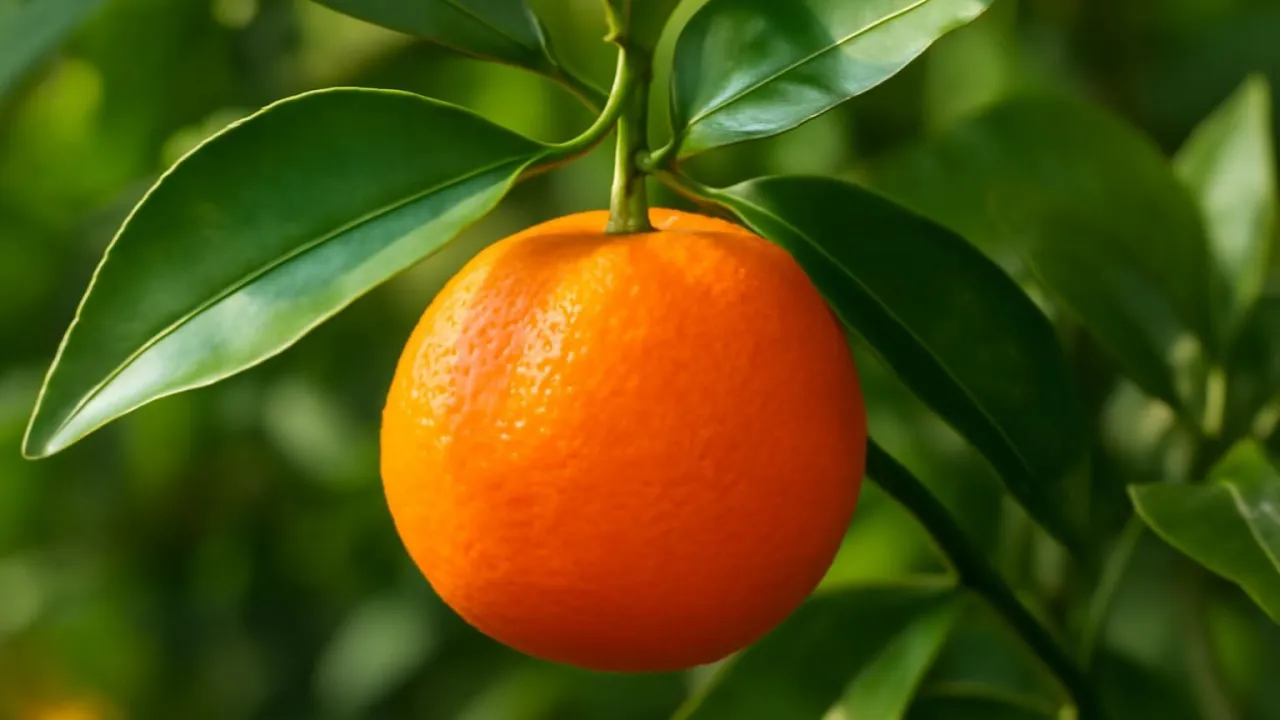
Mandarins are one of the easiest oranges to peel by hand!
✨ Word Sparks (Grade 2 Glossary)
Tap 🔊 to hear
segments
Small parts inside the fruit you can eat
subtropical
Warm places near the tropics
healthy
Good for your body and strong
🪝
Have you ever peeled a mandarin orange all by yourself?
1
Sweet and Small Fruit
Mandarin oranges are small fruits that taste very sweet and juicy. They have bright orange skin that is easy to peel. Many people love to eat mandarins as a snack.
2
Growing on Warm Trees
Mandarins grow on trees in warm places like Asia and areas. These trees need plenty of sunlight and water to grow fruits. Farmers pick mandarins when the fruit is ripe and ready.
3
Easy to Peel Skin
One cool feature is the mandarin’s thin, loose skin. This skin peels off easily with your fingers. Inside, mandarins have many juicy that you can eat one by one.
Mandarins use their bright skin color to show they are ripe and ready to eat!
✨ Word Sparks (Grade 3 Glossary)
Tap 🔊 to hear
pollination
When bees help flowers make fruit
adaptation
A special trait that helps survival
nutrients
Food in soil that plants need
🪝
Did you know mandarins have a special skin that helps them survive?
1
Sweet Citrus with Soft Skin
Mandarins are small citrus fruits with bright orange, soft skin that peels easily. Their sweet, juicy segments make them popular snacks worldwide. The soft skin protects the fruit while allowing easy access to the tasty inside.
2
Growing in Warm Climates
Mandarins grow best in subtropical climates where sunlight and warmth help them develop. These trees need from the soil and regular watering to produce healthy fruit. The climate helps mandarins ripen with their full sweet flavor.
3
Adaptations for Survival
The mandarin’s loose skin is an that helps protect the fruit from predators and pests. This peel also helps reduce water loss, keeping the fruit juicy. The bright orange color serves as a signal to animals that the fruit is ripe.
4
Pollination and Growth
Mandarin trees rely on by insects like bees to produce fruit. Pollination helps flowers turn into fruit with many juicy segments inside. This process is important for the tree’s life cycle and fruit production.
Mandarin oranges help spread seeds by attracting animals with their bright peel color.
✨ Word Sparks (Grade 4 Glossary)
Tap 🔊 to hear
symbiotic
Two living things helping each other
ecosystem
All living things in one place
irrigation
Giving water to plants by humans
🪝
How does the mandarin orange’s peel help it survive in nature?
1
The Role of Peel and Color
The mandarin orange’s peel is thin and loosely attached, which helps animals peel it easily and spread its seeds. Its bright orange color signals ripeness, attracting animals that eat the fruit and help disperse seeds. This cause-and-effect relationship helps mandarins reproduce successfully in their . The peel’s softness also prevents damage during growth and transport.
2
Mandarins in Food Webs
Mandarins provide food for many animals, including birds and insects, which rely on the fruit for nutrients. In turn, these animals help pollinate the trees or spread seeds, creating a relationship that supports the ’s health. Humans also cultivate mandarins widely for food and agriculture. This mutual benefit strengthens natural and farm environments.
3
Growing Regions and Climate Needs
Mandarins thrive in subtropical and warm temperate regions where temperatures rarely drop below freezing. They require full sunlight and moderate rainfall to produce sweet, juicy fruit. Climate changes and human agriculture impact their growing areas and production levels worldwide. Farmers adapt by choosing suitable varieties and managing water carefully.
4
Effects of Human Farming
Human farming practices have increased mandarin production through and pest control, but overuse of chemicals can harm soil and nearby wildlife. Sustainable farming methods help maintain healthy while providing plentiful fruit harvests. Understanding these impacts is important for future mandarin conservation. Efforts include organic farming and habitat protection.
Mandarins contain bright carotenoid pigments that protect fruit and attract animals to spread seeds.
✨ Word Sparks (Grade 5 Glossary)
Tap 🔊 to hear
pericarp
The outer peel layer of a fruit
carotenoid
Pigments that give fruits orange color
citrus greening
A disease that harms citrus trees
🪝
What makes the mandarin orange a unique citrus fruit in science and agriculture?
1
Scientific Classification and Origins
The mandarin orange, scientifically named Citrus reticulata, belongs to the Rutaceae family, which includes other citrus fruits like lemons and grapefruits. Native to Southeast Asia, mandarins have been cultivated for thousands of years and spread globally due to their sweet flavor and easy-to-peel skin. Their genetic diversity helps scientists study citrus evolution and breeding.
2
Physiological Features and Mechanics
Mandarins have a thin, loosely attached peel called the , which facilitates easy peeling by consumers and animals alike. The fruit’s internal structure consists of multiple juice-filled segments separated by membranes, optimizing nutrient storage and dispersal. Their bright orange pigments protect against UV damage and attract seed dispersers.
3
Conservation and Agricultural History
Mandarins have been selectively bred over centuries for sweetness, seedlessness, and peelability, improving their commercial value. However, diseases like threaten global production, prompting conservation efforts and research into resistant varieties. Sustainable farming practices aim to balance high yields with environmental protection.
4
Quantitative Comparisons and Growth
Mandarins typically measure 2 to 4 inches (5 to 10 centimeters) in diameter and weigh between 80 to 150 grams. They grow best in temperatures ranging from 55 to 100 degrees Fahrenheit (13 to 38 degrees Celsius). During peak harvest, trees can produce hundreds of fruits annually, contributing significantly to global citrus markets.
5
Ecological and Economic Importance
Mandarins play a vital role in subtropical ecosystems by providing food for wildlife and supporting pollinators like bees. Economically, they are a major fruit crop worldwide, with millions of tons produced annually, especially in China, Spain, and the United States. Their cultivation impacts global agriculture, trade, and nutrition.