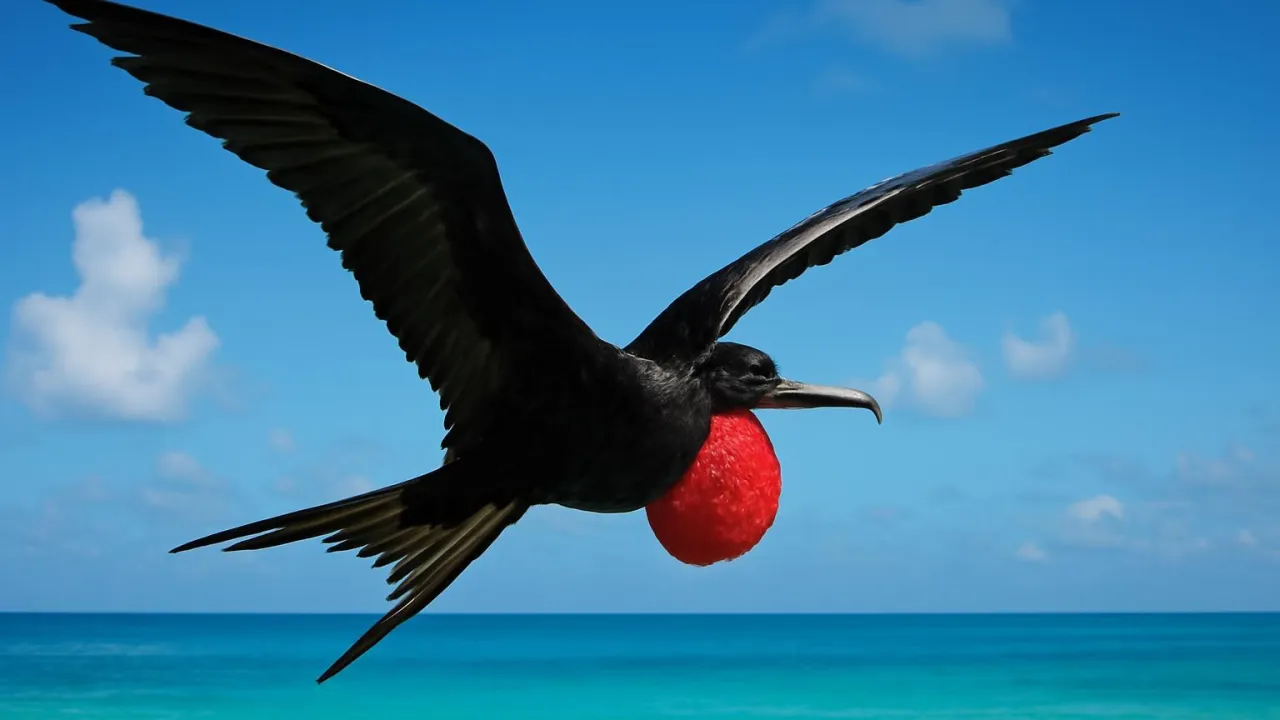
2. What does the male frigatebird use its red pouch for?
🤯 Mind-Blowing Fact • Grade 2
Magnificent frigatebirds can stay in the air for up to two weeks without landing!
✨ Word Sparks (Grade 2 Glossary)
Tap 🔊 to hear
soar
To fly high and smoothly without much effort
nest
A bird’s home made of sticks and leaves
pouch
A red balloon-like bag on a male bird’s throat
🪝
Have you ever seen a bird that can fly for days without resting?
1
Flying with Giant Wings
The magnificent frigatebird has huge wings that help it above the ocean. It can glide for hours without flapping. Its wingspan can reach over four feet wide.
2
Where It Lives and Grows
This bird lives near tropical coasts and islands. It builds in trees or bushes. Baby frigatebirds grow slowly and learn to fly after many weeks.
3
A Bright Red Balloon on Males
Male frigatebirds have a red throat that inflates like a balloon. They use it to attract females during mating season. The pouch can get very big and bright.
1. Where do magnificent frigatebirds build their nests?
2. What is the red pouch on male frigatebirds for?
🤯 Mind-Blowing Fact • Grade 3
Magnificent frigatebirds can stay aloft for over a week without landing to rest or eat!
✨ Word Sparks (Grade 3 Glossary)
Tap 🔊 to hear
camouflage
Colors that help animals hide in their home
kleptoparasitism
When animals steal food from others
regurgitate
To bring food back up to feed babies
🪝
Did you know the magnificent frigatebird is a master of soaring and stealing food?
1
Amazing Flight and Camouflage
The magnificent frigatebird has a wingspan up to 4.3 feet, which helps it soar for hours. Its black feathers provide excellent against the ocean and sky. This bird rarely flaps its wings, using air currents to glide effortlessly. Its long, forked tail helps it steer while flying.
2
Life Cycle and Growth
Frigatebirds build nests high in coastal trees to protect their young from predators. The chicks grow slowly and depend on their parents for food for several months. Parents feed their young by regurgitating fish and squid caught from the ocean surface. This long care period helps chicks develop strong flight muscles.
3
Unique Red Throat Pouch
Male magnificent frigatebirds have a red throat pouch that inflates like a balloon during mating season. This pouch is used to attract females and intimidate rival males. The bright red color comes from many tiny blood vessels close to the skin. The pouch can take up to 20 minutes to fully inflate.
4
Survival and Adaptations
Frigatebirds often steal food from other seabirds, a behavior called . Their hooked beak helps them snatch prey mid-air or from the water’s surface. They cannot swim or dive, so they rely on their flying skills to catch food. Their lightweight bones and large wings help them stay airborne for days.
1. What helps frigatebirds glide without much effort?
2. What is kleptoparasitism?
🤯 Mind-Blowing Fact • Grade 4
Magnificent frigatebirds can soar over 250 miles in a single day without flapping their wings!
✨ Word Sparks (Grade 4 Glossary)
Tap 🔊 to hear
kleptoparasite
An animal that steals food from others
ecosystem
All living things and their home working together
mangroves
Trees that grow in salty water near coasts
🪝
How does the magnificent frigatebird’s flying skill affect its role in ocean ecosystems?
1
Soaring Flight and Energy Use
The magnificent frigatebird uses its large wingspan to soar effortlessly over tropical oceans for hours, conserving energy by gliding on air currents. This ability allows it to search wide areas for food without tiring quickly. Because it rarely flaps its wings, it can stay airborne for up to two weeks continuously. This remarkable flight skill helps it avoid predators and find scarce prey.
2
Ecosystem Role and Food Web
As a predator and , the frigatebird influences marine food webs by feeding on fish, squid, and stealing from other seabirds. Its presence helps control fish populations and affects the behavior of other seabirds. By nesting in coastal trees, it also contributes nutrients to island through guano deposits. Human activities like habitat destruction can threaten its nesting sites.
3
Geographic Range and Habitat
Magnificent frigatebirds inhabit tropical and subtropical coastal regions from the Gulf of Mexico to the Galapagos Islands and the Caribbean Sea. They prefer nesting in and dry forests on islands where they are safe from land predators. Their wide range allows them to exploit diverse marine environments and seasonal food availability.
4
Breeding and Mating Displays
During mating season, males inflate their bright red throat pouches to attract females and compete with rival males. This display can last for hours and requires significant energy investment. Successful males mate and help raise chicks by feeding them regurgitated fish. The long breeding cycle ensures chicks develop strong flying abilities before leaving the nest.
1. Why can magnificent frigatebirds stay in the air so long?
2. What role does the frigatebird play in its ecosystem?
🤯 Mind-Blowing Fact • Grade 5
Magnificent frigatebirds can stay airborne for over two weeks, covering thousands of miles without landing.
✨ Word Sparks (Grade 5 Glossary)
Tap 🔊 to hear
dynamic soaring
Using wind changes to fly without much effort
gular pouch
The red throat balloon male frigatebirds inflate to attract mates
apex predator
Top animal hunter with no natural enemies
🪝
What makes the magnificent frigatebird one of the most extraordinary seabirds in the world?
1
Taxonomy and Scientific Classification
The magnificent frigatebird, scientifically named Fregata magnificens, belongs to the family Fregatidae within the order Suliformes. It is closely related to other frigatebird species found in tropical oceans worldwide. This bird is classified by its distinctive forked tail, large wingspan, and unique mating behaviors involving the red throat pouch inflation.
2
Flight Mechanics and Physiology
Magnificent frigatebirds possess extremely lightweight skeletons and long, narrow wings that maximize lift while minimizing energy use. Their wing shape allows and slope soaring, enabling them to exploit wind gradients over the ocean surface. They can remain aloft for over two weeks, traveling thousands of miles without landing, a feat supported by efficient respiratory and muscular adaptations.
3
Breeding Behavior and Conservation Status
During breeding season, males inflate their red to attract females in elaborate courtship displays that can last several hours. They nest in colonies on remote islands, often in mangrove forests. Despite being widespread, habitat loss and human disturbance threaten some populations, prompting conservation efforts to protect nesting sites and migratory corridors.
4
Ecological Impact and Human Interaction
As apex aerial predators and kleptoparasites, magnificent frigatebirds influence marine food webs by controlling fish and squid populations and affecting other seabirds’ feeding success. Their guano enriches island soils, supporting plant growth. Human activities such as coastal development and pollution pose risks, but protected areas help maintain stable populations.
5
Quantitative Comparisons and Records
The magnificent frigatebird’s wingspan can reach up to 4.3 feet (1.3 meters), allowing it to glide over 250 miles daily without flapping. It weighs about 2.6 to 3.4 pounds (1.2 to 1.5 kilograms), remarkably light for its size. This bird can remain airborne for more than 14 days continuously, a record among seabirds, demonstrating extraordinary endurance and flight efficiency.