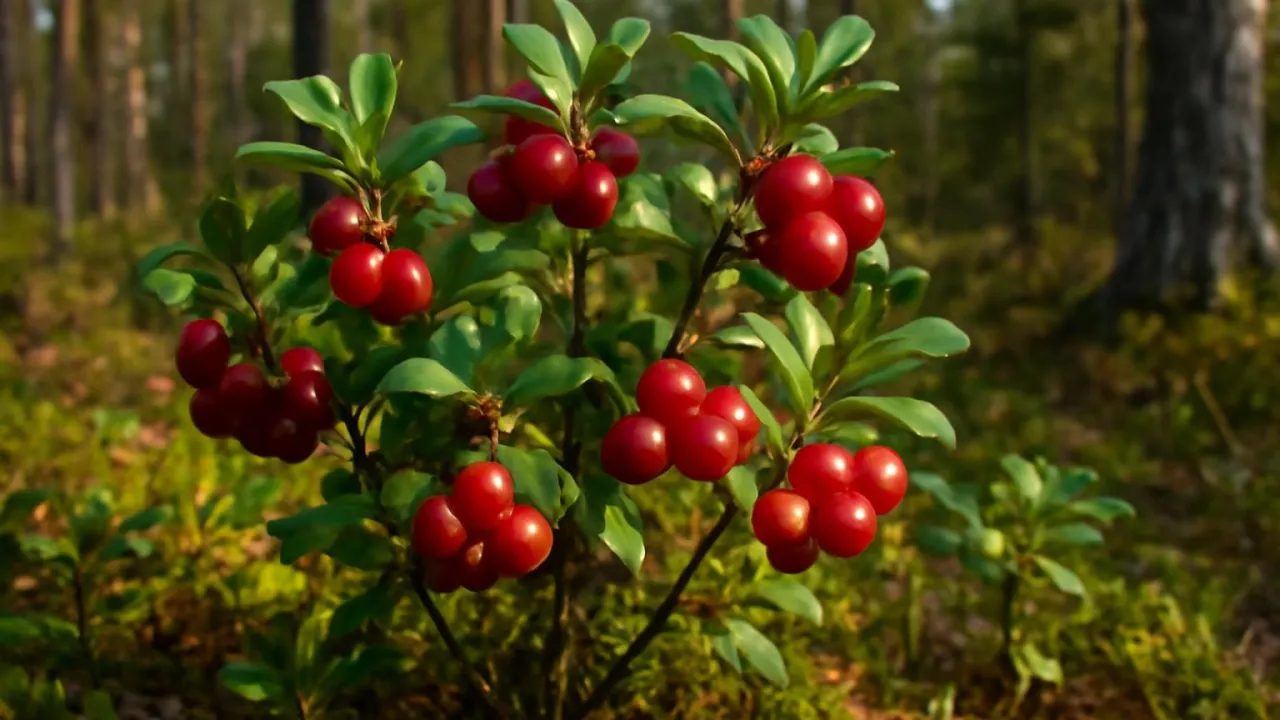
Lingonberries can stay fresh and tasty even after many months in cold weather!
✨ Word Sparks (Grade 2 Glossary)
Tap 🔊 to hear
acidic
Having a sour or sharp taste or soil type
moist
Slightly wet or damp
vitamin
A natural nutrient that helps your body stay healthy
🪝
Have you ever seen tiny red berries that grow in cold places?
1
Tiny Red Berries
Lingonberries are small and bright red, growing on low bushes. They have a sweet and sour taste that many people enjoy. Birds and animals also eat these berries during cold months.
2
Cold Forest Homes
These berries grow in northern forests where the soil is soft and . Lingonberries need moderate sunlight and ground to grow well. They survive cold winters under snow cover.
3
Healthy and Useful
People use lingonberries to make jams, sauces, and drinks. The berries have that help keep people healthy. They can stay fresh for a long time after picking.
Lingonberries use animals to spread their seeds and grow new plants far away!
✨ Word Sparks (Grade 3 Glossary)
Tap 🔊 to hear
nutrients
Good stuff in food that helps you grow
adaptation
A change that helps plants or animals survive
seed dispersal
How seeds move to new places to grow
🪝
Did you know lingonberries help animals and people survive cold winters?
1
Lingonberry Plant and Berries
Lingonberries grow on low shrubs that reach about one foot tall. Their bright red berries attract birds and other forest animals. The berries have a sour and sweet flavor that people enjoy in jams. This fruit is small but packed with .
2
Cold Habitat and Growth
Lingonberries thrive in acidic, moist soil found in northern forests and tundras. These plants adapt to cold climates by growing close to the ground to avoid harsh winds. They survive winter under snow, which protects their roots and buds. This helps them live in tough environments.
3
Survival and Protection
The bright red color of lingonberries helps them stand out to animals that spread their seeds. This process is called and helps the plant reproduce. The thick leaves protect the plant from cold and dry conditions. This camouflage and protection help lingonberries survive predators and weather.
4
Human Uses and Benefits
People harvest lingonberries to make jams, sauces, and juices that are rich in vitamins. These berries contain antioxidants, which help protect cells from damage. Lingonberries have been used in traditional medicine for centuries. Their long shelf life makes them valuable for winter food supplies.
Lingonberries form a key part of northern forest food webs, feeding many animals in winter!
✨ Word Sparks (Grade 4 Glossary)
Tap 🔊 to hear
symbiosis
When two living things help each other survive
boreal
Relating to cold northern forests
antioxidants
Natural substances that protect your cells
🪝
How do tiny lingonberries survive harsh northern winters and help their forests?
1
Lingonberry’s Cold Climate Adaptations
Lingonberries grow on low shrubs that resist strong northern winds by staying close to the ground. Their thick, waxy leaves reduce water loss during cold, dry winters, helping them survive freezing temperatures. The plants thrive in acidic, moist soils found in forests and tundra regions. These adaptations allow lingonberries to live where many other plants cannot.
2
Role in Forest Ecosystems
Lingonberries provide food for many animals, including birds, bears, and small mammals, especially during scarce winter months. Animals that eat the berries help spread lingonberry seeds far across the forest floor, aiding plant reproduction. This mutual relationship, or , benefits both the plants and animals. Lingonberries also contribute to the forest’s food web by supporting wildlife diversity.
3
Human Uses and Agricultural Impact
Humans harvest lingonberries to make jams, juices, and sauces that are rich in and vitamins. These berries have a long shelf life, making them important for winter food storage in northern cultures. Lingonberry cultivation has increased in some regions, but wild harvesting still dominates due to their natural habitat needs. Sustainable harvesting helps protect forest ecosystems and maintains berry populations.
4
Geographic Distribution and Growth
Lingonberries grow naturally throughout northern Europe, Asia, and North America, especially in forests and tundra. They prefer cool climates with acidic, moist soils and partial sunlight. Their growth is limited by temperature and soil pH, which restricts them to specific northern regions. Climate change may affect lingonberry habitats by altering temperature and soil conditions.
1. What helps lingonberries survive cold, dry winters?
2. How do animals help lingonberries grow?
🤯 Mind-Blowing Fact • Grade 5
Lingonberries belong to the same family as blueberries and have antioxidant-rich berries that last long in cold storage!
✨ Word Sparks (Grade 5 Glossary)
Tap 🔊 to hear
Ericaceae
A family of plants like blueberries and cranberries
antioxidants
Natural chemicals that protect cells from damage
mutualistic
A helpful relationship between two living things
🪝
What makes the lingonberry a vital fruit in northern ecosystems and human culture?
1
Scientific Classification and Botanical Features
Lingonberry, scientifically named Vaccinium vitis-idaea, belongs to the family, closely related to blueberries and cranberries. It is an evergreen shrub typically growing between 6 and 12 inches tall, with leathery, glossy leaves adapted to cold climates. The plant produces small, bell-shaped pinkish flowers in spring, which later develop into bright red berries rich in nutrients. These botanical characteristics help lingonberries thrive in acidic, nutrient-poor soils of boreal forests.
2
Physiological Adaptations for Survival
Lingonberries have thick, wax-coated leaves that minimize water loss during freezing winters, a critical adaptation in their northern habitats. Their shallow root systems efficiently absorb nutrients from acidic, moist soils, while snow cover insulates roots from extreme cold. The berries contain such as flavonoids, which protect the fruit from oxidative damage and contribute to their long shelf life. These physiological traits enable lingonberries to endure harsh environmental conditions.
3
Ecological Role and Seed Dispersal
Lingonberries play a crucial role in northern food webs by providing sustenance to birds, bears, and small mammals during scarce winter months. Animals consume the berries and disperse seeds through their droppings, facilitating plant reproduction across large areas. This relationship enhances biodiversity and forest regeneration. Additionally, lingonberries contribute to soil health by preventing erosion with their dense shrub coverage.
4
Cultural Importance and Conservation
Indigenous peoples and northern cultures have harvested lingonberries for centuries, using them in traditional foods, medicines, and ceremonies. Their antioxidant-rich berries are valued for health benefits and culinary uses worldwide. Although wild harvesting remains common, commercial cultivation has increased, prompting conservation efforts to maintain sustainable populations. Protecting lingonberry habitats is essential as climate change threatens their cold-adapted ecosystems.
5
Quantitative Comparisons and Environmental Challenges
Lingonberry shrubs typically grow 6 to 12 inches tall, producing berries approximately 0.2 inches in diameter. These berries can remain fresh for several months at temperatures near freezing, unlike many other fruits. Lingonberries grow best in soil pH between 4.0 and 5.5 and temperatures ranging from 32°F to 68°F (0°C to 20°C). Climate change-induced temperature rises and soil condition shifts pose significant risks to their growth and distribution.