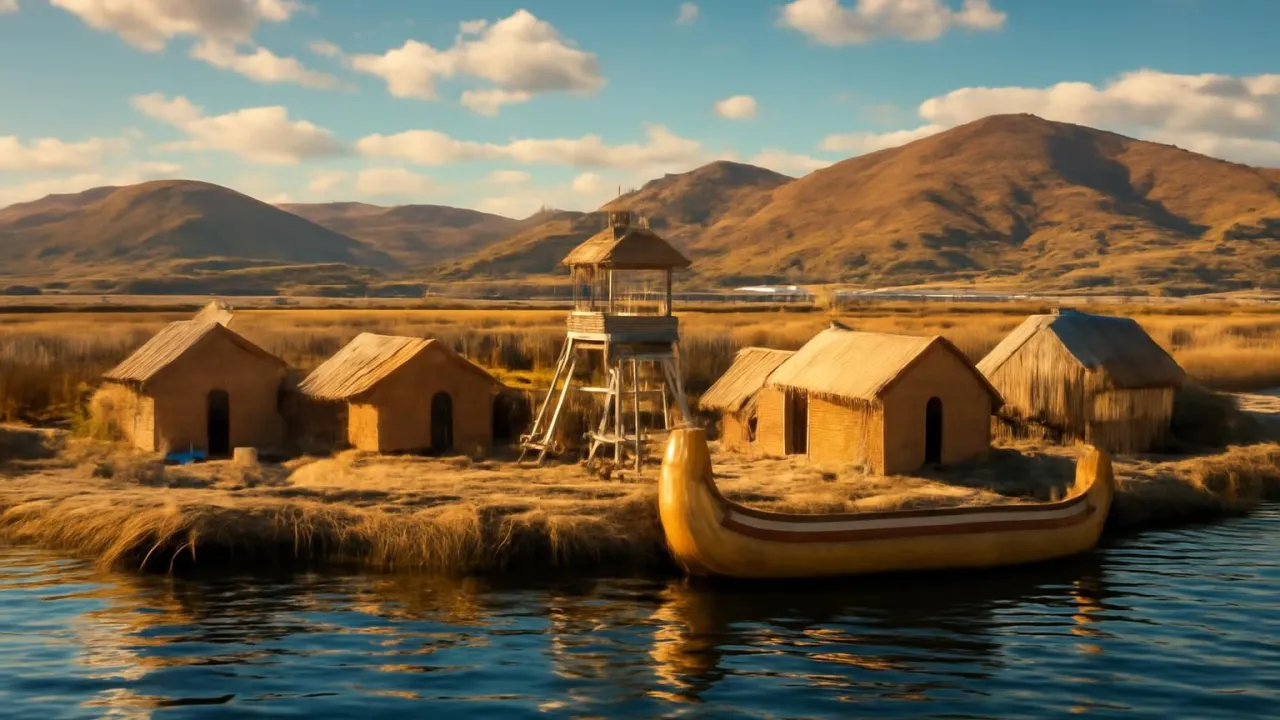
The Uros people have lived on floating islands for hundreds of years!
✨ Word Sparks (Grade 2 Glossary)
Tap 🔊 to hear
totora
A special reed from the lake
bouncy
Springy and soft to walk on
visitor
Someone who comes to see a place
🪝
Can you imagine living on a soft, floating island?
1
Floating Homes
The Uros people live on islands that float on Lake Titicaca. These islands are made from layers of strong, bendy reeds. When you walk, the ground feels soft and .
2
Building with Nature
Families cut the tall reeds and stack them in thick layers. They build houses, boats, and even watchtowers from the same reeds. The islands must be rebuilt often because the reeds rot in water.
3
Life on the Lake
Children play and help their families every day. Birds nest in the reeds, and fish swim under the islands. come to see these amazing floating homes and learn about Uros life.
Some floating islands even have schools made from reeds!
✨ Word Sparks (Grade 3 Glossary)
Tap 🔊 to hear
anchor
A heavy object that holds things in place
rot
To slowly break down or decay
ingenious
Very clever and creative
🪝
What would it feel like to jump on an island that floats?
1
A Lake Full of Floating Villages
On Lake Titicaca, the Uros people build entire villages on floating islands. These islands are made from thick layers of totora reeds, which grow in the shallow lake water. When you step on them, the ground feels springy and sometimes even wobbles beneath your feet. The islands drift gently as the wind moves across the lake.
2
How Reeds Become Islands
Totora reeds are bundled and woven together to create a strong, floating base. New reeds are added on top as the bottom layers away in the water. The Uros use the same reeds to build their houses, boats, and even animal pens. This traditional engineering keeps the islands sturdy and safe for families.
3
Living with Nature’s Rhythm
The Uros people fish, gather reeds, and watch birds that nest nearby. Their floating homes rise and fall with the waves and weather. When storms come, the islands are anchored with ropes tied to sticks in the lakebed. Visitors can ride in reed boats and learn about the Uros’ special way of life.
4
A Wonder of Human Ingenuity
The floating islands show how people adapt to their environment using local resources. The Uros’ skills have been passed down through generations, making the islands a living example of cultural heritage. Tourists from around the world visit to see the unique floating villages. The islands are a symbol of creativity and survival on Lake Titicaca.
1. What keeps the floating islands from drifting away?
2. What do the Uros people use to build almost everything?
🤯 Mind-Blowing Fact • Grade 4
The largest floating islands can support up to ten families and even have solar panels for electricity!
✨ Word Sparks (Grade 4 Glossary)
Tap 🔊 to hear
buoyant
Able to float easily on water
ecology
How living things interact with nature
heritage
Traditions passed down through families
🪝
Have you ever wondered how people make entire islands float?
1
A Floating World in the Andes
High in the Andes Mountains, Lake Titicaca glimmers with dozens of man-made floating islands. For centuries, the Uros people have crafted these islands from totora reeds, which grow abundantly along the lake’s edge. Each island is carefully layered with cut reeds, creating a thick, mat that floats on the water’s surface. The communities move and rebuild their islands as needed, always working with the rhythms of the lake.
2
Engineering with Nature’s Materials
Building a floating island requires knowledge of physics and local . The dense roots of totora reeds form a natural raft, while bundles of dried reeds are stacked on top to form the living surface. As the lower layers decompose, new layers are added, maintaining the island’s buoyancy and strength. The Uros also construct their homes, watchtowers, and boats entirely from reeds, demonstrating remarkable resourcefulness.
3
Life on the Water
Daily life on the floating islands is shaped by the lake’s environment. Families fish, gather fresh reeds, and care for birds that nest among the reeds. Children attend school on special reed islands, and everyone helps maintain the floating structures. When storms threaten, islands are anchored with ropes tied to sturdy poles sunk deep into the lakebed, protecting them from drifting away.
4
A Living Heritage
The floating islands of Lake Titicaca are recognized as a unique cultural by people around the world. Tourists visit to learn about the Uros’ ingenious way of life and their deep connection to nature. The islands represent both ancient tradition and ongoing adaptation, showing how humans can thrive in challenging environments by working with natural materials and creative engineering.
1. Why do the Uros need to add new reeds to their islands?
2. How do the Uros protect their islands during storms?
🤯 Mind-Blowing Fact • Grade 5
Each floating island can weigh over 30 tons and must be rebuilt every decade to survive.
✨ Word Sparks (Grade 5 Glossary)
Tap 🔊 to hear
buoyancy
The force that makes things float
microbial
Related to tiny living things like bacteria
sustainability
Using resources so they last a long time
🪝
What secrets of engineering let an entire village float atop a mountain lake?
1
An Ancient Floating Civilization
Imagine stepping onto land that shifts gently beneath your feet, surrounded by the sparkling blue waters of Lake Titicaca. For centuries, the Uros people have engineered floating islands using only the resources found in their unique environment. These islands, first described by Spanish chroniclers in the 16th century, are a testament to human ingenuity and adaptability. The Uros originally built their floating homes to escape conflict, using the lake as a natural barrier. Today, their communities continue to thrive on these remarkable reed platforms.
2
Physics and Crafting of Totora Islands
The construction of a floating island is a sophisticated process that relies on the physical properties of totora reeds. The of the reeds, due to their air-filled cellular structure, allows thick mats to float even when supporting houses, people, and livestock. Builders bind blocks of dense totora roots together to form a stable base, then layer freshly cut reeds atop, creating a spongy platform up to two meters thick. As the lower layers decompose through activity and water exposure, new reeds are added regularly to maintain strength and floatation.
3
Sustainable Living and Environmental Adaptation
Life on the floating islands demands constant maintenance and adaptation to environmental changes. The Uros fish for sustenance, harvest totora for construction, and raise birds and guinea pigs for food. Solar panels now provide electricity for lighting and communication, blending ancient tradition with modern technology. The islands are anchored by ropes tied to eucalyptus poles driven deep into the muddy lakebed, preventing them from drifting during fierce Andean storms. This sustainable lifestyle demonstrates a deep understanding of local ecology and resource management.
4
Cultural Significance and Global Recognition
The floating islands of Lake Titicaca are recognized as a living symbol of cultural resilience and innovation. The Uros language, customs, and craftsmanship have been preserved through oral tradition and daily practice. Tourists from around the world visit to experience the islands’ unique architecture and learn about this extraordinary way of life. UNESCO and other organizations have highlighted the islands as an example of intangible cultural heritage, inspiring efforts to protect both the environment and the Uros’ traditions for future generations.
5
Challenges and the Future of the Floating Islands
Despite their beauty and ingenuity, the floating islands face significant challenges from climate change, pollution, and tourism pressures. Rising water temperatures and changing lake levels threaten the growth of totora reeds, while increased boat traffic can damage fragile island structures. The Uros community is working with scientists and conservationists to develop new techniques for reed cultivation and island construction. Their ongoing efforts ensure that this remarkable floating civilization will endure, offering lessons in , adaptation, and cultural pride.