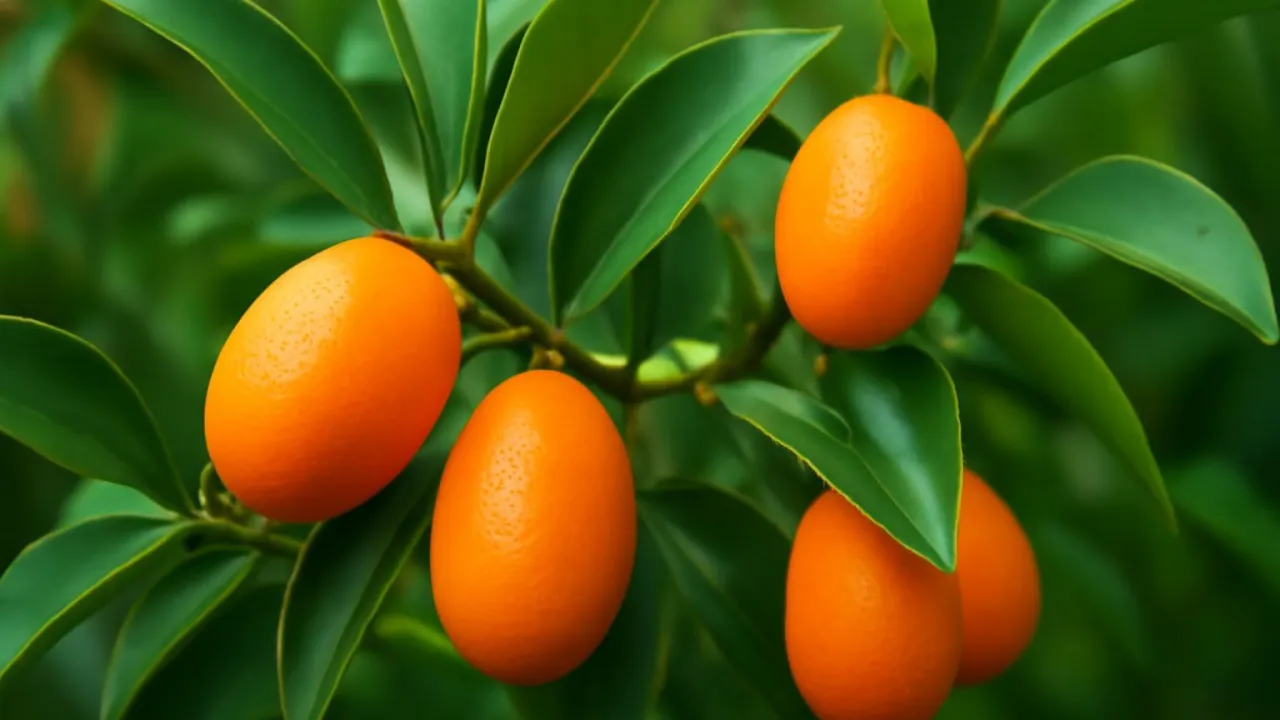
Kumquats are unique because their peel is sweet while the inside is sour!
✨ Word Sparks (Grade 2 Glossary)
Tap 🔊 to hear
ripe
When fruit is ready to eat
sunlight
Light from the sun that plants need
tart
A sharp, sour taste
🪝
Have you ever tried a fruit you can eat whole, peel and all?
1
What Is a Kumquat?
Kumquats are tiny orange fruits that grow on small trees in warm places. They look like mini oranges but are much smaller. The trees have green leaves and small white flowers that bloom in spring.
2
How Kumquats Grow
Kumquat trees need plenty of and regular watering to grow well. The fruits start green and turn bright orange when . Birds and animals enjoy eating kumquats from the trees.
3
A Special Taste
Kumquats have a sweet peel and sour inside, making them taste both sweet and . People often eat the whole fruit, peel and all, which is unusual for citrus fruits. They can be used in jams, salads, or eaten fresh.
Kumquats’ sweet peel and sour inside is a clever survival adaptation.
✨ Word Sparks (Grade 3 Glossary)
Tap 🔊 to hear
pollinators
Animals like bees that help flowers make fruit
camouflage
Colors or shapes that help hide plants or animals
adaptation
A special change that helps plants or animals survive
🪝
Did you know kumquats have a peel you can eat that tastes sweet?
1
Kumquat’s Unique Look
Kumquats are small citrus fruits about one to two inches long. Their bright orange skin is smooth and edible. Unlike many fruits, their peel is sweet while the inside is sour. This contrast helps protect the fruit from some predators.
2
How They Grow and Adapt
Kumquats grow on evergreen trees that thrive in warm climates. The trees produce white flowers that attract like bees. Their thick peel helps reduce water loss, an important for sunny, dry places. This adaptation helps kumquats survive droughts.
3
Role in Nature
Kumquats provide food for birds and small mammals, which help spread seeds. This seed dispersal is important for the plant’s reproduction. Their bright color also acts as among leaves, hiding them from some predators. These traits help kumquats survive in their ecosystem.
4
Tasty and Useful Fruit
People enjoy kumquats fresh or cooked in jams and sauces. Their edible peel adds unique flavor to recipes. Kumquats also have vitamins like vitamin C, which helps keep people healthy. This fruit is both tasty and nutritious.
Kumquats’ edible peel helps reduce water loss and protects seeds in hot climates.
✨ Word Sparks (Grade 4 Glossary)
Tap 🔊 to hear
pollinators
Animals like bees that help flowers make fruit
ecosystem
A community of plants, animals, and their environment
irrigation
Giving water to plants on farms
🪝
How does the kumquat’s sweet peel help it survive in nature?
1
Kumquat’s Special Structure
Kumquats have a unique peel that tastes sweet while the inside is sour, which confuses some predators and protects the fruit. This edible peel reduces water loss in hot climates, helping the fruit stay fresh longer. The peel’s thickness also protects the seeds inside from damage. These features increase the kumquat’s chances of survival and reproduction.
2
Ecosystem Role and Relationships
Kumquats serve as a food source for birds and small mammals, which help disperse seeds through their droppings, supporting forest growth. The flowers attract like bees, which are essential for fruit production. Kumquats also contribute to local food webs by providing nutrients to various animals. Humans cultivate kumquats for food and ornamental purposes, impacting positively and sometimes negatively.
3
Geographic Distribution and Growth
Originally from Southeast Asia and China, kumquats have spread to warm regions worldwide, including the southern United States. They thrive in climates with mild winters and hot summers, requiring full sun and well-drained soil. Farmers often grow kumquats in orchards where they receive regular care and . Their adaptability to different environments makes them popular in many countries.
4
Human Uses and Benefits
People enjoy kumquats fresh, candied, or in marmalades, appreciating their unique sweet and sour flavor. The fruit contains vitamin C and antioxidants, which support human immune health. Kumquats are also used in traditional medicines in some cultures. Their cultivation supports local economies and promotes biodiversity through sustainable farming practices.
Kumquat peels contain oil glands that protect the fruit and make it tasty to eat whole.
✨ Word Sparks (Grade 5 Glossary)
Tap 🔊 to hear
cuticle
A protective waxy layer on a fruit’s skin
transpiration
Water loss from plants into the air
genetic diversity
Different traits in plants that help survival
🪝
What scientific secrets make the kumquat’s edible peel a unique adaptation?
1
Taxonomy and Scientific Classification
Kumquats belong to the genus Fortunella within the Rutaceae family, closely related to true citrus fruits like oranges and lemons. Their classification has evolved with genetic studies showing distinct differences from other citrus species. Several species and hybrids exist, each with unique fruit sizes and flavors. Understanding taxonomy helps scientists study their evolution and cultivation.
2
Physiological Mechanics of the Peel
The kumquat’s peel contains specialized oil glands producing aromatic compounds that deter some herbivores and attract pollinators. Its thick, waxy reduces , preventing water loss in hot environments. The peel’s sweet flavor comes from sugars concentrated in the epidermal cells, contrasting with the acidic juice inside. These physiological traits make the kumquat’s peel both protective and palatable.
3
Conservation and Botanical History
Originally native to Southeast Asia, kumquats were introduced worldwide through trade and cultivation centuries ago. They are now grown commercially in subtropical regions, with breeding programs improving disease resistance and fruit quality. Conservation efforts focus on preserving wild relatives and to maintain resilience against pests and climate change. Botanical history reveals kumquats’ cultural significance in many societies.
4
Quantitative Comparisons and Growth Data
Kumquat fruits typically measure 1 to 2 inches (2.5 to 5 cm) in length and weigh about 10 to 20 grams. Trees can grow up to 10 to 15 feet (3 to 4.5 meters) tall and produce fruit annually. They require temperatures between 55 and 85 degrees Fahrenheit (13 to 29 degrees Celsius) for optimal growth. Their rapid flowering and fruiting cycles allow multiple harvests in favorable climates.
5
Economic and Nutritional Importance
Kumquats provide valuable nutrients such as vitamin C, fiber, and antioxidants, supporting human health and nutrition worldwide. Economically, they contribute to local and global markets through fresh sales and processed products like marmalades. Their unique edible peel differentiates them from other citrus fruits, encouraging culinary innovation. Sustainable cultivation practices ensure long-term productivity and environmental health.