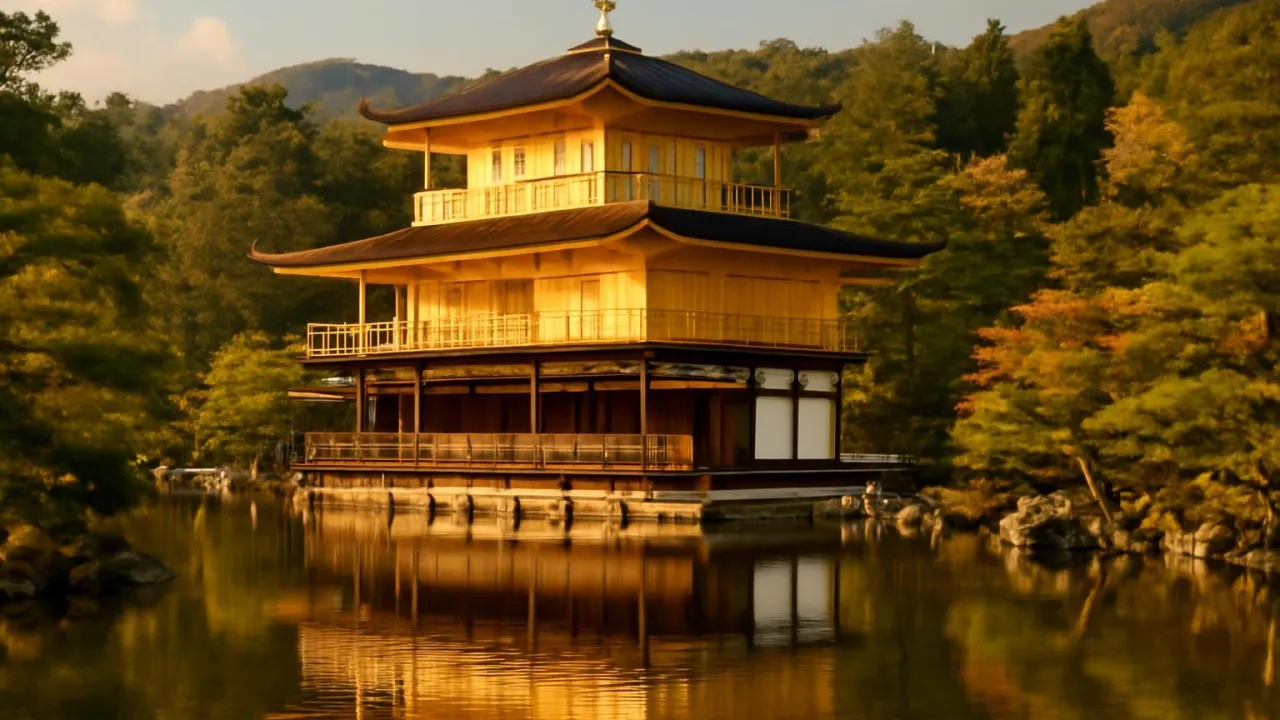
Kinkaku-ji’s gold leaf is so thin it can float on air!
✨ Word Sparks (Grade 2 Glossary)
Tap 🔊 to hear
Kyoto
A city in Japan
reflection
An image seen in water
visitor
A person who comes to see
🪝
What would you think if you saw a golden building glowing by the water?
1
A Temple That Shines
When the sun rises, Kinkaku-ji glows with golden light. Its top two floors are covered in real gold leaf, sparkling for everyone to see. People from all over the world come to visit this shining place.
2
Magic in the Pond
The temple stands beside a wide, peaceful pond. The gold walls reflect like a mirror in the water, making the whole scene look magical. Ducks and fish live in the pond, swimming under the golden glow.
3
A Calm and Beautiful Spot
walk through the quiet garden and feel calm and happy. Kinkaku-ji was rebuilt after a fire long ago, but its golden shine still amazes everyone. Many people come just to enjoy its peaceful beauty.
2. What do people feel when they walk in the garden?
🤯 Mind-Blowing Fact • Grade 3
Kinkaku-ji’s golden glow can be seen from across the lake, even on cloudy days!
✨ Word Sparks (Grade 3 Glossary)
Tap 🔊 to hear
shogun
A powerful leader in old Japan
reflection
Light bouncing off a surface
monument
A building made to remember something
🪝
What would it feel like to stand beside a golden temple shining in the morning sun?
1
A Shining Landmark
Kinkaku-ji, also called the Golden Pavilion, glows with sunlight in Kyoto. Its top two stories are covered in gold leaf, which makes the building shimmer. The gold reflects beautifully in the calm pond below. Visitors come to see the sparkling temple and peaceful gardens.
2
History in Every Layer
The original Kinkaku-ji was built in 1397 during the Muromachi period. It was once a ’s villa before becoming a Zen Buddhist temple. After a fire in 1950, the temple was carefully rebuilt to match its historic design. Today, it stands as a symbol of Kyoto’s rich history.
3
How Gold Leaf Works
Gold leaf is very thin, almost like a sheet of paper. Craftsmen carefully press it onto the wood, making the surface shine. Sunlight bounces off the gold, creating a bright in the pond. This effect is called reflection, and it makes the scene look magical.
4
A Place for Peace and Wonder
People visit Kinkaku-ji to enjoy its beauty and calm. The gardens are designed for quiet walks and peaceful thoughts. The pond’s still water helps create a sense of harmony. Kinkaku-ji is a famous that inspires visitors from around the world.
Gold leaf on Kinkaku-ji is so thin that 1,000 sheets stacked together are thinner than a coin!
✨ Word Sparks (Grade 4 Glossary)
Tap 🔊 to hear
optical reflection
Light bouncing off shiny surfaces
resilience
Being strong after hard times
craftsmen
People skilled at making things
🪝
If you could hear the gentle breeze at Kinkaku-ji, would it sound different near golden walls?
1
A Golden Wonder in Kyoto
Kinkaku-ji, or the Golden Pavilion, gleams brightly along the edge of a tranquil pond in Kyoto. Its top two stories are covered in delicate gold leaf, creating a dazzling sight in sunlight or rain. The temple’s reflection in the pond, called Kyoko-chi, doubles the beauty for every visitor. This remarkable landmark is one of Japan’s most celebrated Zen Buddhist temples.
2
History and Restoration
Originally constructed in 1397 as a retirement villa for shogun Ashikaga Yoshimitsu, Kinkaku-ji became a temple after his death. The structure was destroyed by fire in 1950, but was meticulously rebuilt in 1955 using traditional methods. carefully applied gold leaf to the upper floors, restoring its original brilliance. Today, it stands as a symbol of and cultural pride.
3
Engineering and Reflection
The gold leaf covering the upper stories is only a few microns thick, yet it creates a powerful visual impact. Sunlight striking the gold produces a shimmering reflection on the pond’s surface, a phenomenon known as . The temple’s wooden frame, tiled roof, and gold leaf combine traditional Japanese engineering with artistic design.
4
Cultural Importance
Kinkaku-ji is a UNESCO World Heritage site, drawing millions of visitors each year. Its gardens are designed for meditation and peaceful walks, enhancing the sense of harmony. The temple’s golden glow has inspired artists, poets, and architects for centuries. Kinkaku-ji remains a shining example of Japanese culture and architectural ingenuity.
1. How does gold leaf create Kinkaku-ji’s famous glow?
2. Why is Kinkaku-ji important to Japanese culture?
🤯 Mind-Blowing Fact • Grade 5
Kinkaku-ji’s gold leaf is so fine that a single ounce can be hammered into 300 square feet of coverage!
✨ Word Sparks (Grade 5 Glossary)
Tap 🔊 to hear
Shinden style
Ancient Japanese palace building design
interlocking joints
Wooden pieces fitting together without nails
impermanence
Nothing stays the same forever
🪝
What secrets lie behind the shimmering golden surface of Kinkaku-ji, and how does its design reflect centuries of Japanese artistry?
1
A Radiant Jewel of Japanese Architecture
Kinkaku-ji, officially named Rokuon-ji, sits beside Kyoto’s Kyoko-chi pond, its upper stories glittering with pure gold leaf. The temple’s three-tiered structure blends three distinct architectural styles: the first floor is built in the of imperial palaces, the second in Bukke style for samurai residences, and the third in traditional Chinese Zen hall style. Each level’s design reflects a different aspect of Japanese history and culture, making Kinkaku-ji an architectural marvel.
2
Engineering the Golden Glow
The gold leaf used on Kinkaku-ji’s upper floors is hammered to a thickness of just 0.1 microns, then carefully applied to lacquered wood. This ultra-thin layer maximizes reflection, producing a luminous effect even on cloudy days. The temple’s wooden frame is constructed without nails, using for earthquake resistance—a hallmark of Japanese carpentry. The tiled roof, crowned by a golden phoenix, adds both symbolic and structural elegance.
3
Historical Evolution and Restoration
Commissioned in 1397 by shogun Ashikaga Yoshimitsu, the original structure served as his retirement villa before becoming a Zen temple. After a devastating fire in 1950, artisans relied on historical records and photographs to faithfully reconstruct the building by 1955. The restoration involved traditional techniques, including hand-applying more than 100,000 gold leaves, ensuring the pavilion’s authenticity and brilliance would endure for generations.
4
Cultural and Global Significance
Kinkaku-ji’s gleaming presence has influenced Japanese art, literature, and garden design for centuries. As a UNESCO World Heritage site, it attracts millions of visitors annually who seek inspiration, tranquility, and a glimpse into Japan’s Muromachi-era aesthetics. The temple’s gardens are meticulously arranged to frame the pavilion’s reflection in the pond, embodying the Zen principles of harmony and .
5
Physics of Reflection and Perception
The dazzling visual effect of Kinkaku-ji relies on the physics of optical reflection. Gold’s high reflectivity causes sunlight to bounce off its surface, creating a radiant mirror image in the still pond. The thinness of the gold leaf amplifies this effect, as even a slight breeze can change the light’s angle, making the pavilion appear to shimmer. This interplay of light, water, and gold transforms Kinkaku-ji into a living work of art, celebrated worldwide for its beauty and ingenuity.