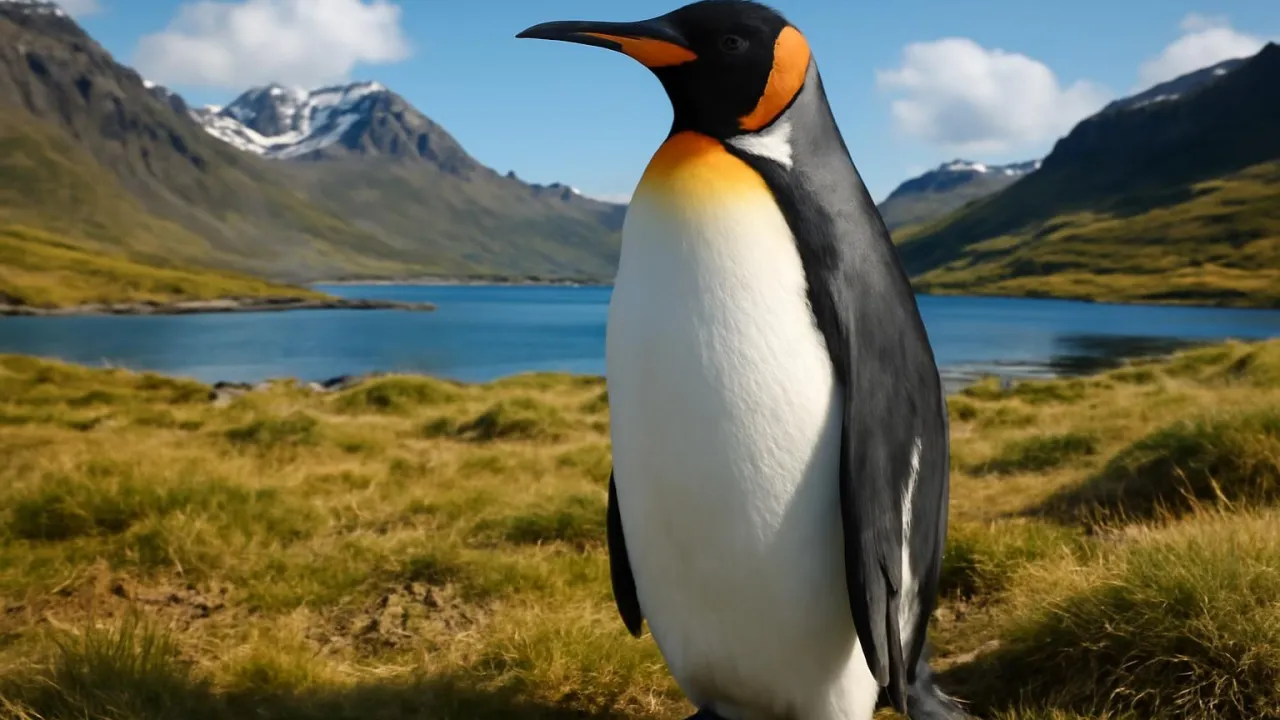
King penguins can stay underwater for up to eight minutes while hunting for food.
✨ Word Sparks (Grade 3 Glossary)
Tap 🔊 to hear
camouflage
Colors that help animals hide
insulation
Something that keeps heat inside
flippers
Flat limbs that help animals swim
🪝
Did you know king penguins use their bright colors to talk to each other?
1
Color and Camouflage
King penguins have bright orange patches that help them attract mates. Their dark backs blend with the ocean from above. This helps protect them from predators.
2
Cold Habitat and Adaptation
These birds live on subantarctic islands where it is very cold and windy. Their thick feathers provide and keep body heat inside. This adaptation helps them survive harsh weather.
3
Diving and Hunting
King penguins can dive over 1,700 feet deep to hunt fish and squid. Their strong help them swim quickly underwater. They hold their breath for several minutes while diving.
4
Life Cycle and Parenting
King penguins lay one egg and keep it warm on their feet under a flap of skin. Both parents take turns feeding the chick. This care helps the chick grow strong and healthy.
1. How do king penguins keep warm in cold weather?
2. What do king penguins use to swim fast underwater?
🤯 Mind-Blowing Fact • Grade 4
King penguins can dive deeper than 1,700 feet, showing incredible underwater endurance.
✨ Word Sparks (Grade 4 Glossary)
Tap 🔊 to hear
insulation
Keeps heat inside to stay warm
ecosystem
All living things and their homes
conservation
Protecting animals and places
🪝
How do king penguins survive and thrive in icy, windy places?
1
Bright Colors and Communication
King penguins use their bright orange and yellow feathers to communicate with mates and other penguins. These colors help them recognize each other in large colonies. Bright feathers attract mates during the breeding season, which is vital for their reproduction. This visual signaling is key in crowded and noisy environments.
2
Adaptations for Cold and Wind
Living on subantarctic islands means king penguins face freezing temperatures and strong winds every day. Their dense feathers provide excellent , while a thick layer of fat beneath their skin keeps their bodies warm. These adaptations allow them to conserve heat and survive harsh weather conditions. Additionally, their compact body shape reduces heat loss.
3
Role in the Ecosystem
King penguins are important predators in their ocean , feeding mainly on fish and squid. By controlling fish populations, they help maintain balance in the food web. They also serve as prey for larger predators like seals and orcas, which keeps the ecosystem healthy. Their presence supports biodiversity in cold marine environments.
4
Geographic Range and Human Impact
King penguins live mainly on subantarctic islands such as South Georgia and the Falklands. Human activities like commercial fishing and climate change threaten their food supply and breeding habitats. efforts focus on protecting these areas to ensure king penguin populations remain stable. Monitoring programs track population changes over time.
King penguins can dive over 1,700 feet deep and stay underwater for almost eight minutes to catch food.
✨ Word Sparks (Grade 5 Glossary)
Tap 🔊 to hear
plumage
The feathers covering a bird’s body
brood pouch
Skin flap where penguins keep eggs warm
circulatory system
Body system that moves blood and heat
🪝
What makes the king penguin a master diver and survivor in harsh subantarctic climates?
1
Scientific Classification and Physical Traits
The king penguin, Aptenodytes patagonicus, is the second largest penguin species, reaching about 3 feet tall and weighing up to 35 pounds. Its striking orange-yellow on the head and neck distinguishes it from other penguins. This species exhibits sexual monomorphism, meaning males and females look alike but differ slightly in size.
2
Physiological Adaptations for Diving and Cold
King penguins have dense, waterproof feathers and a thick layer of subcutaneous fat that insulates them against freezing temperatures. Their adjusts blood flow to conserve heat during deep dives, which can exceed 1,700 feet and last up to eight minutes. Specialized muscles store oxygen to support extended underwater foraging.
3
Breeding Behavior and Chick Rearing
These penguins breed on subantarctic islands, laying a single egg that parents incubate on their feet beneath a . Both parents alternate feeding the chick by regurgitating partially digested fish and squid. This cooperative parenting ensures high chick survival despite harsh environmental conditions.
4
Ecological Role and Conservation Status
King penguins play a vital role as mid-level predators, maintaining balance in marine food webs by consuming fish and squid. They are prey for leopard seals and orcas. Although currently listed as Least Concern, threats like climate change and overfishing could impact their populations, prompting ongoing conservation efforts.
5
Quantitative Comparisons and Records
King penguins can dive to depths over 1,700 feet (520 meters), deeper than most seabirds, and remain submerged for nearly eight minutes. Their average weight of 30 to 35 pounds (14 to 16 kilograms) and height near 3 feet (90 centimeters) make them formidable swimmers in cold waters. These adaptations surpass many other penguin species in diving endurance.