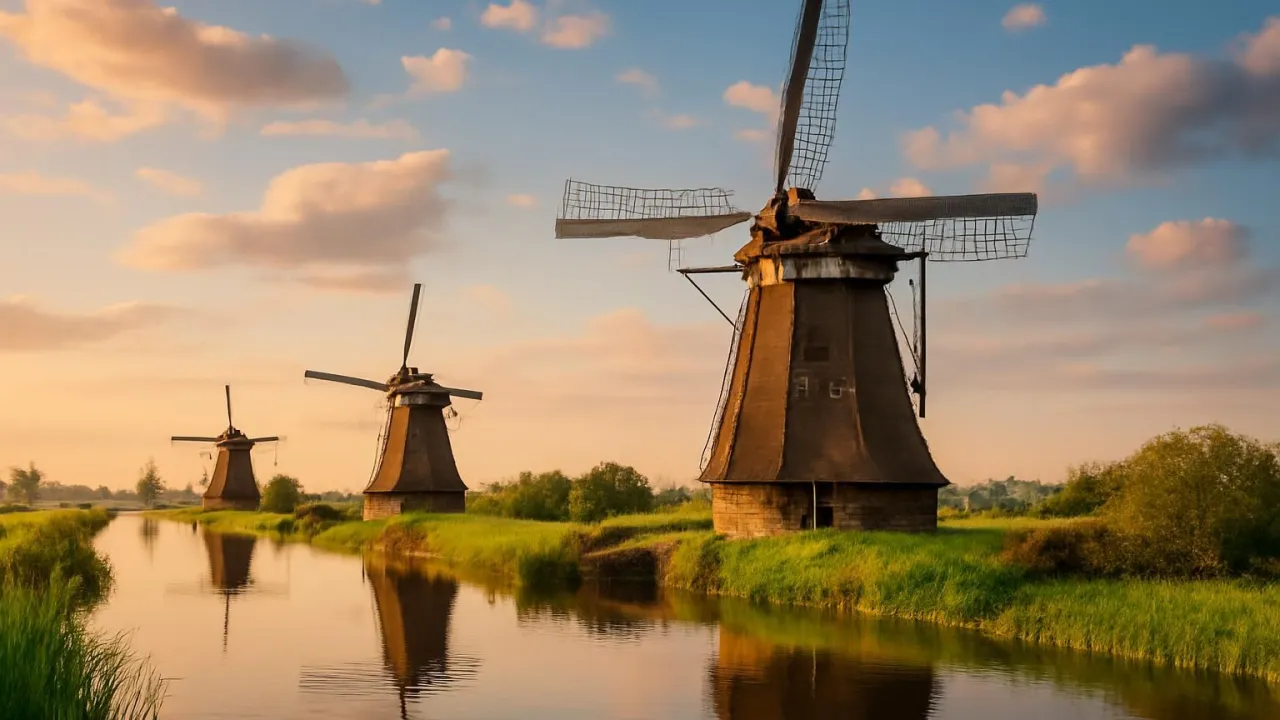
Kinderdijk’s windmills can move enough water to fill many swimming pools every day!
✨ Word Sparks (Grade 2 Glossary)
Tap 🔊 to hear
sails
The arms that catch the wind
pump
To move water from one place to another
flood
When water covers the land
🪝
Have you ever heard wooden sails creak in the wind?
1
Spinning in the Wind
The windmills at Kinderdijk have big wooden that turn quickly. When the wind blows, the sails creak and whirl around. People come to watch them spin and listen to their sounds.
2
Keeping Feet Dry
Long ago, people built these windmills to water away from the land. The land is very low and can easily, so the windmills help keep it dry. Today, visitors walk and ride bikes along the water.
3
A Place to Explore
Kinderdijk has nineteen windmills standing in a neat row. Ducks and birds play in the ponds nearby. Many people take photos to remember their visit.
Each windmill can lift about 220 gallons (1,000 liters) of water every minute!
✨ Word Sparks (Grade 3 Glossary)
Tap 🔊 to hear
polder
Land below sea level, kept dry by pumps
gear
A wheel with teeth that turns things
Archimedes’ screw
A spiral tool for lifting water
🪝
Imagine standing by a canal and feeling the breeze push giant sails—how do they move so much water?
1
Windmills and Water
At Kinderdijk, the windmills use the power of the wind to turn their sails. As the sails spin, they drive and shafts inside the windmill. This mechanical movement powers a pump, which lifts water from the land into canals. Without these windmills, the low land would flood easily.
2
Built for Protection
The Dutch built these windmills nearly 300 years ago to protect their homes. The region is called a , which means it is land below sea level. The windmills pump water out, sending it safely to the river. Today, modern pumps help, but the windmills still work as a backup.
3
A Living Landmark
Nineteen tall windmills stand in a long row at Kinderdijk. Visitors walk along the dikes and watch the sails spin on windy days. Ducks, swans, and frogs live in the wet fields and canals. People from all over the world come to see this famous site.
4
How the Windmills Work
The wind turns the sails, creating vibration and energy. This energy moves a large wheel inside, called an , which lifts water upward. The windmills' clever design uses and levers to change wind power into water movement. Kinderdijk shows how people and engineering can shape the land.
2. Why are the windmills important for the polder?
🤯 Mind-Blowing Fact • Grade 4
Kinderdijk’s windmills form the largest group of historic windmills still operating anywhere in the world.
✨ Word Sparks (Grade 4 Glossary)
Tap 🔊 to hear
mechanical energy
Energy that moves things using machines
dike
A wall that keeps water out
conservation
Protecting nature and wildlife
🪝
What if the windmills at Kinderdijk suddenly stopped spinning—would the land still stay dry?
1
Harnessing the Wind
The windmills of Kinderdijk transform the invisible power of wind into , using their massive sails to turn gears and shafts. When the wind blows, it creates force on the sails, causing them to rotate and set the entire mechanism in motion. This energy is transferred through a system of wooden gears, which then drive pumps or Archimedes’ screws to move water. The process is a fascinating example of early engineering, showing how people used natural forces to solve big problems.
2
A Battle Against Water
Kinderdijk sits in a polder, a region of land below sea level, making it especially vulnerable to flooding. In the 18th century, Dutch engineers built the windmills to keep the land dry by pumping excess water into higher canals and rivers. The windmills worked together as a system, each one helping to move water step by step away from homes and farms. Today, modern electric pumps do most of the work, but the windmills still serve as important backups and reminders of the past.
3
Cultural and Global Impact
Kinderdijk’s windmills are more than just machines—they are symbols of Dutch creativity and resilience. The site is recognized as a UNESCO World Heritage landmark, drawing visitors from all over the world. School groups, tourists, and engineers come to learn about water management and sustainable technology. The windmills have inspired similar water-control systems in other low-lying countries, showing the global importance of this Dutch invention.
4
Living History and Nature
Walking or biking along the at Kinderdijk, visitors see not only historic windmills but also rich wildlife. Wetlands around the windmills are home to herons, ducks, and frogs, creating a unique habitat for many species. The area is carefully protected, balancing tourism with . By preserving both the windmills and their environment, the Netherlands honors its heritage and teaches future generations about engineering and nature.
1. How do the windmills transfer wind energy to move water?
2. Why is Kinderdijk important around the world?
🤯 Mind-Blowing Fact • Grade 5
Kinderdijk’s windmills can collectively move over 60,000 gallons (about 227,000 liters) of water every hour when operating together.
✨ Word Sparks (Grade 5 Glossary)
Tap 🔊 to hear
hydraulic engineering
Designing ways to control and move water
mechanical advantage
How machines make work easier
aerodynamic lift
Wind pushing up to help things move
🪝
If you could step inside a Kinderdijk windmill, could you explain how it turns invisible wind into a life-saving force?
1
Engineering Marvels of the Dutch Landscape
At Kinderdijk, the iconic windmills stand as masterpieces of , ingeniously designed to harness the kinetic energy of wind. Each windmill features four large sails, which can reach up to 92 feet (28 meters) in height, capturing even gentle breezes to initiate rotation. As the sails spin, their motion is transferred via a complex system of wooden gears, cogs, and a vertical shaft, converting the wind’s energy into rotational mechanical power. This power activates either a scoop wheel or an Archimedes’ screw, both of which are sophisticated mechanisms for lifting water from low-lying polders. The entire process demonstrates the principles of energy transfer, , and early renewable technology.
2
Historical Evolution and Global Influence
Constructed between 1738 and 1740, the nineteen Kinderdijk windmills represent the largest surviving group of their kind in the world. Their creation was a response to centuries of devastating floods in the Netherlands, where over a quarter of the land lies below sea level. Dutch engineers developed a network of wind-powered pumping stations to systematically move water from the polders into higher canals and eventually out to sea. The success of Kinderdijk’s system influenced water management techniques across Europe and inspired similar flood-control projects in countries such as England, Poland, and the United States.
3
Physics and Mechanics in Action
The operation of a Kinderdijk windmill is a vivid example of physics in action. Wind energy is first captured by the sails, which are angled to maximize and rotation. This rotational energy is transmitted through a series of gears that increase torque, allowing the heavy scoop wheel or Archimedes’ screw to lift thousands of liters of water per hour. The windmill’s structure must withstand strong gusts, so builders used sturdy oak timbers and brick foundations, carefully balancing the weight and forces involved. Modern engineers still study these windmills to learn about sustainable design and mechanical resilience.
4
Cultural Heritage and Environmental Stewardship
Kinderdijk is not only an engineering triumph but also a living symbol of Dutch culture and environmental stewardship. As a UNESCO World Heritage Site, it attracts hundreds of thousands of visitors annually, who come to explore the windmills, bike along the dikes, and observe the rich wetland ecosystem. The area is home to rare birds, amphibians, and unique plants, making conservation efforts essential. Educational programs teach students and tourists about the relationship between human innovation and nature, emphasizing the importance of protecting both heritage and habitat.
5
Kinderdijk Today: Balancing Past and Future
While modern electric pumps now handle most water management, Kinderdijk’s windmills remain fully operational as emergency backups and historical demonstrations. Engineers regularly maintain the wooden gears and brickwork to ensure the windmills can still function during floods or power outages. The site stands as a testament to the enduring value of renewable energy and community cooperation in the face of environmental challenges. By preserving Kinderdijk, the Netherlands continues to inspire global solutions for sustainable living and climate resilience.