Jeremy Bentham
The Philosopher Who Asked, 'What Helps Everyone?'
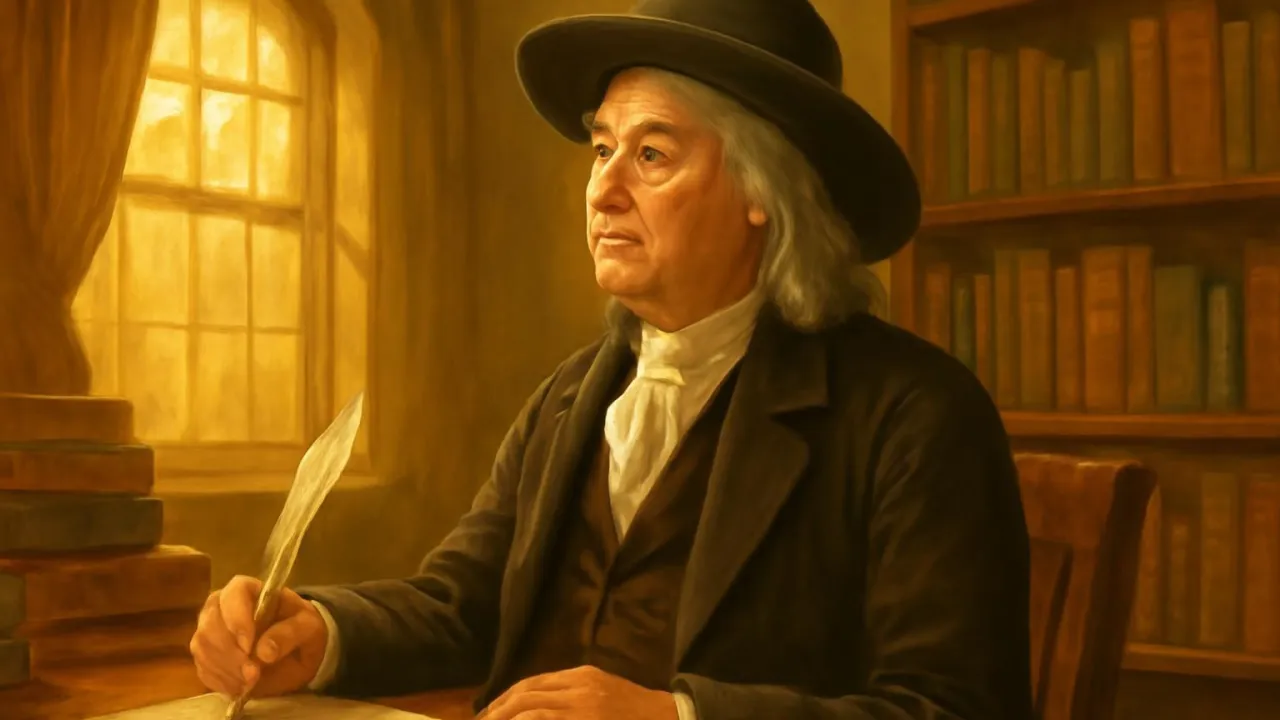
Jeremy asked that his body be preserved and displayed to inspire future thinkers at University College London.
1 A Child with Big Questions
Even as a young boy in London, Jeremy Bentham was fascinated by questions about right and wrong. He read advanced books and asked adults why some rules seemed unfair to certain people. This early curiosity led him to study law, searching for ways to improve society. Jeremy’s family encouraged his love of learning and .
2 The Birth of Utilitarianism
As Jeremy grew older, he developed a groundbreaking idea called utilitarianism, meaning 'the greatest happiness for the greatest number.' He believed laws and actions should be judged by how much happiness or pain they create for everyone. Jeremy wrote detailed books and essays, challenging old traditions that favored only the powerful. His new philosophy sparked across England and Europe.
3 Facing Resistance, Inspiring Change
Many leaders and thinkers at first resisted Jeremy’s ideas, saying they were too radical or strange. Jeremy responded with patience and careful arguments, using examples from real life to show why fairness was important. He even designed a special building, the Panopticon, to help people learn and improve through observation and kindness. Over time, more people began to see the value in his vision.
4 A Legacy of Fairness
Jeremy Bentham’s ideas influenced the creation of modern laws about voting, schools, and workers’ rights. His belief in fairness and happiness for all still shapes government decisions around the world today. Philosophers and lawmakers continue to study his writings, searching for ways to make societies more just. Jeremy’s work reminds us that big questions can lead to lasting change.
1. What did Jeremy believe laws should create?
2. What was the Panopticon?