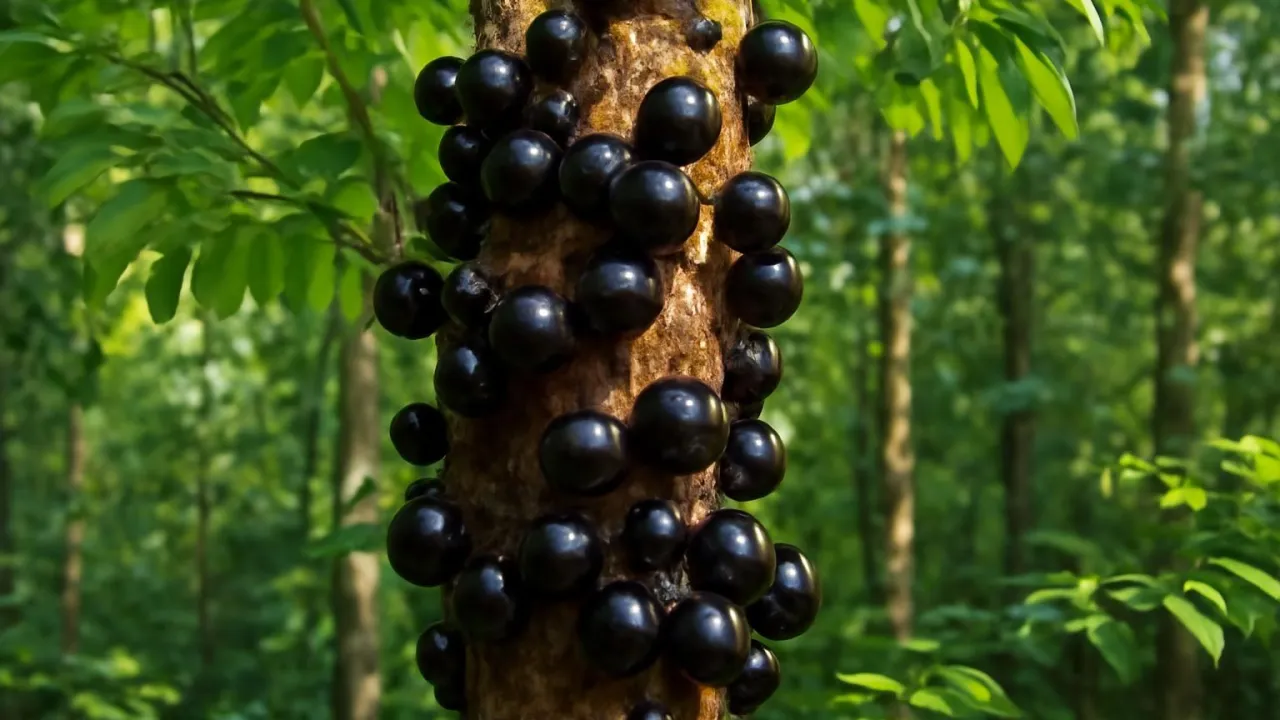
Jabuticaba fruits grow on the trunk and branches, a rare trait in trees!
✨ Word Sparks (Grade 2 Glossary)
Tap 🔊 to hear
bark
The outside covering of a tree
fruit
A sweet food that grows on plants
sunlight
Light from the sun that plants need
🪝
Have you ever seen fruit growing right on a tree trunk?
1
Jabuticaba Tree Looks Unique
The jabuticaba tree grows in Brazil and has thick brown . It grows up to thirty feet tall and has green leaves. The tree loves warm weather and needs plenty of sun.
2
Fruits Grow on the Tree Trunk
Unlike other trees, jabuticaba grow directly on the trunk and branches. These fruits are dark purple and look like grapes. Many birds and animals eat the sweet fruits.
3
Sweet Fruits and Uses
People eat jabuticaba fresh or make juice and jelly from them. The fruits are juicy and taste sweet. The tree also needs regular watering to grow healthy fruits.
Jabuticaba’s cauliflory lets fruits grow right on the trunk, helping animals eat them easily!
✨ Word Sparks (Grade 3 Glossary)
Tap 🔊 to hear
cauliflory
Fruit growing on a tree’s trunk or main stem
pollination
How flowers get pollen to make seeds
nutrients
Food plants and animals need to grow
🪝
Did you know jabuticaba fruits grow on the tree’s trunk, not just on branches?
1
Unique Growth on the Trunk
Jabuticaba trees have a special adaptation called , where fruits grow directly on the trunk. This helps animals reach the fruit easily. The smooth bark supports this unusual fruit growth. It is an important survival trait in dense forests.
2
Fruit and Tree Features
The dark purple jabuticaba fruits are rich in and antioxidants. They are small, round, and look like grapes. The tree grows in warm climates and needs sunlight and water to thrive. Its leaves are thick and green, helping it absorb sunlight.
3
Ecosystem Role and Pollination
Jabuticaba fruits attract many animals, which help spread seeds through their droppings. Pollinators like bees visit the flowers to help with . This tree plays an important role in its ecosystem’s food web. It provides food for birds, mammals, and insects.
4
How It Survives in Nature
The tree’s helps protect fruits from some predators by keeping them low. Its thick bark also guards against damage. This adaptation increases the chance that seeds will spread and grow new trees. It is a clever way to survive in crowded forests.
Jabuticaba’s trunk fruit growth helps animals eat and spread seeds, aiding forest health.
✨ Word Sparks (Grade 4 Glossary)
Tap 🔊 to hear
cauliflory
Fruit grows on tree trunk, not branches
pollinators
Animals like bees that help flowers grow fruit
ecosystem
All living things and their home together
🪝
Why does the jabuticaba tree grow fruit on its trunk instead of branches?
1
Cauliflory and Its Benefits
The jabuticaba tree shows , meaning fruit grows directly on the trunk and main branches. This adaptation allows animals like birds and mammals easier access to the fruit, which helps spread seeds more effectively. Because the fruits are low to the ground, they avoid some predators that target higher branches. This unique growth pattern increases the tree’s chances of reproduction in dense forests.
2
Role in the Ecosystem
Jabuticaba trees provide food for many animals, including birds, bats, and small mammals. These animals eat the fruit and help disperse the seeds through their droppings, supporting forest regeneration. The tree’s flowers attract such as bees, which are essential for fruit production. By supporting these animals, the jabuticaba plays a key role in maintaining its ’s food web.
3
Geographic Distribution and Growth
Native to the Brazilian Atlantic Forest, jabuticaba thrives in warm, humid climates with rich soil. It grows up to thirty feet tall and requires full sunlight and regular watering for optimal fruit production. The tree’s thick bark protects it from pests and environmental damage. It is also cultivated in other tropical regions because of its unique fruit and adaptability.
4
Human Uses and Impact
People harvest jabuticaba fruits fresh or use them to make juice, jams, and wine. The fruit is rich in antioxidants and vitamins, making it valuable for health. However, habitat loss in the Atlantic Forest threatens wild jabuticaba populations. Conservation efforts focus on protecting forests and encouraging sustainable cultivation practices to preserve this unique species.
Jabuticaba’s cauliflory is a rare adaptation that helps it thrive and support forest biodiversity.
✨ Word Sparks (Grade 5 Glossary)
Tap 🔊 to hear
cauliflory
Fruit grows on trunk or main branches
frugivores
Animals that eat mostly fruit
biodiversity
Many different plants and animals living together
🪝
How does jabuticaba’s unique fruit growth strategy affect its survival and ecosystem role?
1
Taxonomy and Scientific Context
Jabuticaba, scientifically known as Plinia cauliflora, belongs to the Myrtaceae family, which includes guavas and eucalyptus. It is native to the Brazilian Atlantic Forest, a hotspot. This species exhibits , a rare botanical trait where flowers and fruits develop directly on the trunk and older branches. This adaptation differentiates it from most other fruit trees that bear fruit on new shoots or branches.
2
Physiological Mechanics of Cauliflory
The jabuticaba’s trunk has specialized lenticels and smooth bark that support fruit growth directly on mature wood. This physiological adaptation allows the tree to bear heavy clusters of fruits without damaging delicate new branches. also facilitates easier access for ground-dwelling animals, enhancing seed dispersal. The fruit’s thick skin protects seeds from predators and environmental stressors.
3
Ecological and Conservation Importance
Jabuticaba plays a critical role in its ecosystem by providing food for various such as birds, bats, and mammals, which in turn disperse its seeds. The tree’s presence supports and forest regeneration in the Atlantic Forest biome. However, deforestation and habitat fragmentation threaten wild populations. Conservation efforts emphasize sustainable cultivation and forest preservation to maintain this species.
4
Cultural and Economic Uses
Locally, jabuticaba fruit is consumed fresh and processed into jellies, wines, and liqueurs, contributing to regional economies. Its high antioxidant content has sparked interest in nutritional research. The tree is also cultivated in home gardens and botanical collections worldwide due to its unique fruiting habit and ornamental value.
5
Quantitative Comparisons and Growth
Jabuticaba trees typically reach heights between 15 and 30 feet (4.5 to 9 meters) and produce fruit clusters weighing up to 1.5 pounds (700 grams). The fruits mature in about 20 to 25 days after flowering. Optimal fruit production requires temperatures between 68°F and 86°F (20°C to 30°C) and regular watering. Compared to other tropical fruits, jabuticaba’s cauliflorous growth is an unusual and efficient reproductive strategy.