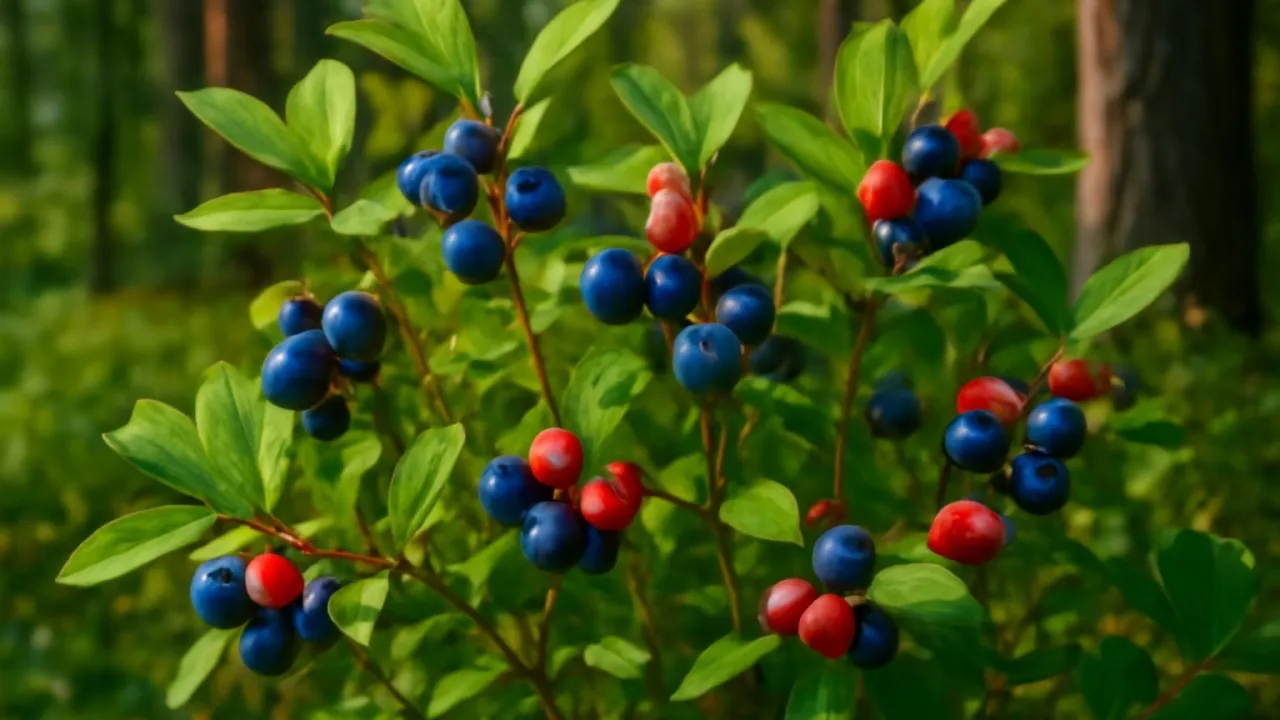
Huckleberries are a favorite food for bears and many birds in the forest!
✨ Word Sparks (Grade 2 Glossary)
Tap 🔊 to hear
ripen
When a fruit becomes ready to eat
moist
A little wet or damp
forest
A place with many trees and plants
🪝
Have you ever tasted a berry that birds love too?
1
Huckleberry Colors
Huckleberries can be red or blue, and they grow on tall bushes. Birds enjoy eating these berries because they are sweet and juicy. The berries change color as they from red to blue.
2
Where They Live
These berries grow mostly in and mountains where it is cool. Huckleberries need sunlight and soil to grow well. They often grow near pine trees and other forest plants.
3
Yummy and Useful
People pick huckleberries to eat fresh or bake into pies and jams. The berries have a sweet taste that many people enjoy. Huckleberries are also a food source for many animals.
Huckleberries help spread their seeds by hitching rides inside animals' bellies!
✨ Word Sparks (Grade 3 Glossary)
Tap 🔊 to hear
adaptation
A change that helps plants or animals survive
pollination
When pollen moves to help plants make seeds
symbiotic
A helpful relationship between living things
🪝
Did you know huckleberries help animals survive in forests?
1
Huckleberry Colors and Camouflage
Huckleberries start red and turn blue when ripe, helping animals spot them. This color change is an that signals ripeness to birds and bears. The bright colors also stand out against green leaves, making them easy to find.
2
Where They Grow and Adaptations
Huckleberries grow in cool forests and mountain areas with moist soil and sunlight. Their thick leaves help protect them from cold winds and dry spells. These allow huckleberries to survive harsh weather conditions.
3
Role in the Forest Food Web
Huckleberries provide important nutrients to many animals like bears, birds, and deer. These animals help spread huckleberry seeds through their droppings, aiding and growth. This relationship supports the forest ecosystem.
4
Human Use and Growth Cycle
People harvest huckleberries to eat fresh or make jams and pies during summer. The plants bloom with small flowers before berries develop, completing their growth cycle each year. Understanding this cycle helps farmers and foragers gather berries sustainably.
1. Why do huckleberries change color from red to blue?
2. How do animals help huckleberries grow?
🤯 Mind-Blowing Fact • Grade 4
Huckleberries connect forest animals and plants through a complex food web and seed dispersal system.
✨ Word Sparks (Grade 4 Glossary)
Tap 🔊 to hear
mutualism
A helpful relationship where both living things benefit
dispersal
The spreading of seeds far from the parent plant
biodiversity
Many different kinds of plants and animals living together
🪝
What if tiny berries could shape whole forest ecosystems?
1
Color Signals and Survival
Huckleberries change from bright red to deep blue as they ripen, attracting many forest animals. This color change is a cause-and-effect adaptation that helps animals find ripe berries easily. By signaling ripeness, huckleberries increase their chances of seed by animals. This process is essential for the plant’s reproduction and forest renewal.
2
Ecosystem Roles and Symbiosis
Huckleberries serve as a vital food source for bears, birds, and small mammals, linking them in the forest food web. Animals that eat the berries help disperse seeds, creating a symbiotic relationship that benefits both plants and animals. This supports and forest health by maintaining balanced populations and plant growth.
3
Growth Environment and Geographic Range
These berries thrive in moist, well-drained soils found in North American forests and mountain regions. They prefer cooler climates and often grow under pine trees, which provide shade and protection from harsh weather. Their geographic distribution includes the Pacific Northwest and Rocky Mountains, where they adapt to varying elevations.
4
Human Impact and Conservation
People harvest huckleberries for food and cultural uses, sometimes impacting wild populations if not done sustainably. Conservation efforts focus on protecting forest habitats and promoting responsible foraging practices. Understanding huckleberry ecology helps maintain healthy ecosystems and ensures berry availability for future generations.
2. Why is conserving huckleberry habitats important?
🤯 Mind-Blowing Fact • Grade 5
Huckleberries have adapted to mountain climates, thriving where temperatures vary widely and soils are acidic.
✨ Word Sparks (Grade 5 Glossary)
Tap 🔊 to hear
endozoochory
Seed spreading when animals eat fruit and drop seeds
acidic
Soil that is sour and helps some plants grow
genetic diversity
Different traits in plants that help them survive
🪝
How do huckleberries fit into the science of plants and forest ecology?
1
Scientific Classification and Botanical Features
Huckleberries belong to the genus Vaccinium, closely related to blueberries, within the Ericaceae family. Their scientific name is Vaccinium membranaceum, characterized by deciduous shrubs with thin, membranous leaves. Unlike many fruits, huckleberries contain numerous small seeds inside, which are dispersed by animals.
2
Physiological Adaptations and Growth Mechanics
Huckleberry bushes thrive in , well-drained soils typical of mountainous forests, requiring moderate sunlight and moisture. Their leaves have a waxy coating that reduces water loss, and their root systems efficiently absorb nutrients in nutrient-poor soils. The berries change color from red to blue due to pigment development signaling ripeness.
3
Ecological Importance and Seed Dispersal
Huckleberries play a crucial role in forest ecosystems by providing food for bears, birds, and small mammals, which in turn disperse seeds through . This mutualistic relationship enhances and forest regeneration. The timing of berry ripening aligns with animal feeding habits, optimizing seed dispersal success.
4
Conservation and Human Cultural History
Indigenous peoples have harvested huckleberries for centuries, using them in traditional foods and medicines, highlighting their cultural significance. Modern conservation efforts focus on sustainable harvesting and habitat protection to prevent overharvesting and habitat loss. Climate change poses challenges by altering growing conditions and berry production.
5
Quantitative Comparisons and Environmental Conditions
Huckleberry bushes can grow up to six feet tall and produce berries approximately 0.2 to 0.4 inches in diameter. They typically grow at elevations between 3,000 and 9,000 feet, where temperatures range from 40 to 75 degrees Fahrenheit during the growing season. Their growth rate and berry yield depend heavily on soil moisture and sunlight availability.