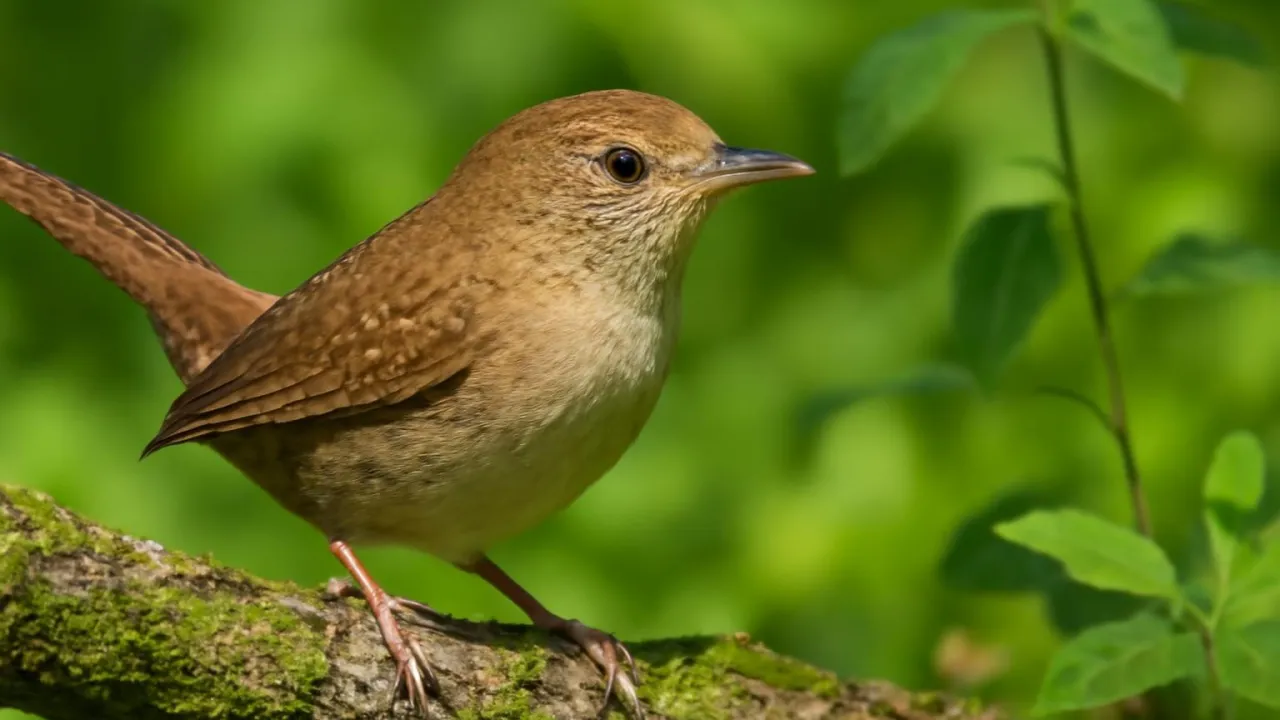
House wrens can sing more than 40 different songs to talk to other birds!
✨ Word Sparks (Grade 2 Glossary)
Tap 🔊 to hear
insects
Small animals like bugs and spiders
territory
An area a bird protects from others
nest
A home birds make for their eggs
🪝
Can you imagine a tiny bird singing loudly near your home every morning?
1
A Tiny Bird with Brown Feathers
The house wren has soft brown feathers and a short tail. It hops on branches and looks for to eat. It uses its sharp beak to catch bugs and spiders. This bird is very active during the day.
2
Where House Wrens Make Nests
House wrens like to live near homes and in gardens with many trees. They build in small holes or birdhouses using twigs and grass. These nests keep their eggs safe and warm. The birds stay close to their nests to protect their young.
3
Loud Songs from a Small Bird
Even though it is small, the house wren sings very loudly to find mates and mark its . Its songs are happy and full of many notes. It often sings early in the morning and late in the evening. This singing helps it talk to other birds.
House wrens can sing more than 40 different songs to communicate with others!
✨ Word Sparks (Grade 3 Glossary)
Tap 🔊 to hear
camouflage
Colors that help animals hide in nature
predator
An animal that hunts other animals
territory
Land an animal protects from others
🪝
Did you know the tiny house wren uses its loud song to protect its home?
1
Small Bird with Camouflage Feathers
The house wren has brown feathers that help it blend into trees and bushes. This protects it from like hawks and cats. Its small size allows it to hide easily in dense shrubs. These adaptations help it survive in many habitats.
2
Nesting and Life Cycle
House wrens build nests in small holes or birdhouses using twigs and grass. The female lays eggs that hatch into chicks after about two weeks. Both parents feed the young insects and spiders to help them grow. This life cycle repeats each spring.
3
Loud and Complex Songs
House wrens sing loud, complex songs to defend their and attract mates. Their songs include many different notes and patterns. Singing early in the morning helps them communicate before other birds start. This vocal adaptation is important for their survival.
4
Habitat and Food
These birds live in North and South America in forests, gardens, and near homes. They eat insects and spiders, which provide important nutrients. Their sharp beak helps catch prey quickly. House wrens play a role in controlling insect populations.
1. How do house wrens protect themselves from predators?
2. What do house wren parents feed their chicks?
🤯 Mind-Blowing Fact • Grade 4
House wrens sing more than 40 different songs to communicate and defend territory!
✨ Word Sparks (Grade 4 Glossary)
Tap 🔊 to hear
ecosystem
A community of living things and their environment
territory
An area an animal protects from others
adaptation
A body feature that helps survival
🪝
How does the house wren’s loud song affect its survival in different environments?
1
Adaptations for Survival
The house wren’s brown feathers act as camouflage, helping it avoid predators like hawks and snakes in forests and gardens. Its small size allows it to hide in dense shrubs and narrow spaces. These physical traits increase its chances of survival in many habitats across North and South America.
2
Role in the Ecosystem
House wrens help control insect populations by eating many bugs and spiders, which benefits plants and humans. They are prey for larger birds and mammals, making them an important part of the food web. Their nesting habits also provide shelter for other small animals when abandoned.
3
Singing and Territory Defense
Male house wrens sing loud, complex songs to defend their and attract mates during breeding season. This vocal behavior prevents fights by warning other males to stay away. Singing early in the morning and late in the evening maximizes communication when fewer predators are active.
4
Geographic Distribution and Human Impact
House wrens are found throughout much of the Americas, from Canada to South America, adapting well to urban and rural areas. Human activity can both help and harm them by providing birdhouses or destroying habitats. Conservation efforts include protecting nesting sites and planting native vegetation.
1. Why do male house wrens sing loudly during breeding season?
2. How do house wrens help the ecosystem?
🤯 Mind-Blowing Fact • Grade 5
House wrens use a unique syrinx to produce over 40 different songs for communication and survival.
✨ Word Sparks (Grade 5 Glossary)
Tap 🔊 to hear
syrinx
The bird’s voice box used to make sounds
taxonomy
How scientists classify living things
biodiversity
Many different kinds of plants and animals
🪝
What makes the house wren’s singing ability a remarkable adaptation in its scientific classification?
1
Taxonomy and Scientific Context
The house wren, Troglodytes aedon, belongs to the Troglodytidae family, known for small, active birds with loud songs. This species is widespread throughout North and South America, adapting to diverse environments from forests to urban areas. Its genus name means “cave dweller,” reflecting its preference for nesting in cavities.
2
Physiological Mechanics of Singing
House wrens produce loud, complex songs using a specialized vocal organ called the , located where the trachea splits into the lungs. Their small body size contrasts with their powerful voice, allowing them to communicate effectively over long distances. This vocal ability is crucial for territory defense and mate attraction.
3
Conservation and Habitat History
Although house wrens are common and not currently endangered, habitat loss and urban development can threaten local populations. Conservation efforts focus on preserving natural nesting sites and encouraging the use of birdhouses. Historically, their adaptability has helped them thrive despite human changes to the environment.
4
Ecological Role and Food Web Impact
House wrens consume a variety of insects and spiders, controlling pest populations that could damage plants and crops. They serve as prey for larger birds and mammals, linking multiple levels of the food web. Their nesting cavities, once abandoned, provide shelter for other small animals, enhancing .
5
Quantitative Comparisons and Behavior
Measuring about 4.7 inches (12 cm) long and weighing around 0.3 ounces (8 grams), house wrens can sing over 40 distinct songs. Their song rate peaks at dawn and dusk, lasting up to several minutes per session. These birds can fly up to 15 miles per hour (24 km/h) while foraging and maintain territories up to 2 acres (0.8 hectares).